

Як відвідуівач, я уже була на пивних фестивалях здорової людини, і Brewskival не став в цьому сенсі для мене відкриттям. Але зсередини... Хоча, про все по черзі.
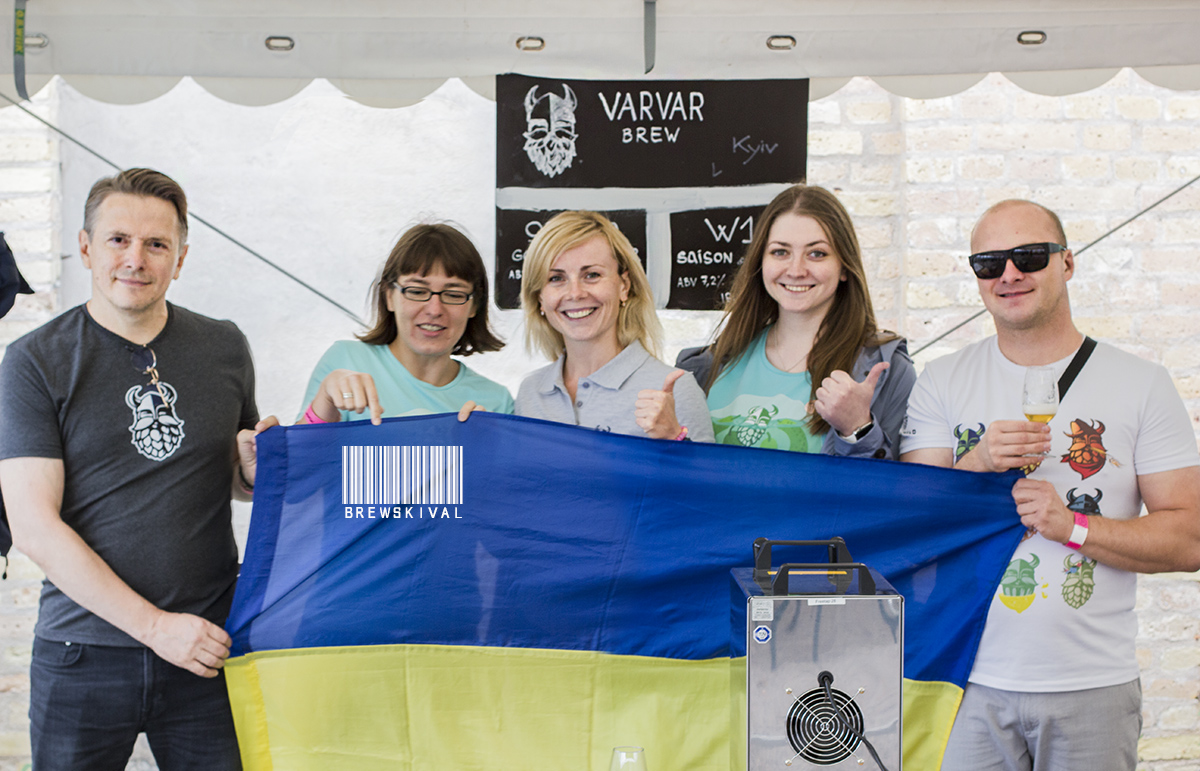
Сьогодні всесвітній день пива, свято, яке започаткували десять років тому. (ок, одинадцять). А усвідомлено пити пиво я почала 2008 року. Тому цей допис буде історично-ностальгічно-ювілейним, але про все з самого початку.

Frankly speaking, у Франкфурті з кавою краще ніж з пивом, але все-таки на пару днів вам буде що робити навіть там.
Два моменти.
Перший - хоча Франкфурт одна з бізнес-столиць Європи, запасайтеся готівкою, бо є місця, де беруть тільки кеш.
Дві крамниці - Kiosk45 і Bierboutiqueeee Ølwechsel ми перевірити не змогли, одні були у відпустці, другі закриті у вікенд. Die Bierothek® у Skyline Plaza має невеликий, але цікавий вибір німецького пива, імпорт переважно поширені бельгійці, але є і японці, естонці, французи. Дуже рекомендований Yok-Yok виявився катастрофічно нудним в сесні вибору, і більше вино-дрінко-орієнтованим. Гастро-поверх Galeria Kaufhof теж не порадував.
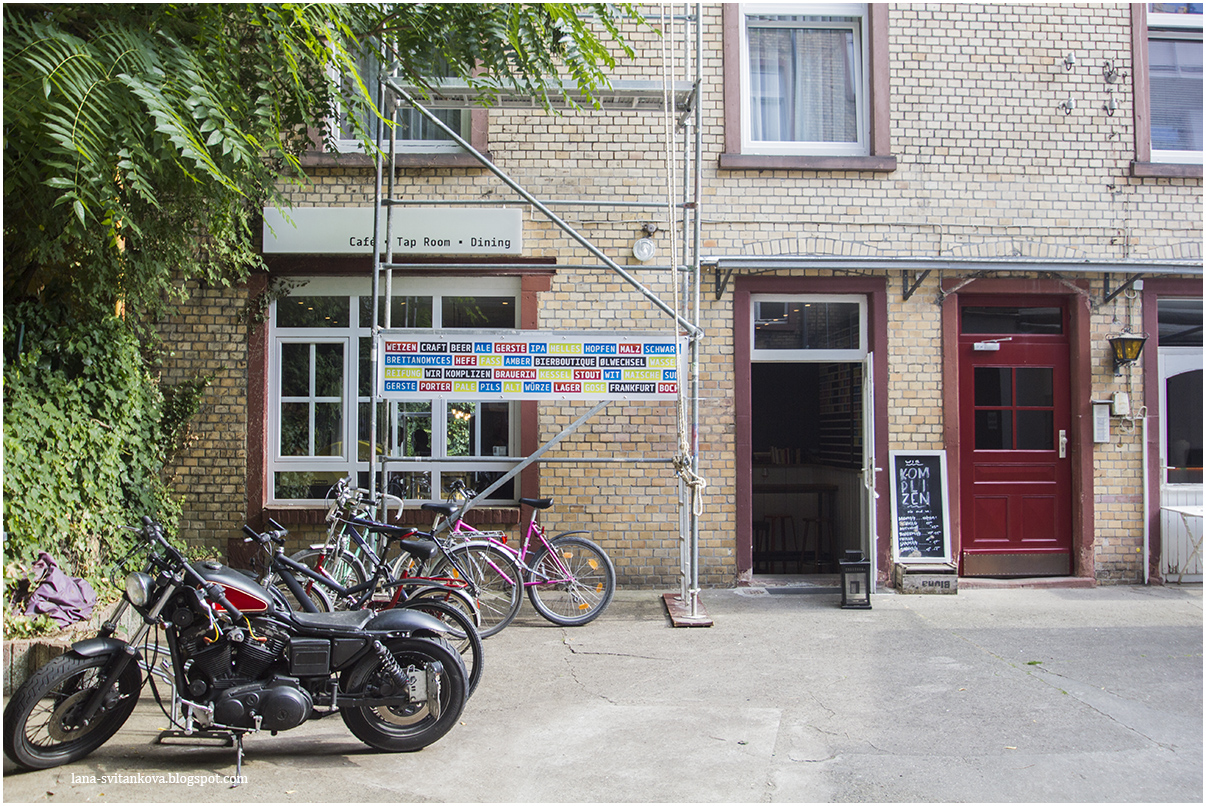
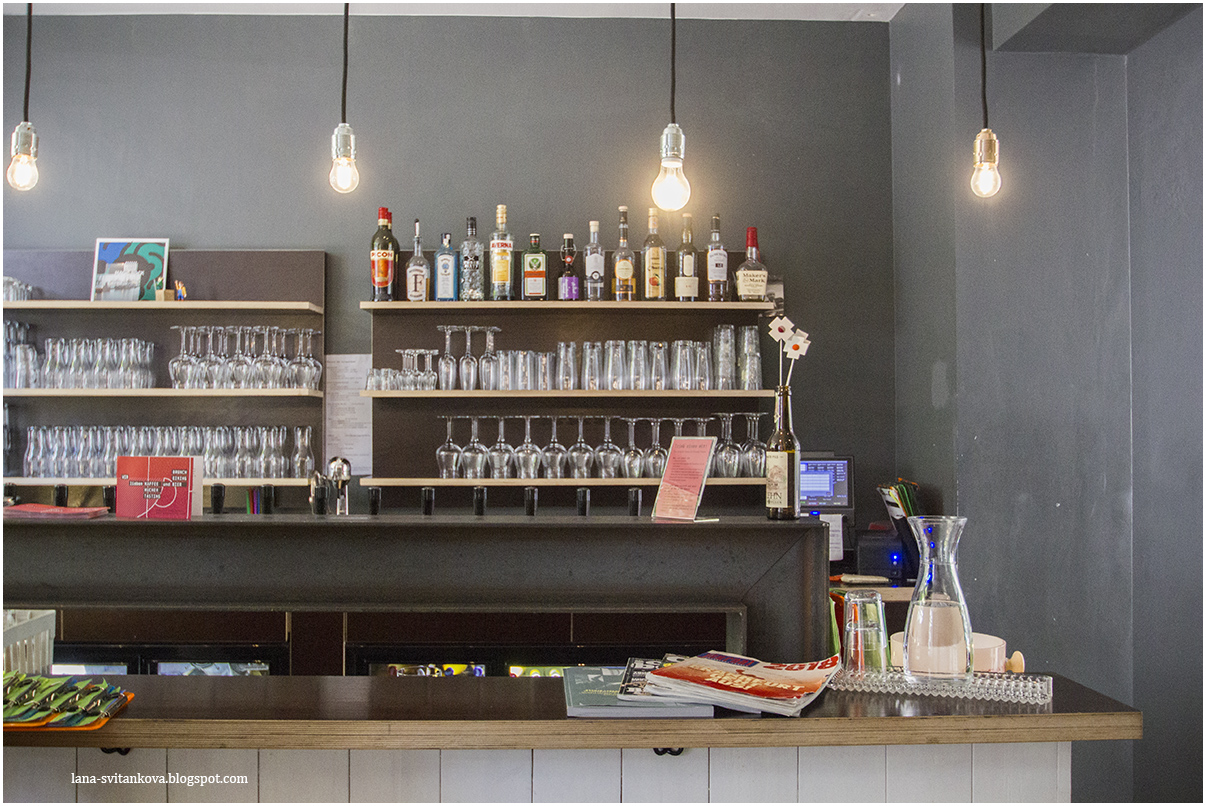
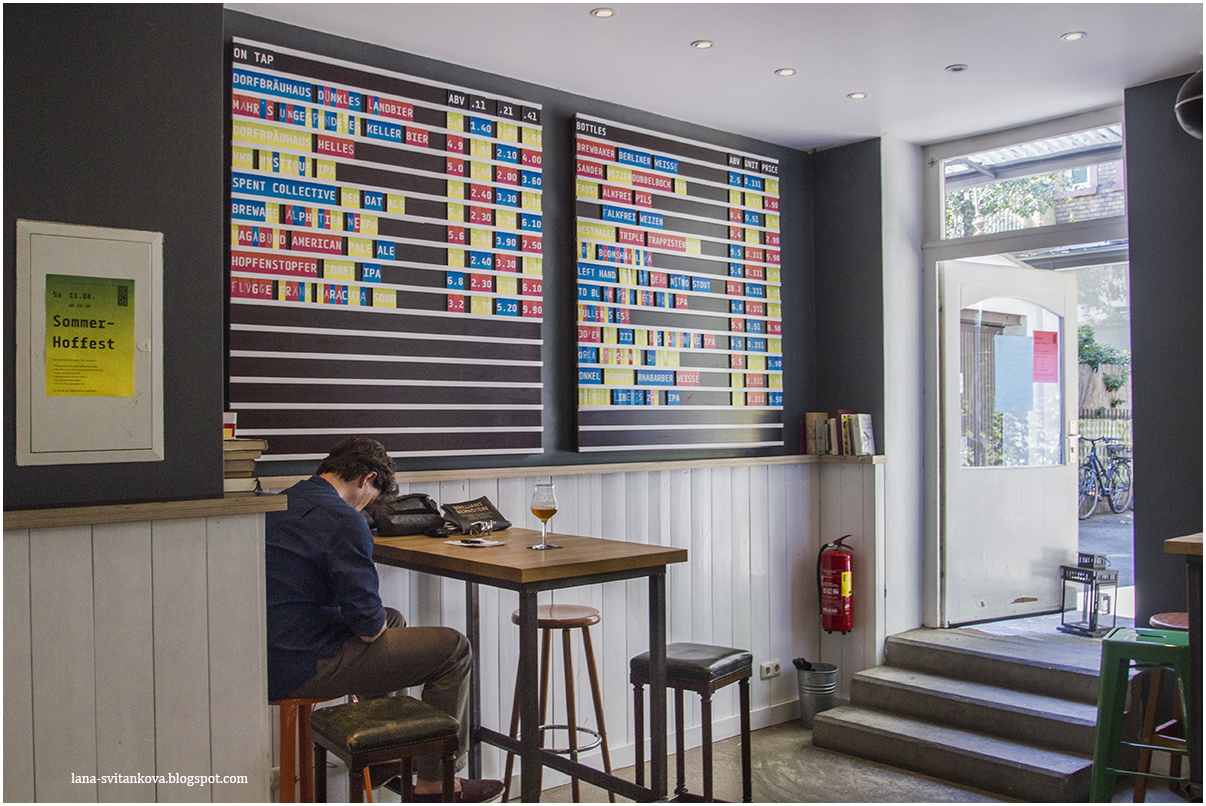
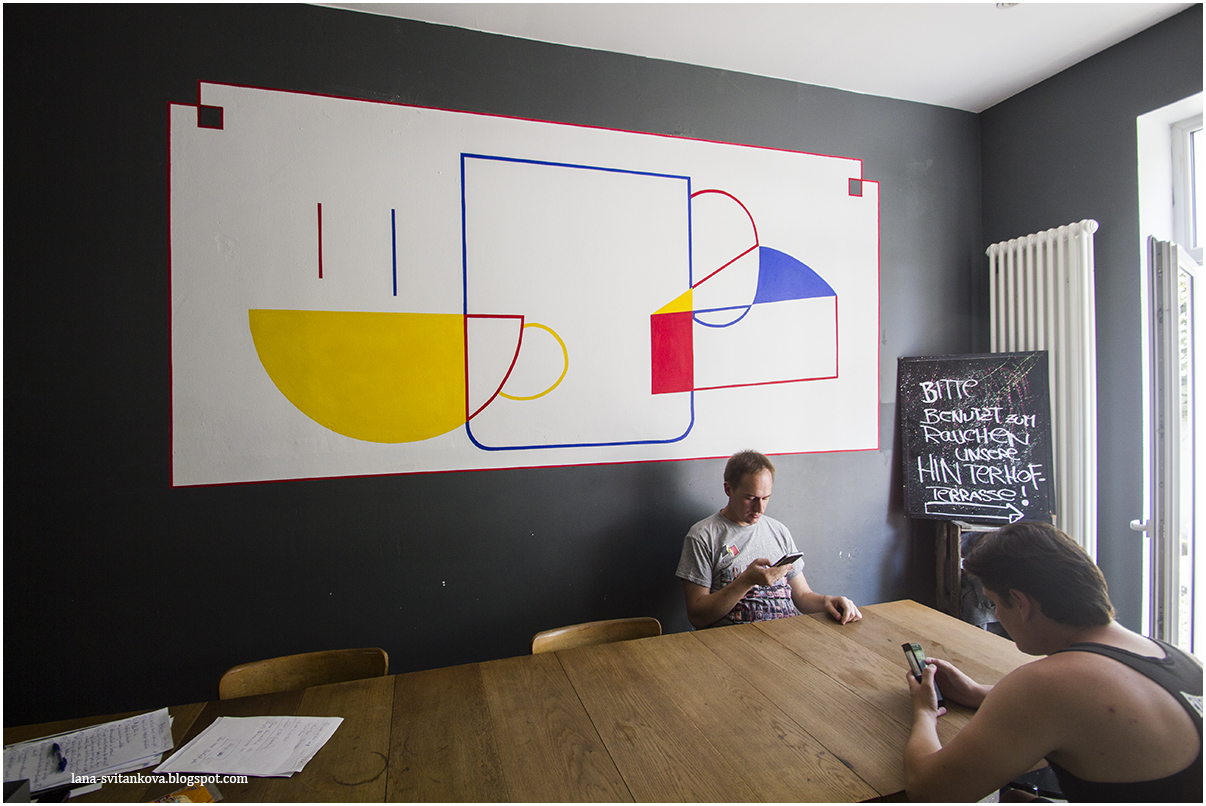
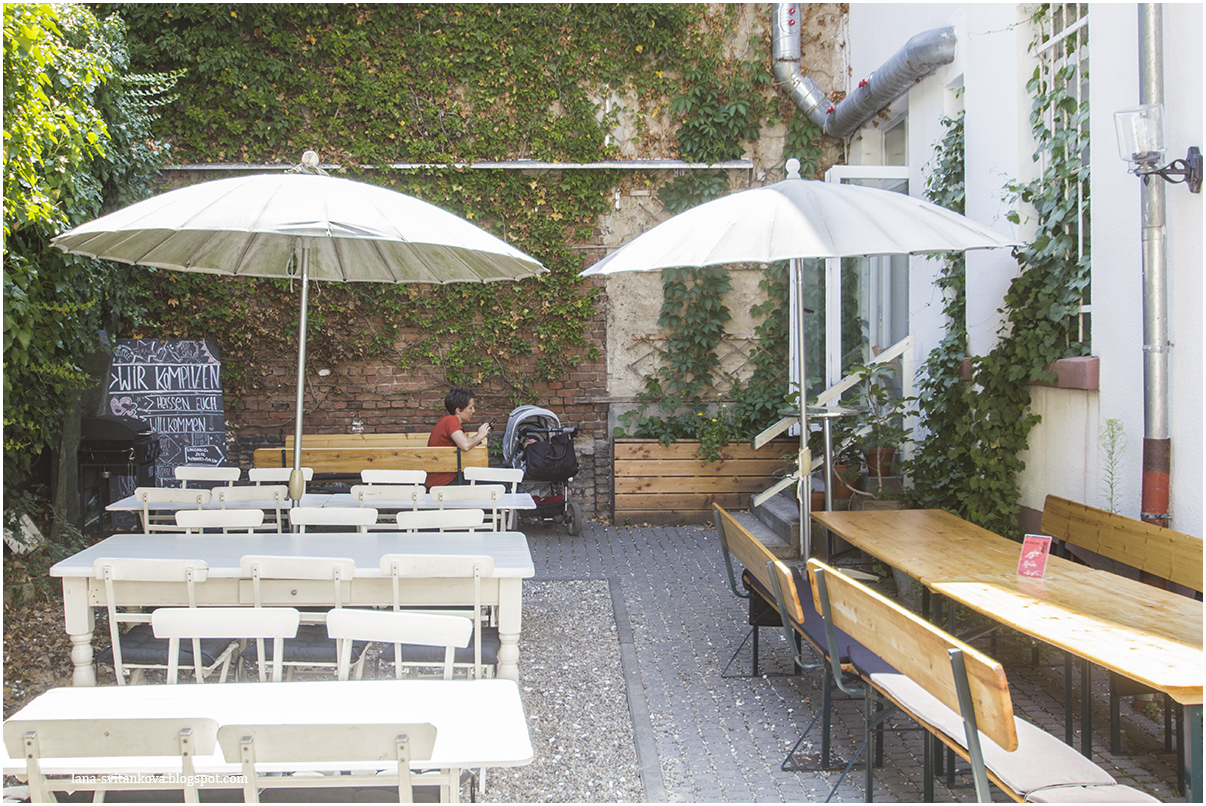
Wir Komplizen (Egenolffstraße 17, wir-komplizen.de) - мега-затишний заклад з 10ма кранами, пристойним холодильником, приємною терасою, невеликим меню їжі і супер-френдлі командою. Ми жили в одному кварталі звідта, тому він став нашою першою точкою перетину з місцевою пивною культурою і відсутністю термінала для оплати карткою. Раджу.
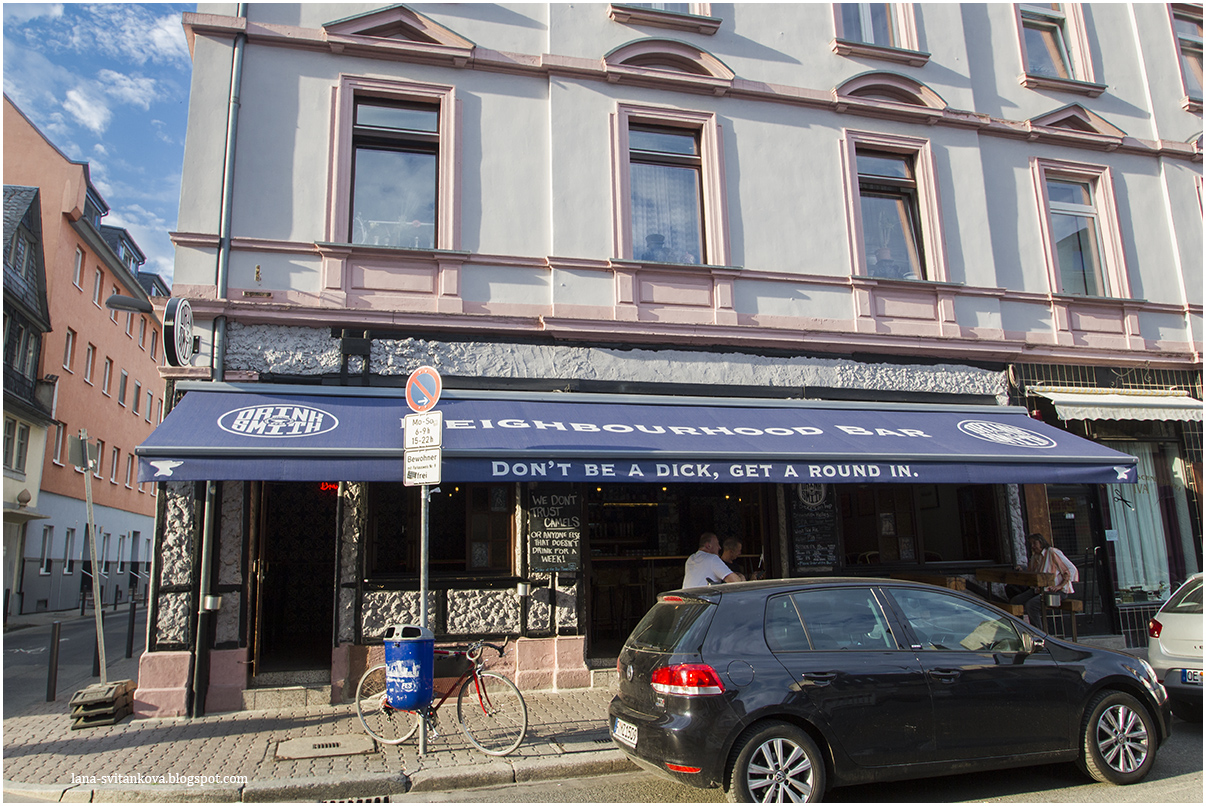
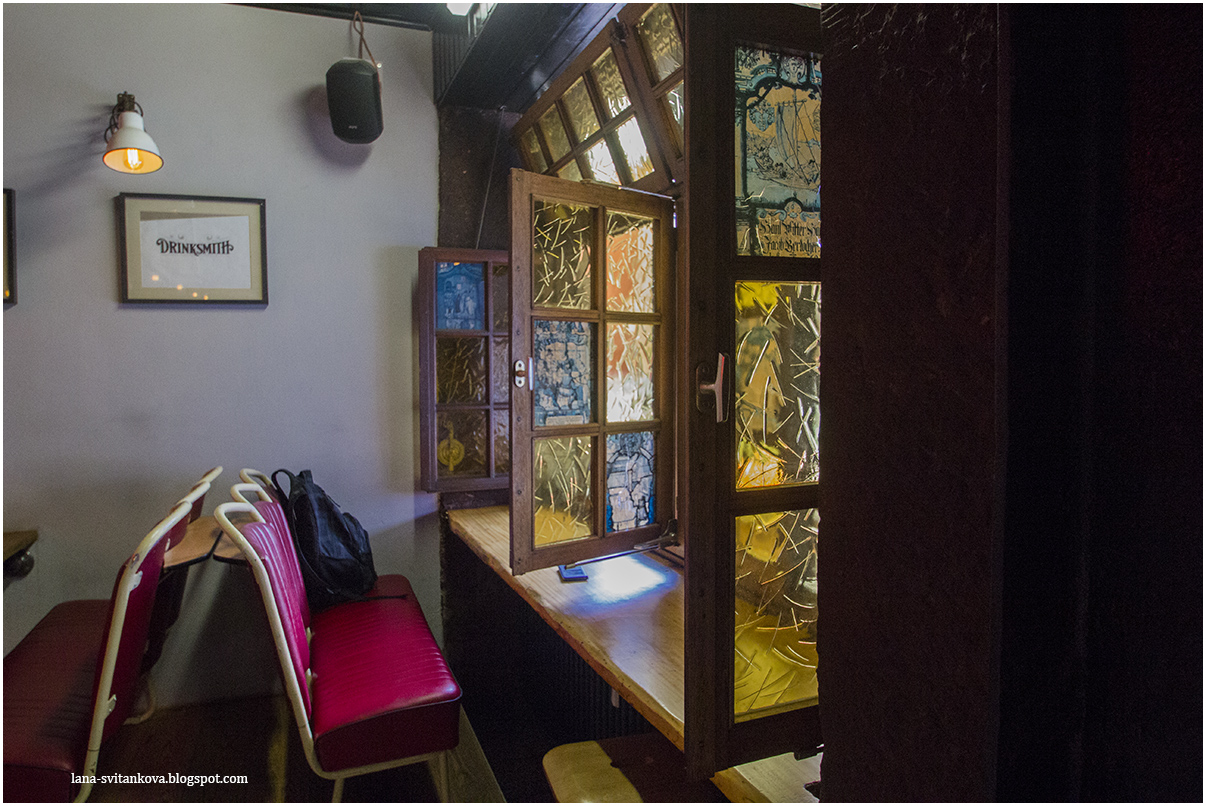
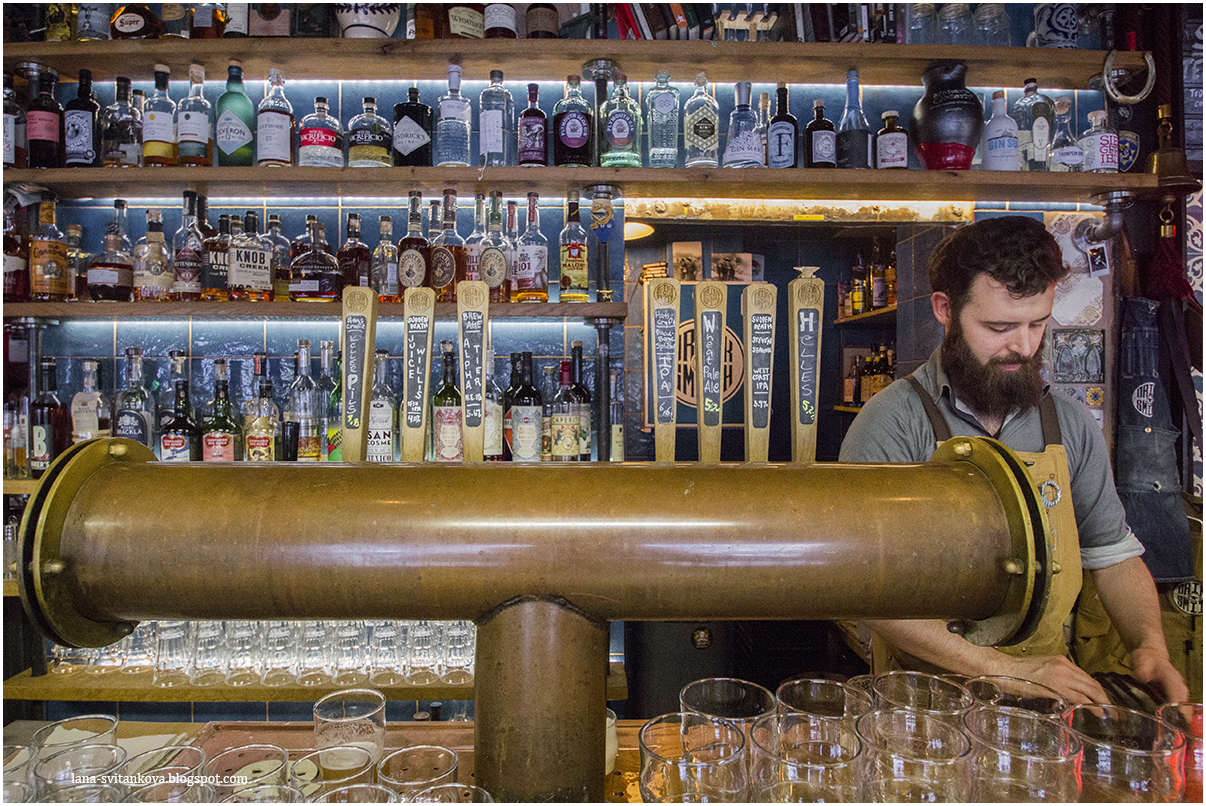
Другий по затишності - Drinksmith Neighbourhood Bar (Wallstraße 14, drinksmithbar.com) 6 кранів, атмосферно, приємно потеревенити з барменом, ніякого галасу (вдень), пиво добране дуже ок, пінти і напівпінти (не дуже дешево, півпінта IPA 4 євро, пінта 7), лише готівка. Чомусь серед місцевих користується популярністю більше як коктейльний заклад, ніж пивний.
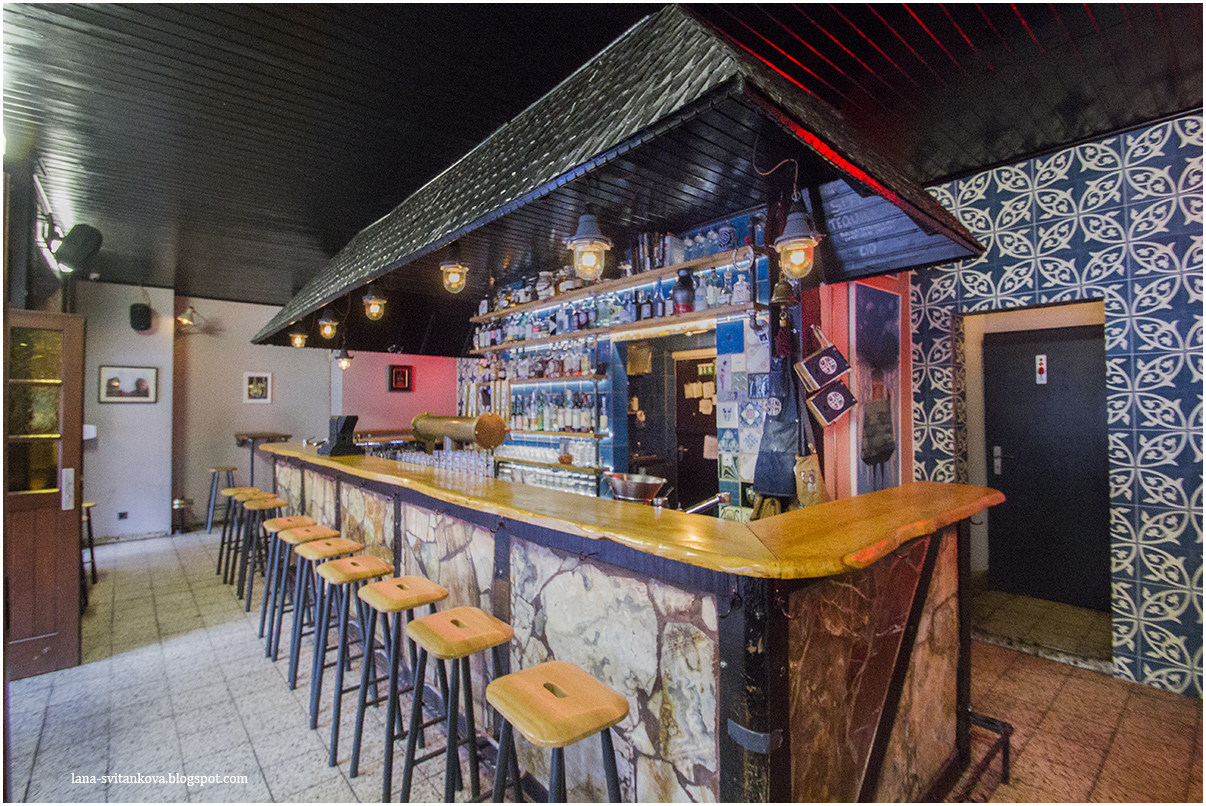
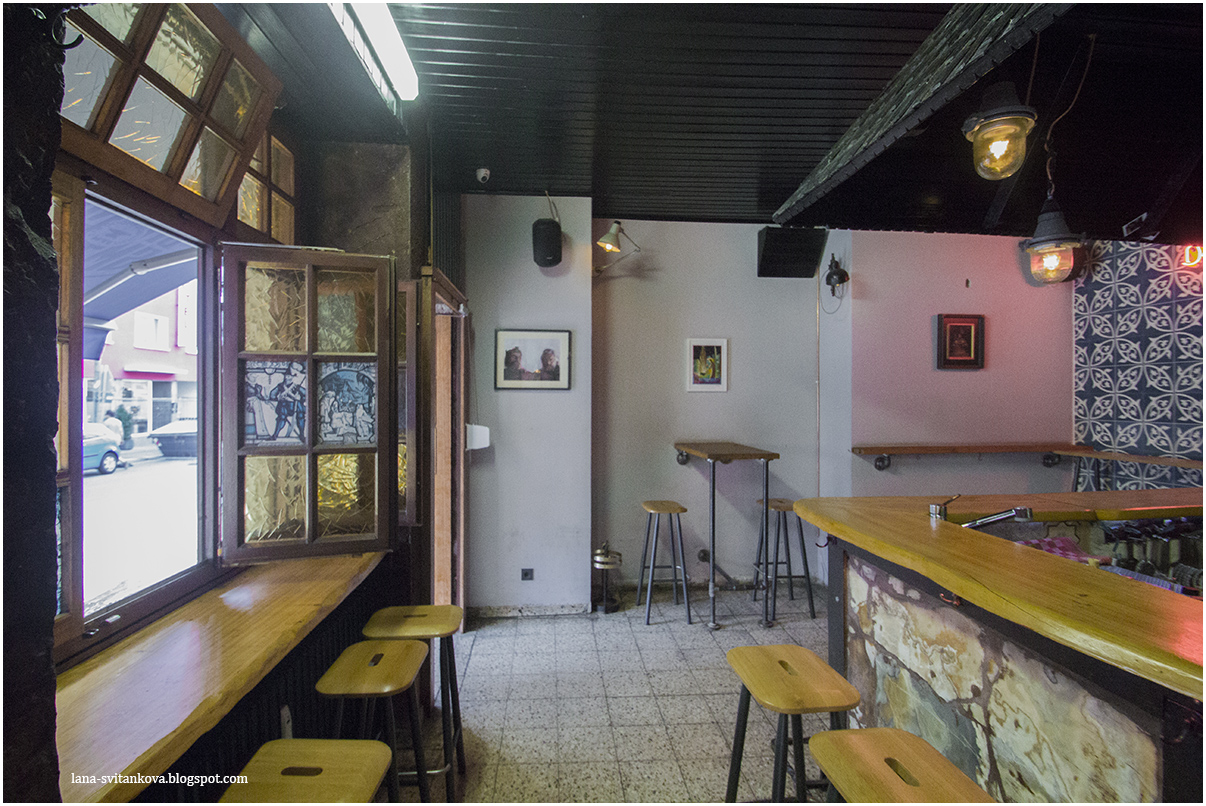
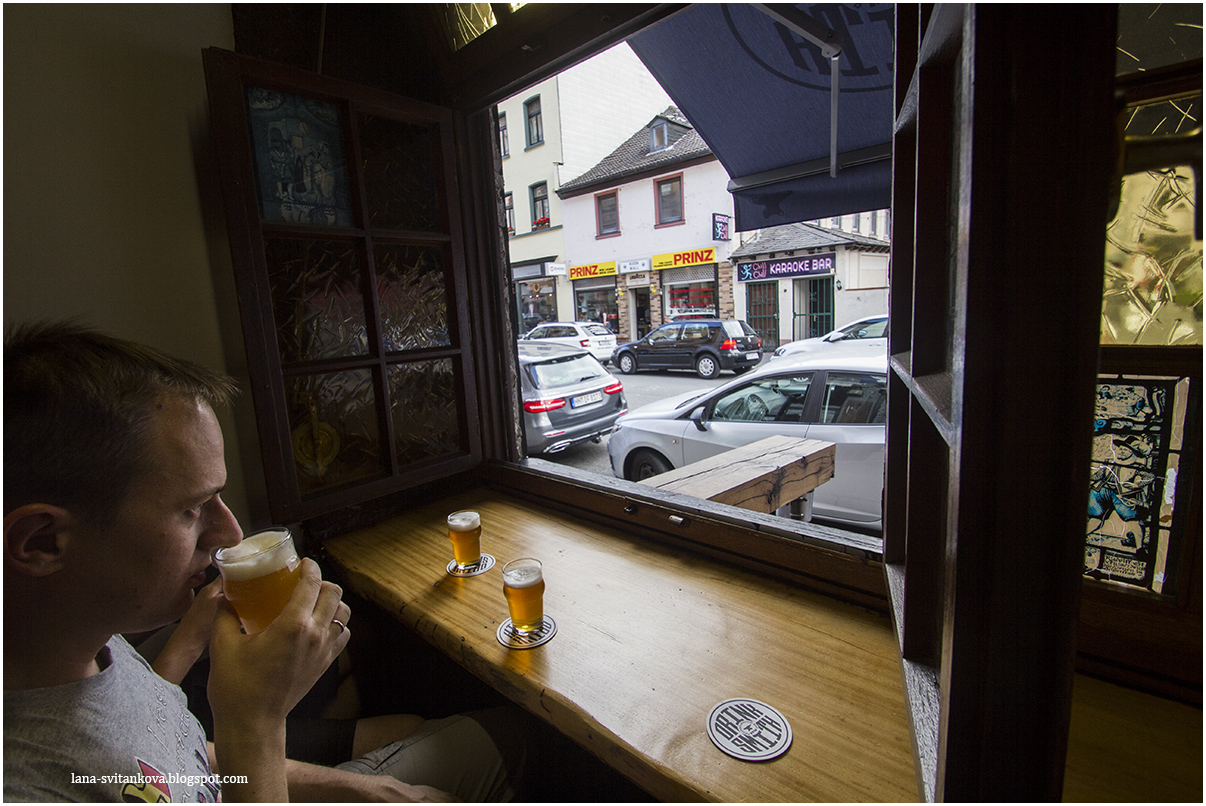
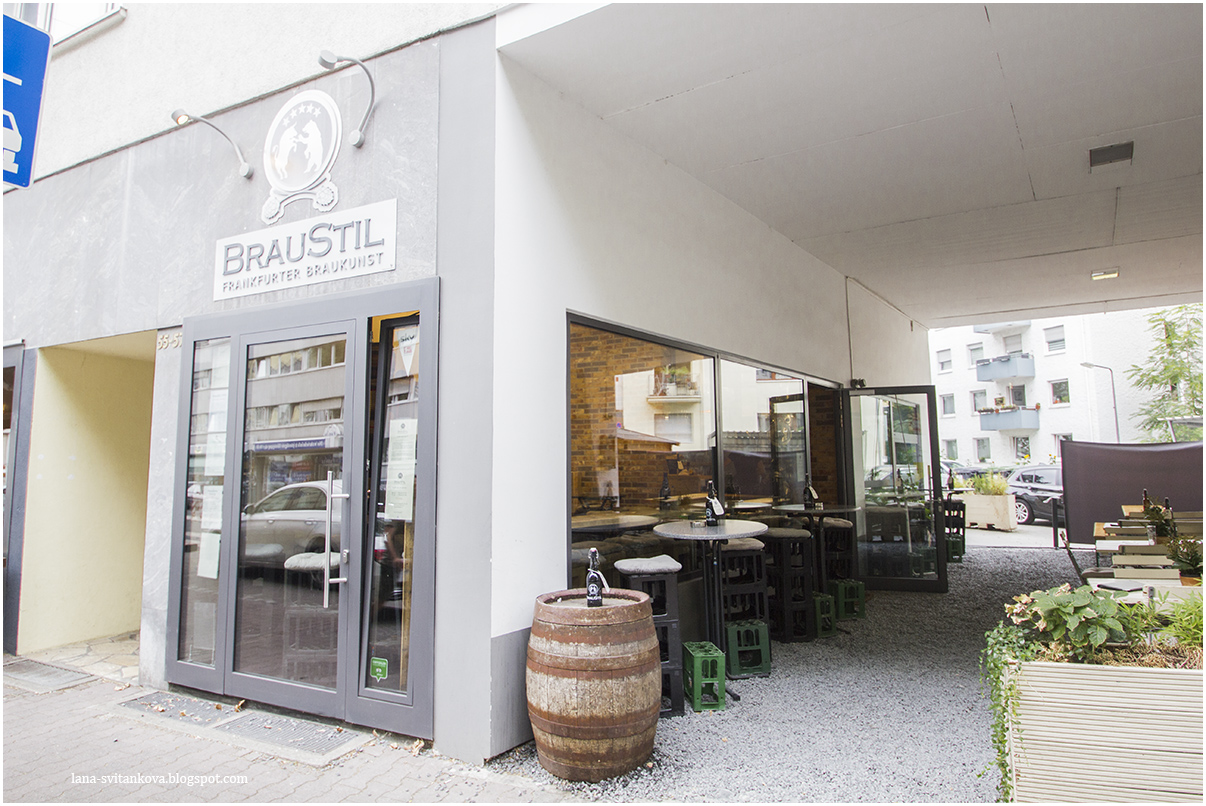
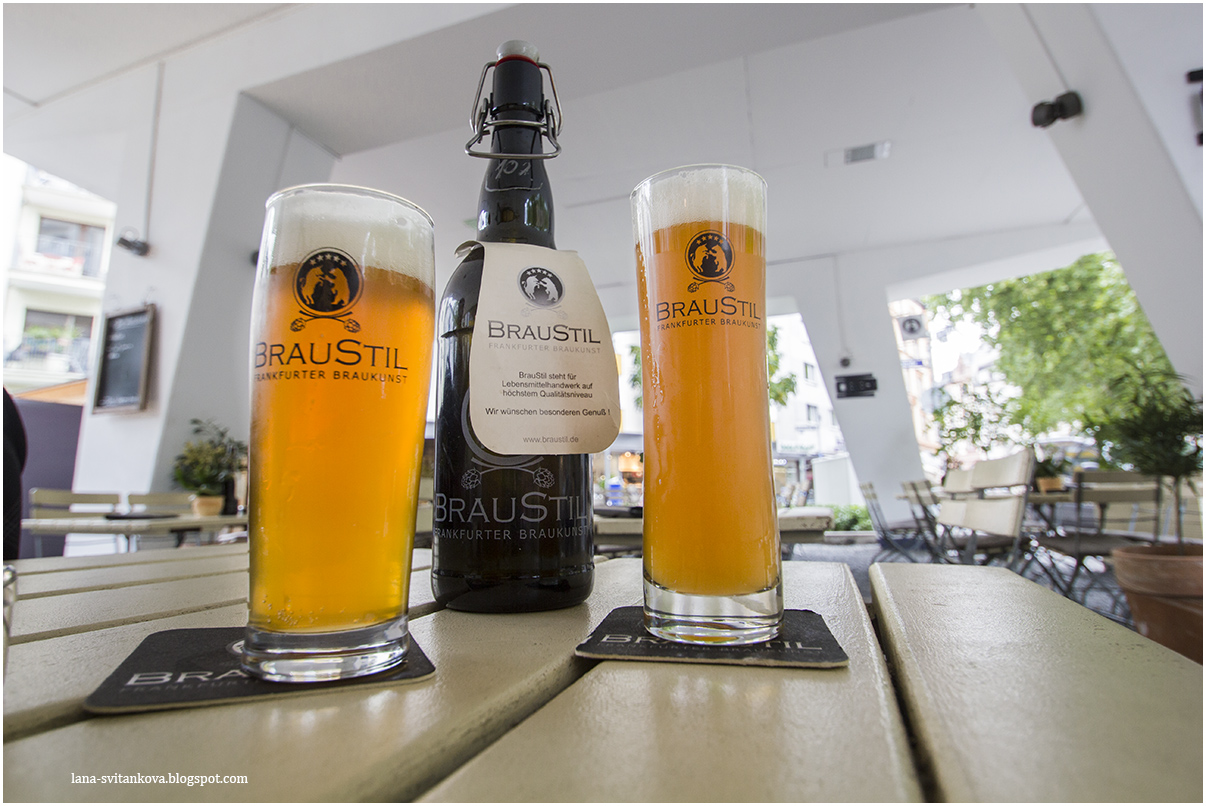
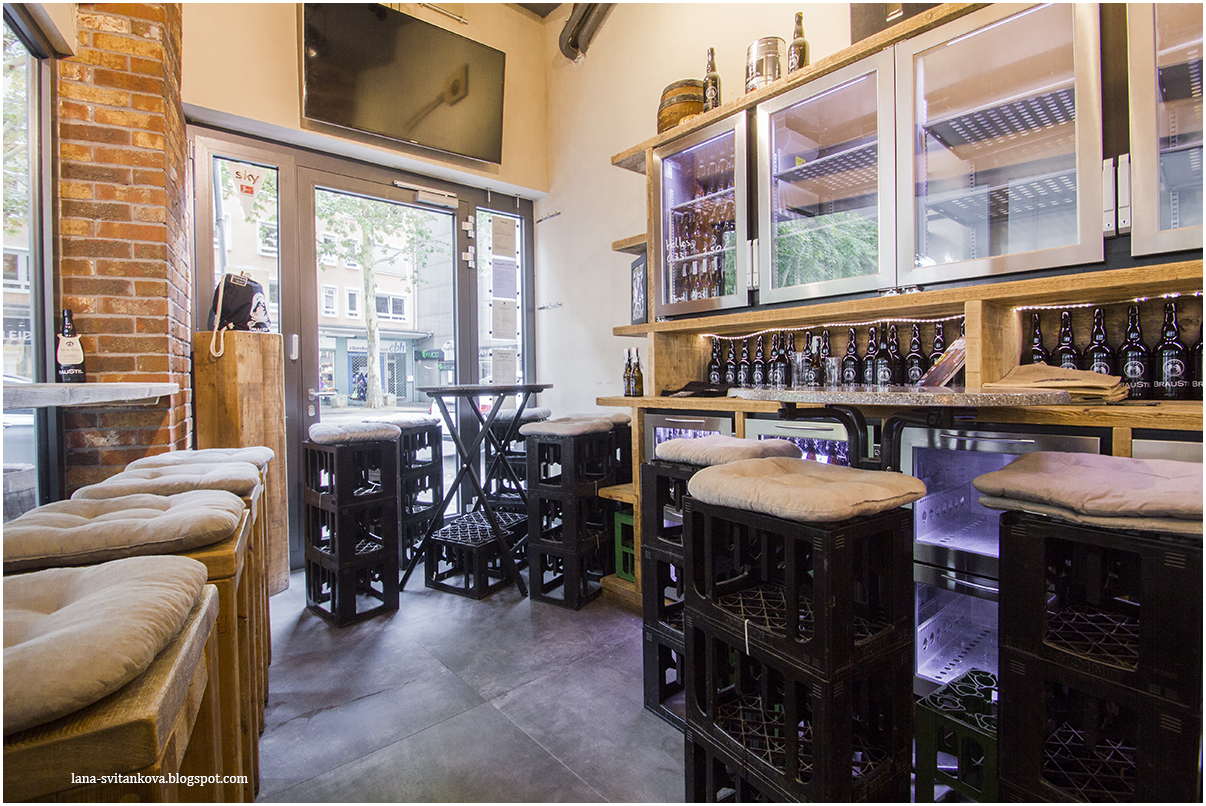
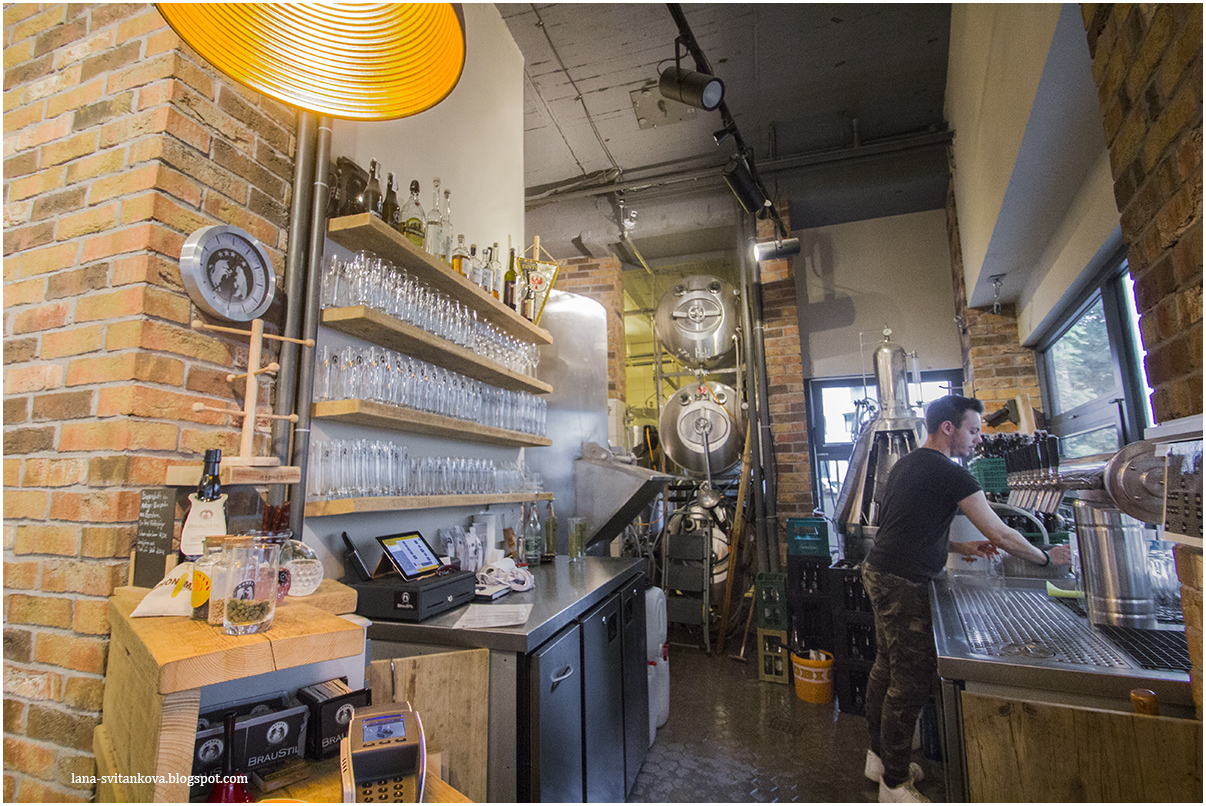
BrauStil (Oeder Weg 57, braustil.de) - брюпаб з системою на 8 кранів, але в аявності в кращому випадку 4, а в наш візит пива було взагалі два - Helles i California Ale. Ну, таке. Термінал, гроулери з собою (під депозит).
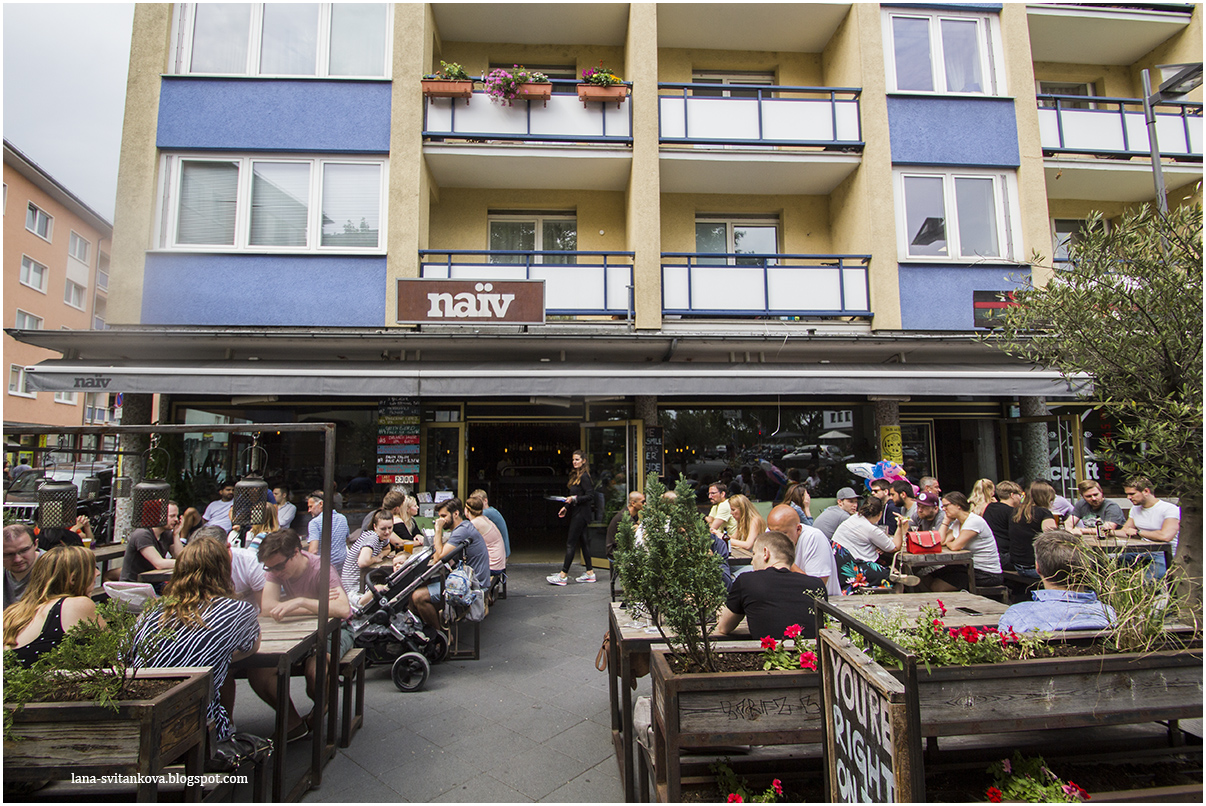
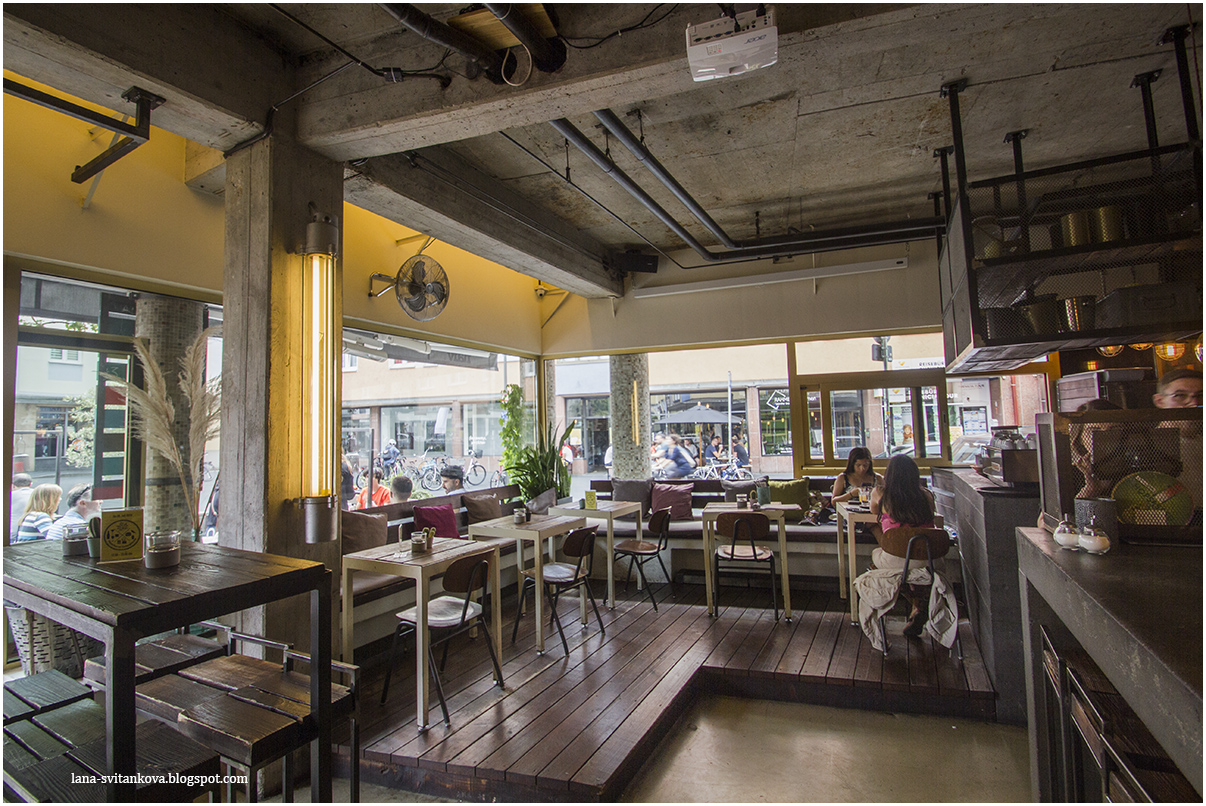
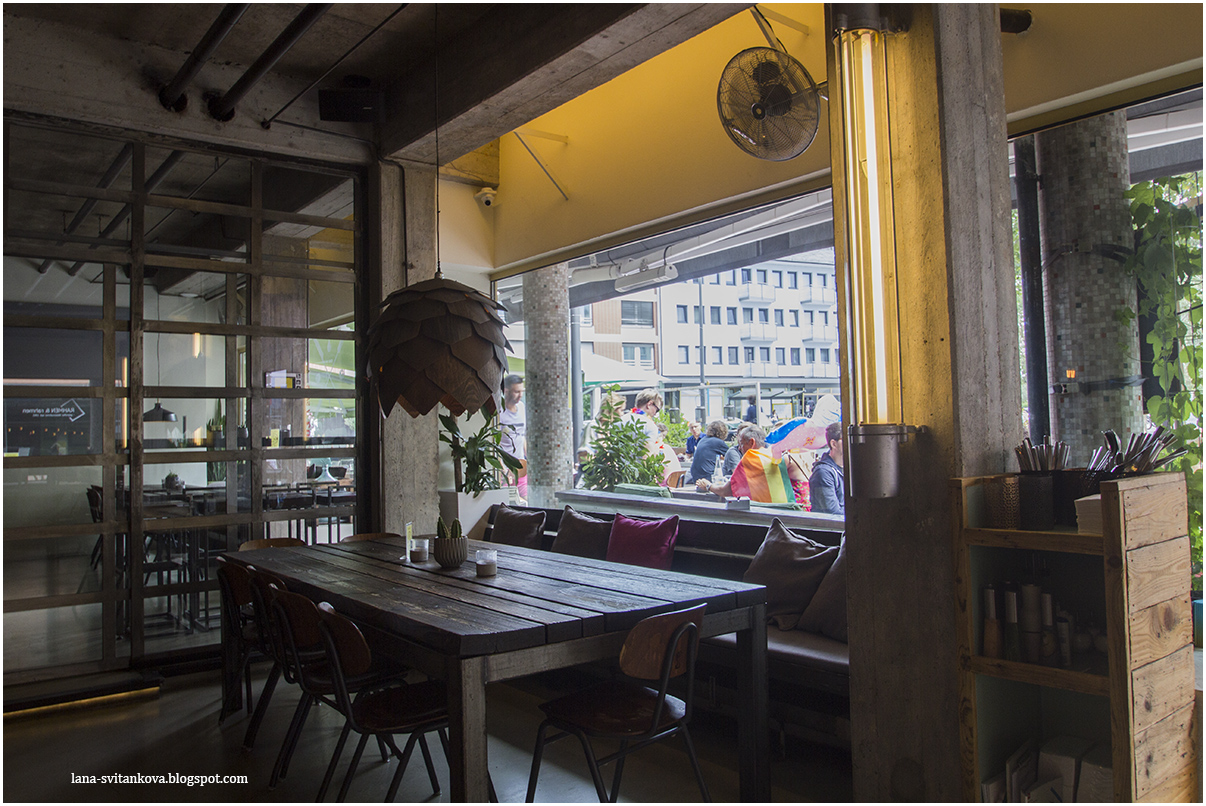
Найширший вибір пива у naïv (Fahrgasse 4, naiv-frankfurt.de), що є і закладом і крамницею по сусідству. Кранів 10, але є ще надцять сторінок пляшкового пива, яке відрізняється ціною у закладі і крамниці настільки мінімально, що мені здається, взагалі не відрізняється. Вперше бачу такий підхід. Є їжа - хороша смачна пивного плану їжа, порції великі, навіть в максимальну посадку команда працює злагоджено і швидко. Завдяки крамниці познайомилися з пивом чудової місцевої пивоварні Flugge, яка варить либонь не найдєрзновєннєше пиво, яке ми зустрічали в Німеччині, всілякі брет ІРА, сезони, роггенбіри, краса. ожна розрахуватися краткою. Однозначна рекомендація.
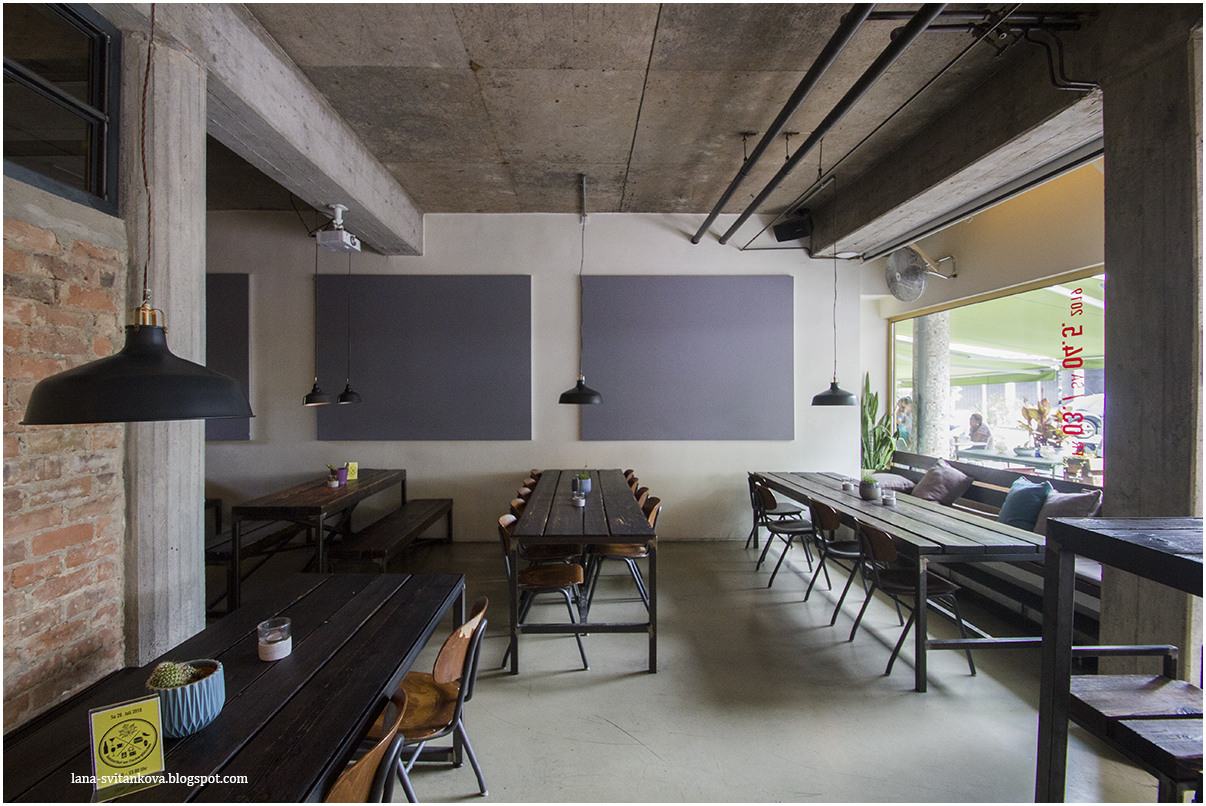
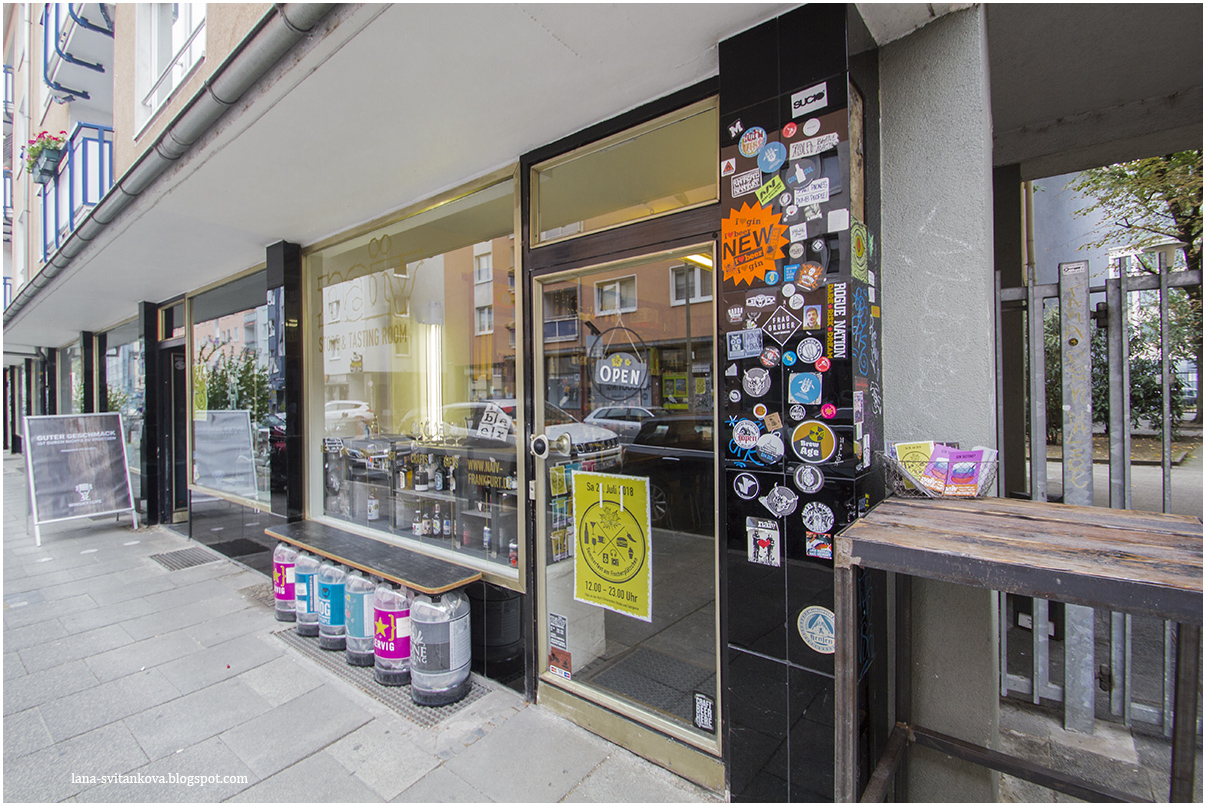
А якщо повернутися до кави... Ходіть у The Holy Cross Brewing Society, Café No.48, Hoppenworth & Ploch Rösterei, Bohnerie café // röstsalon - усьо фантастіш.
Друге - влітку особливо не розраховуйте на кольорову різноманітність пива, сезонність тут мега-потужна. В жодному з закладів темного пива на крані ми не знайшли.
Дві крамниці - Kiosk45 і Bierboutiqueeee Ølwechsel ми перевірити не змогли, одні були у відпустці, другі закриті у вікенд. Die Bierothek® у Skyline Plaza має невеликий, але цікавий вибір німецького пива, імпорт переважно поширені бельгійці, але є і японці, естонці, французи. Дуже рекомендований Yok-Yok виявився катастрофічно нудним в сесні вибору, і більше вино-дрінко-орієнтованим. Гастро-поверх Galeria Kaufhof теж не порадував.
Wir Komplizen (Egenolffstraße 17, wir-komplizen.de) - мега-затишний заклад з 10ма кранами, пристойним холодильником, приємною терасою, невеликим меню їжі і супер-френдлі командою. Ми жили в одному кварталі звідта, тому він став нашою першою точкою перетину з місцевою пивною культурою і відсутністю термінала для оплати карткою. Раджу.
Другий по затишності - Drinksmith Neighbourhood Bar (Wallstraße 14, drinksmithbar.com) 6 кранів, атмосферно, приємно потеревенити з барменом, ніякого галасу (вдень), пиво добране дуже ок, пінти і напівпінти (не дуже дешево, півпінта IPA 4 євро, пінта 7), лише готівка. Чомусь серед місцевих користується популярністю більше як коктейльний заклад, ніж пивний.
BrauStil (Oeder Weg 57, braustil.de) - брюпаб з системою на 8 кранів, але в аявності в кращому випадку 4, а в наш візит пива було взагалі два - Helles i California Ale. Ну, таке. Термінал, гроулери з собою (під депозит).
Найширший вибір пива у naïv (Fahrgasse 4, naiv-frankfurt.de), що є і закладом і крамницею по сусідству. Кранів 10, але є ще надцять сторінок пляшкового пива, яке відрізняється ціною у закладі і крамниці настільки мінімально, що мені здається, взагалі не відрізняється. Вперше бачу такий підхід. Є їжа - хороша смачна пивного плану їжа, порції великі, навіть в максимальну посадку команда працює злагоджено і швидко. Завдяки крамниці познайомилися з пивом чудової місцевої пивоварні Flugge, яка варить либонь не найдєрзновєннєше пиво, яке ми зустрічали в Німеччині, всілякі брет ІРА, сезони, роггенбіри, краса. ожна розрахуватися краткою. Однозначна рекомендація.
А якщо повернутися до кави... Ходіть у The Holy Cross Brewing Society, Café No.48, Hoppenworth & Ploch Rösterei, Bohnerie café // röstsalon - усьо фантастіш.
During the last five or six years all my vacations bit by bit, almost unnoticeably but unavoidably have turned into beercations. My itineraries revolve around breweries I want to visit, festivals I want to attend, events I want to participate in, stores I want to leave my money at and people I want to meet. But it seems I’m getting old. I don’t enjoy big vibrant and fast paced cities full of people and adventures as much as I did anymore. Not that I don’t like them at all, no. But I’m helplessly falling in love with tiny towns and villages and special people making something with their own hands and I’m eager to spend time on the road and get to them no matter what it takes. More so, if this people and I are brought together by mere accident, like a post on Facebook, a mention by a distant acquaintance or other intricate way of fate. And I’m extremely happy about the fact that such people exist and these unexpected journeys happen.
“Oh gosh, we’ve overslept the best connection for today!” This was the beginning of one Saturday morning in Belgium. Not your usual morning, because it was a morning of our 10 day long trip to the Holy ground of beer. Yes, I know it’s terribly cliched, but totally true nonetheless. Almost a month ago we spontaneously (yes, pun is intended) agreed this adventure with a brewery I accidentally found on the map of Milk the Funk society, people who love mix- and spontaneously ferment things. Antidoot doesn’t even sell beer yet, brothers Tom and Wim Jacobs only brew and welcome visitors some other Saturdays, but they are famous already, and it seems everyone knows about them, including two Swedish distributors whom we’d met in the afternoon. But I get ahead of myself.

Якщо ви думаєте, що хайп - це круто і всі його хочуть, то я пропоную вам ще раз подумати.
Our brewery is yours (Наша пивоварня належить вам)

Талліннська пивна сцена продовжує розширятися.
Продовжимо говорити про дивні (і небажані) смаки у пива?
Частина номер один була отут зі штуками значно більш поширеними, ніж ті, про які йтиметься нижче, але ці дивні аромати в пиві теж зустрічаються. Звідки і що робити.


У наступному випуску ми точно згадаємо "лікарняний набір" - лейкопластир, йод і бинти, а також якісь інші смакоти.
Пийте хороше пиво, вимагайте хорошого пива. Не соромтеся доречно коментувати ґанджі і тоді їх буде менше.
Частина номер один була отут зі штуками значно більш поширеними, ніж ті, про які йтиметься нижче, але ці дивні аромати в пиві теж зустрічаються. Звідки і що робити.

Папір, картон, переважно мокрий, вологий чи затхлий
Якщо ваше пиво пахне і смакує, як мокра картонна коробка чи пачка старих газет (я не питатиму, хто жував картон чи газети), то воно або старе, або щось - а саме надмірний контакт з киснем на якомусь етапі виробництва - пішло не так. Паперові ноти є найбільш розповсюдженою ознакою старіння пива. Спочатку воно губить свою свіжість і хрусткість, потім солодшає: у смаку з'являються карамель, мед, віск, а потім - папір. Все це результати окислення. Саме тому виробники, інженери, світлі голови індустрії пухнуть мізками, як зробити контакт пива і повітря (кисню) мінімальним. Під час наливу у пляшки витісняють зайве "місце" у горлечку пивом, СО2, вигадують якісь інші надтехнологічні рішення, і все заради того, щоб уникнути швидкого старіння. Але тут працюватиме не лише кисень, а й температура, у теплих умовах всі хімічні реакції протікають швидше. Саме тому найкраще місце зберігання пива - темне, холодне і не надто вологе. Ми відволіклися від паперу. Це одна з тих "побічок", які впливають і на аромат, і на смак, у більшій мірі на смак. Головна панацея для пивоварів - мінімізувати надмірний контакт з киснем на етапі аерації сусла, розливу в пляшку, і взагалі, де лише можна, а для любителя пива - пильнувати строк придатності, а краще дату розливу.

Розчинниковий, змивачка для лаку
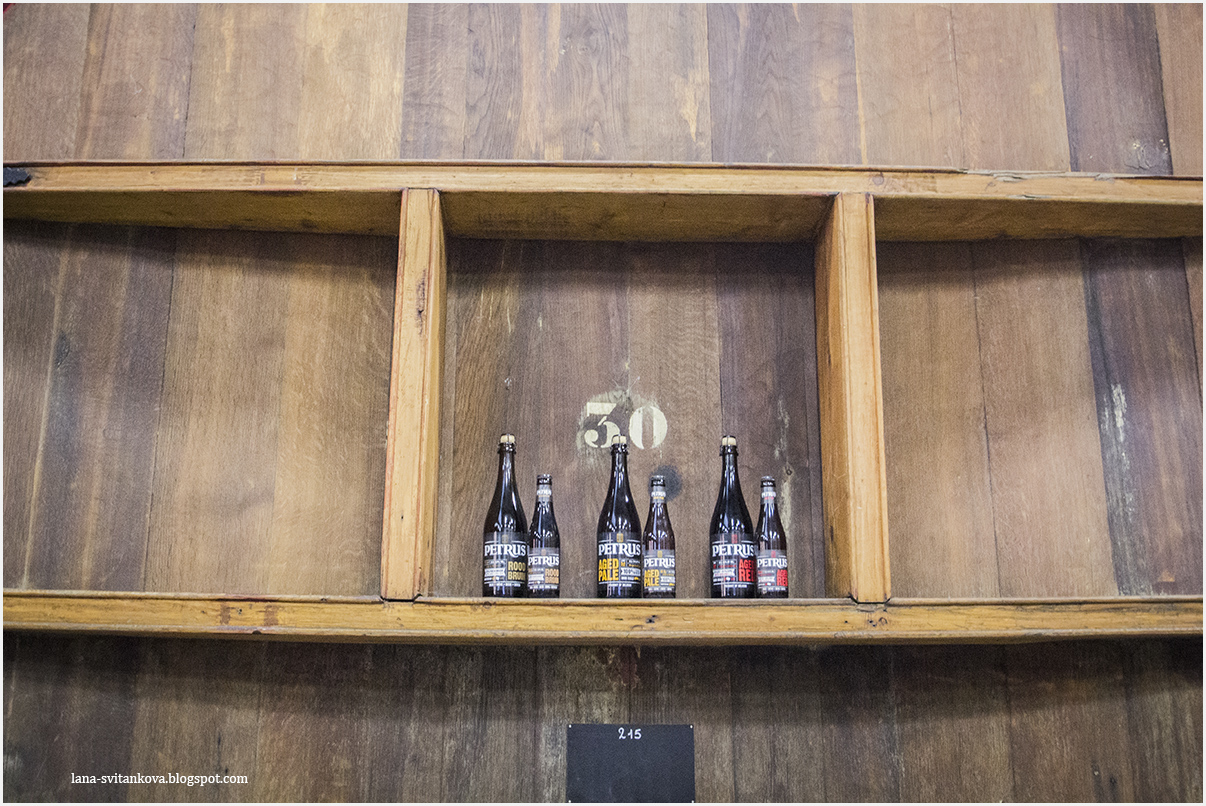
Найдивніше, подібний аромат (а це аромат) може бути як доречним, так і ні. Все залежить від того, в якому пиві ви його знайшли. Найпоширеніша причина появи етилацетату - біосинтез під час бродіння, в якому спирт взаємодіє з оцтовою кислотою і утворює ефір. І, як у більшості випадків з ефірами, відбувається це частіше за високих температур бродіння. Тобто, якщо у пиві десь завелася оцтова кислота, і дріжджам було надто тепленько, матимете такий ефект. Для переважної більшості пива це неприпустимо. Але до подібних біохімічних викрутасів найбільше схильні бельгійські дикі пива, де дріжджі продукують етилацетат у великих кількостях (якщо хочете перевірити особисто, скуштуйте Petrus Pale, який нещодавно завезли
Сільпо, Duchesse De Bourgogne теж раз-у-раз радує подібим ароматом, але якщо бельгійські кислячки - не ваш коник, приємного у таких експериментах буде мало). У різних людей різний поріг сприйняття цієї речовини, і приємний комусь аромат може здатися майже огидним.
Сільпо, Duchesse De Bourgogne теж раз-у-раз радує подібим ароматом, але якщо бельгійські кислячки - не ваш коник, приємного у таких експериментах буде мало). У різних людей різний поріг сприйняття цієї речовини, і приємний комусь аромат може здатися майже огидним.
Окремий пункт для домашніх пивоварів - якщо у вас трапляється подібний ефект, але ви впевнені, що пильнували чистоту і температуру, і зараження у вас немає, але ви користуєтеся пластиковим начинням - перевірте його якість (food-grade), бо причиною може бути саме воно.

В'яжучий
Це приблизно, коли язик отак зав'язується у вузлик, або коли їси нестиглу хурму чи довго жуєш виноградну шкірку. Винуватці таких спец-еффектів у пиві - рослинного походження (але насправді - руки пивовара). І переважно це або солод, в чиїх оболонках містяться таніни, і вони або вимиті надмірним промиванням надто гарячою чи лужною водою, чи помел був надто дрібний, або хміль, якого дали забагато. В цілому погано складений рецепт, де солод не балансує хмелеву гіркоту, в'яжучість теж проявлятиме. У дуже рідкісних випадках це є наслідком зараження ацетобактером. Пиво таким не має бути.
У наступному випуску ми точно згадаємо "лікарняний набір" - лейкопластир, йод і бинти, а також якісь інші смакоти.
Пийте хороше пиво, вимагайте хорошого пива. Не соромтеся доречно коментувати ґанджі і тоді їх буде менше.

Відкоркували ми вчора маленьким постійним клубом а̶л̶к̶о̶г̶о̶л̶і̶к̶і̶в̶ дегустаторів Boon Discovery Box, в якому 4 пляшки гьозів - кожен з окремої бочки з-під конкретного напою і маленький симпатичний буклет, з інформацією про кожен бленд, підказками з наливу і навіть органолептичною сіткою для нотаток.
І саме ці пляшки, а власне, напис на них "монобленд" запустив ціле розслідування в спробі зрозуміти, чим має бути гьоз все-таки офіційно . "Монобленд" з точки зору мови, це як гарячий лід. Як може бути суміш з чогось одного? (Звісно, це можна пояснити процесом, але все одно дивно). Цей казус і нерозуміння, як з однієї бочки можна було вичавити 3 пива - однорічне, дворічне, трирічне одночасно і де його зберігати, і запустило все це колупання.

When I hear the omnipresent “Beer is a man’s drink”, my left eye starts twitching. Sometimes both eyes.
When a girl asks bartender for a beer suggestion and he’s overly eager to sell her “something girly, fruity and sweet” I wonder if he has noticed me drinking an Imperial Stout just a bit further the counter. But she is deprived of it.
When I see beer on a shelf, a beer sporting derogatory name or label more fit for a pubescent joke, I lose all intent of buying it. I am deprived of that beer.
Beer is for all people, but it seems some of them are trying hard to persuade others that not everyone is welcomed in the beer industry.
Why beer is a woman’s drink as well as man's?

Because both took part in supplying ingredients, brewing and drinking from the very beginning.
Sumerian deity and patron of brewing is Ninkasi. A goddess. The Hymn to Ninkasi is considered the first ever written beer recipe. By the way, almost all Sumerian taverns were owned by women.
Kalevala, Finnish epic poem, tells the story of Osmotar, brewster goddess, making beer of water, hops, barley and bear saliva (don’t try this at home! The recipe is very detailed though, and takes twice as many poetical rows as the story of the world’s creation).
Saint Brigid of Kildare was reputed to turn water into beer for lepers. It is uncertain whether this beer cured them, but at least it quenched their thirst.
Incan aclla, the chosen female virgins, kept the sacred fires burning and brewed beer in their spare time (chewed, to say more exactly, but whatever).
Fancy facts, not gods or saints? Ok, let’s turn to history.
A famous writer, philosopher, and naturalist, abbess Hildegard of Bingen is said to be the first to have mentioned preservative qualities of hops in her medical work Liber Subtilitatum Diversarum Naturarum Creaturarum.
If you think about how similar beer brewing is to everyday cooking, next fact won’t surprise you. During the Middle Ages (12-13th century) brewing was decentralized and sporadic, mostly done for personal consumption, just as bread baking, preserving, cooking, and maintained by women. Later a term alewife/brewster emerged, a female who takes brewing as a trade. This job wasn’t considered very profitable or respected, but nonetheless better fare than being a servant or a prostitute. And there is a proof of this. The most precise papers in the history, tax registers, keep hundreds of female names and volumes of tallage they paid. So far so good. After the Black Death came and left, the amount of beer consumed had risen up considerably, and then industrialization started and went in full swing. Step by step men had been driving women out of brewing, widows and single women first, married brewsters later. If you wanted to brew in bigger capacities, you needed an equipment, and mostly that would demand more funds than you owned. And if you were a woman… Well, you just didn’t have enough credibility. At best, woman could inherit a brewery from her late husband, but if there were no male heir, it was usually sold. And the more profitable, commercial and large-scale brewing became, the more Guilds came into power, the fewer women stayed in the industry. Ale, Beer, and Brewsters in England by Judith M. Bennett is a very enlightening read.
Ok, let’s leave production for now; but how and when did beer, consumed by everyone, become “a man’s drink”? Reasons are plentiful, socio-cultural, economical, and special thanks goes to Miller, which started selling “High life” not as a beverage, but a lifestyle. Thankfully change is the only constant thing whatsoever, so it’s a high time (pun intended) to overthrow stereotypes. Carefully nurtured by media, hospitality industry, PR-departments and sadly enough by brewers themselves, it’s a white middle-aged man who embodies the image of target craft-beer audience. Yes, that bearded, charismatic loveable guy in a checkered shirt and a beanie, owner of a few tattoos and a shining smile. And if it’s not enough, women are not considered knowledgeable and credible sources of beer wisdom, though ability for learning, self-education and getting experience is nothing connected to gender.
Cases? I have plenty.
Have you ever tried to get in touch with brewers for an interview? If you are a female journalist, it’s highly possible that you’d be either ignored or promised responds forever. Editor-in-chief, male of course, will get answer in a few days. I’ve been there.

A TV-crew wants to get a short video of brewing process and a short interview. You say that the head-brewer will be busy, but a female spokesperson can answer all the questions. The director is very upset and wants “somebody competent”. What does he know of competence? The head-brewer of Orval is Anne-Françoise Pypaert, the first ever female trappist brewmaster. You don’t question the competence of Warpigs brewer either, don’t you?
I could say that such cases take place only in Ukraine, where craft beer revolution has just started, but it’s not true. Stereotypes are blooming everywhere.
Jordanne McMullan (UK, ambassador of BrewDog)
I think it is much more common now for females to know more about beer. A couple of years ago when I first started out on my beery journey, I was working behind a bar. Originally my journey began in the US where the craft beer scene is much further on and women in beer were extremely common. In the UK however, beer can still be subject to the ‘old man’s drink’. Whilst working behind the bar in the UK there was a moment where a man asked me a question about the beers followed by ‘oh you probably won’t know’, which I then went on to ask him more questions and showcase my knowledge about beer.
It is frustrating to feel you have to prove yourself in an industry you are passionate about, but I think that’s why I enjoy it more. I like proving people wrong and changing stereotypes. I find it’s much easier in cosmopolitan places e.g. London where there is a much vaster range and variety of people, which means people are much more open and can avoid stereotypes. But you do still face difficulties in the UK. The key is to not shy away from showcasing your knowledge. Sometimes I pause people and ask them why they assume I don’t know anything about beer. Then if the situation is right, I like to take the lead in the conversation to display my knowledge on the subject. It completely depends on the person and the situation though as some people discriminate because they are unaware of another way of thinking and some discriminate to be rude. You totally have to use your own judgment to decide what they best course of action is, whether it is to stand up for yourself or to educate the other person.

Is it difficult for a female to participate in beer industry? Oh, no. Since I’m not taken seriously as a woman and potential beer expert anyway, is it actually quite easy. I am convinced that only a few women in this country are proactive on the leading position in the beer business, because they know all too well they don’t stand a chance. In the beer business, women are allowed to work as waitresses, to sell stuff, to show their bosom, and to find nice words in the communications with their well-nourished bosses. And that’s it. I don’t know all women in this country, but the two, who really made it and occupy true leadership positions, are Susanne Horn from the Lammsbräu Brewery and Susanne Hecht from the Schneider Weisse Brewery. Some (other) women are in leading positions just because they inherited a brewery or because their husband is a brewery owner. With my knowledge and the 13 years of experience I have proven everything to myself and to others. Deep in my heart, I simply despise men, who do not take me seriously, just because I am a woman. And I definitely will tell all the female beer enthusiast: Go your own way! Connect with people, who take you seriously. When we will be able to truly grasp the difference between men and women, then we will understand, too, why our world is so short-sighted, always chasing for the quick gain, and rarely for the pleasant and responsible sustainability. If more women worked in responsible positions, our beer world would show more responsibility and beauty.
Christina Coady (Canada, Newfoundland, owner of the brewery under construction and future head-brewer)
Canada is such a big country, so I don’t feel like I can speak to all parts of a woman’s experience working in beer in Canada. I do, however, feel like I can speak to Ontario and Newfoundland. I got my start in Ontario. While there were frustrating moments (being questioned on my abilities, strength, and knowledge) during my time in Toronto, Ontario, the beer community and beer fans were mostly encouraging of diversity in beer. There are individuals that use women as objects in their labels, but they are popping up less and less as beer fans are now questioning said labels.
 Newfoundland’s craft beer scene is very new. In the last year several new breweries have opened across the province with women as owners and/ or brewers. There are almost twenty new breweries in planning (including my own) that also have women as owners and/or brewers. This change in women being more involved in management positions is amazing as beer fans here in Newfoundland are becoming familiar with a craft beer movement that already is diverse, rather than watching it become more so.
I will admit, when I am put down by either a beer professional, supplier, or beer fan, it does hurt and (after the incident, when I am away from others) I have shown anger and sadness. But, during said moments, I remember that I am pretty darn good at my job and I love what I do, so I have interesting things to say. I also try to surround myself with amazing men and women who are feminists that believe in what I’m doing, so when I am feeling upset they are there to help me bounce back. So surround yourself with good people. I like to joke that people who are rude or demeaning to women in beer (or who approve beer labels that depict women as objects) are dinosaurs and will be extinct soon enough. But, until that happens, they are still here and cans of beer that make you feel crappy about yourself are still sometimes on the shelves. Having men and women that believe no one should feel like garbage in their profession in your life provides a good sounding board for moments when you need to vent and pick yourself up.


Being a brewer is difficult for anyone regardless of gender. We work with temperature extremes and hazardous materials. We use raw materials that vary season to season with the expectation of continuing to hit a spec and make a product that people love. Production breweries are fast paced and often have unpredictable work hours. These are challenges that all brewers face.
I continue to give 100% of my effort each day at work. I meet or exceed all expectations of my peers and supervisors in my brewing. I continue my brewing education and am always open to learning more.
I have never had to "prove my expertise" to people working in the beer industry in my area. Sometimes I am challenged by "beer fans" who don't work in the profession, but it quickly turns into a productive conversation once they understand my educational background and experience. But don’t forget, only you can decide what you can or cannot do. Do not let anyone else decide what you are capable of. If you have the interest and the desire, you can do it. If you can visualize yourself doing a specific job or task, you are most likely capable of it. Never count yourself out. Never exclude yourself from an opportunity because you think you are not qualified. If you feel excluded, let your supervisor know. Always seek new opportunities.
Some breweries have very long traditions of doing things a certain way. The longer the tradition is, the longer it takes for that tradition to change. They may have a certain idea of what a brewer should look or act like. These ideas are useless and outdated in a constantly changing industry. Keep doing what you do, and do it well. I believe that breweries will continue to adapt and change their ideas about gender in the industry if they want to stay relevant in the market.

Louise Mulroy & Lucy Stevenson (UK, We Made a Beer podcast)
From the conversations we have had as part of the podcast, it still seems that the job opportunities afforded to men in brewing are still harder to come by for women, particularly in the early stages of a career. However it is by no means impossible for a woman to become successful in the UK beer industry. The UK has a number of high-profile and celebrated female brewers, beer writers and broadcasters and the industry in 2018 seems keener than ever to diversify its members. The homogeneity of the majority of brewers and drinkers is seen as a problem that needs to be addressed, not only in relation to gender but also regarding ethnicity, physical ability and learning ability. The UK industry seems to be putting more and more stock against qualifications these days, whether technical (in brewing) or theoretical/tasting-based in the form of Beer & Cider Academy courses or Cicerone exams. These can be a great way for anyone to build and then prove their knowledge. Achieving these qualifications can be a good equaliser, putting people on the same footing, knowledge-wise, irrespective of gender or background.
Simply to work out how to use your skill set to get beer into the hands of a wider selection of people. If you think that women are underrepresented in beer, find some way to represent them. For any industry to take female employees and commentators seriously, they need to take female consumers seriously. As podcast listeners, we couldn't find a podcast for beer novices, or a podcast about beer that wasn't voiced almost exclusively by men. These were problems that we could do something about - we produced We Made a Beer to try and address both of those problems, and we're really happy that it has brought more people into the world of beer.
Of course gender discrimination still exists, particularly in the marketing of beer, but there is a movement towards eradicating it. Some wonderful women in our industry have spoken out against discriminatory beer marketing on social media and at industry conferences. Along with their male colleagues, they are affecting real and overdue change.
It makes no sense at all to alienate a huge proportion of your potential customer base with sexist beer labels/pump clips. But, while the UK beer industry as a whole is embracing diversity, Twitter alone proves that there are still a substantial amount of men in the UK who seem to feel that beer 'belongs' to them, and they dislike the idea of outsiders interfering in their club. It's up to the people who produce, market and sell beer to challenge the perception that beer is a club and ensure that, instead, its a thriving, diverse and open community full of interesting characters from all walks of life.
 Liliya Solovey (Ukraine, owner of “Hop Heads” beer shop)
There are a lot of industries where females are rather at disadvantage, not only brewing one. And just because stereotyping is very strong, you have to prove your competence constantly. I can’t say I’ve experienced open diminishing or offence, but more often than not people don’t comprehend their ways as insulting or at least unpleasant. It shows mostly at the beer shop when even loyal customers want to ask some questions about beer and particularly call for Max (male co-owner of the shop). I don’t think they really want to upset me, it’s just a common cliche. I usually comment that I am perfectly capable to answer as well, and usually people start feeling embarrassed, but they understand what I mean. You just have to voice your concerns. I hate being a furniture in my shop, really and I hate needing to prove my knowledge and expertise all the time. But for now it’s a reality. For now.
Today women get into brewing more often, though mostly it’s jobs in marketing/sales departments, consulting and hospitality, sometimes it’s a quality control department (for instance, Quality Control Jury at “Ukrpivo” is 80% female). Hopefully, this trend will spread further. Because, yes, they exist, all these women, who open breweries, write books on beer, found clubs and societies (Pink Boots Society or Society of Beer Drinking Ladies) and brew beer (like this one), which is completely different from cliched “light, fruity, sweet beer for girls”. The reasons are different, but all these women have one thing in common: they love beer. And they know their beer. But they have a long way to go to be accepted as equals.
Women in the industry aren’t the only one who experience patronizing and derogatory attitude. Another whole layer of the “you are not welcome here” disposition consist of beer names and labels, exploiting disparaging jokes and images of half-naked or naked women. The saddest thing, mostly people don’t see it as a problem at all.
The most frequent reaction I get is “beer’s for boys, they will understand, it’s ordinary jokes, don’t fret”. Ok, I won’t question the reaction, but if a brewery immerses its brand into this kind of jokes, then I’ll question its values for sure.
The second most frequent answer is “who cares about the label, beer is what really matters”. Hey, it’s twenty first century outside, and we still don’t care about the packaging of the goods we consume and values of the companies we support by being their customers? We can discuss in lengths the properness of certain images, but derogatory label is screaming to me that people who run this project either have poor imagination, or just are lazy and lack self-respect and respect for their customers to put a bit more effort into the product. Because sex sells. It will always be the easiest way to sell. (I have to mention that I won’t be happy with label featuring a naked man, because this is an issue not only of gender discrimination, but of poor marketing in general. And no, I’m not against artistic portrayal of a human body, but you can’t get away from context).
Just some figures.
In 2016 Brewers Association released some very interesting data. Each fourth (25%) craft beer consumer drinking beer at least once a week is a female. Today this percentage can be even higher.
And even more intriguing white paper states that craft shoppers are demographically different than craft consumers. Craft consumers drinking beer on-premises are predominantly male (70%), but off-premise craft shoppers are predominantly female (73%). So if your beer on the shelf (and its label) is not attractive to a customer she will opt for another producer. Besides, not all men are comfortable with sexist jokes anymore. So why should breweries alienate themselves from potential customers? Each business should aim for a 100% customer coverage, widen its audience in all its might, and this just means to sell beer neither to men, nor to women, but to people. Brew for people regardless their gender, skin color, sexual orientation or self-identification in general. By the way labeling fruited, sweet or any kind of beer for that matter as “beer for girls” doesn’t make men preferring these beers too happy.
All the deep-rooted ugly cliches aside, the most disturbing thing still is that people are rarely aware they hurt someone with such attitude. Stereotypes and discrimination are tricky topics, emotions take over pretty often and you can’t avoid controversy. Humans always understand something better by experience than by explanation, and still the first step to mutual understanding is to talk. Like adults. Like proper grown-ups; and not to throw tantrums or sulk in the corner like offended children. Talking is important, but listening is crucial.
Craft beer culture has always been about culture first and foremost, it differs from “all the bland, soulless and uniformed”, it has an idea, an aim, a community. But culture is not limited to thoughtful consumption, discerning hints of flavors, proper glassware, the best ingredients. Attitude and interaction is a part of culture as well. I’d wish so much for craft beer culture to embrace diversity and stop labeling someone not wearing a beard or being gay, transgender or any person for that matter as not worthy acceptance or not credible.
If all craft beer movement started from the effort of few people to rise up against Big Beer, it’s about time to start movement for “beer for all”. Because it is for all indeed.
UPD. I’m immensely thankful to all the cool ladies, who lended me their voices and thoughts on the matter. Original piece was published in the beginning of March. As of today, two beer-shops mentioned above are out of business, but their owners keep rocking the industry and making it diverse and exciting. Thank you.
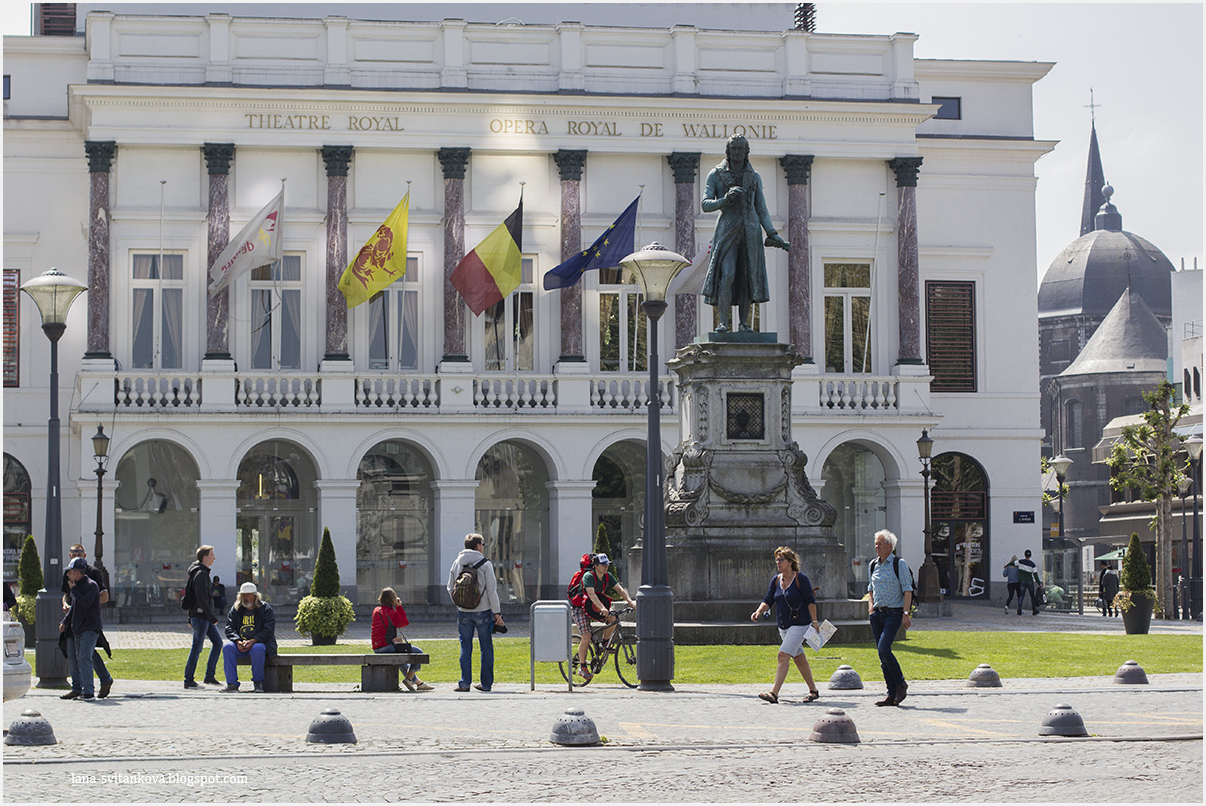
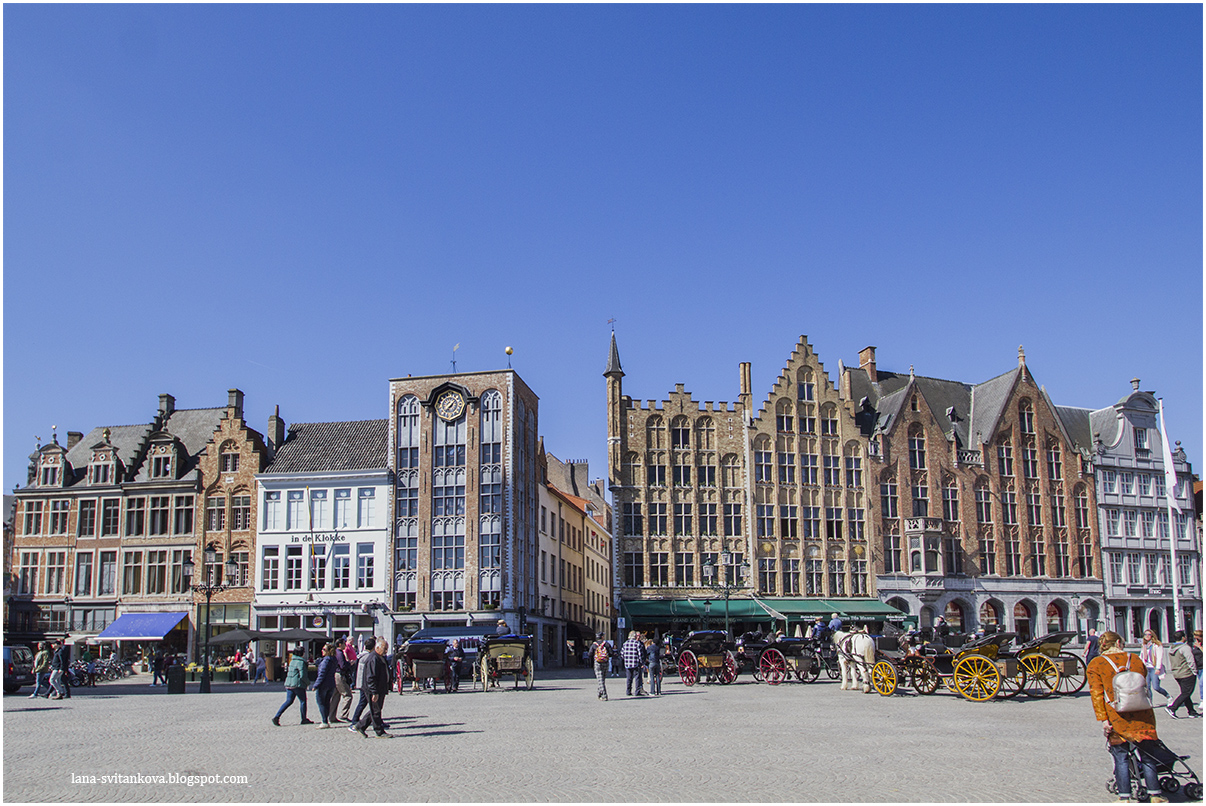
Льєж дуже нагадує мені Львів. Місто із затишним, гарненьким, майже ляльковим центром, а подекуди страшенно бурдний і обшарпаний. Але дуже харизматичне.
Після того, як ми здали велички - а до 17 ми б точно не повернулися, і навіть, либонь не доїхали до Роденбаха, ми вирушили на останню пивоварню брунатно-червоного туру поїздом. Благо, їхати до Роселаре 17 хвилин.
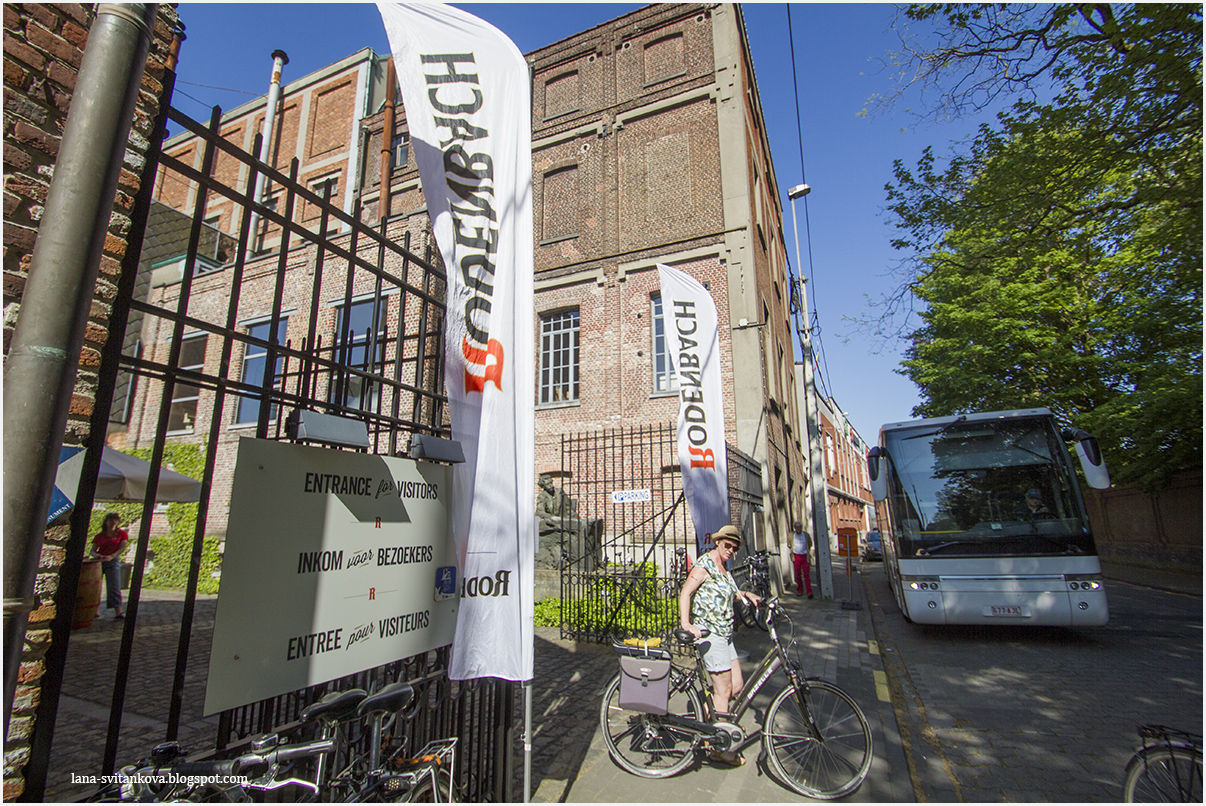
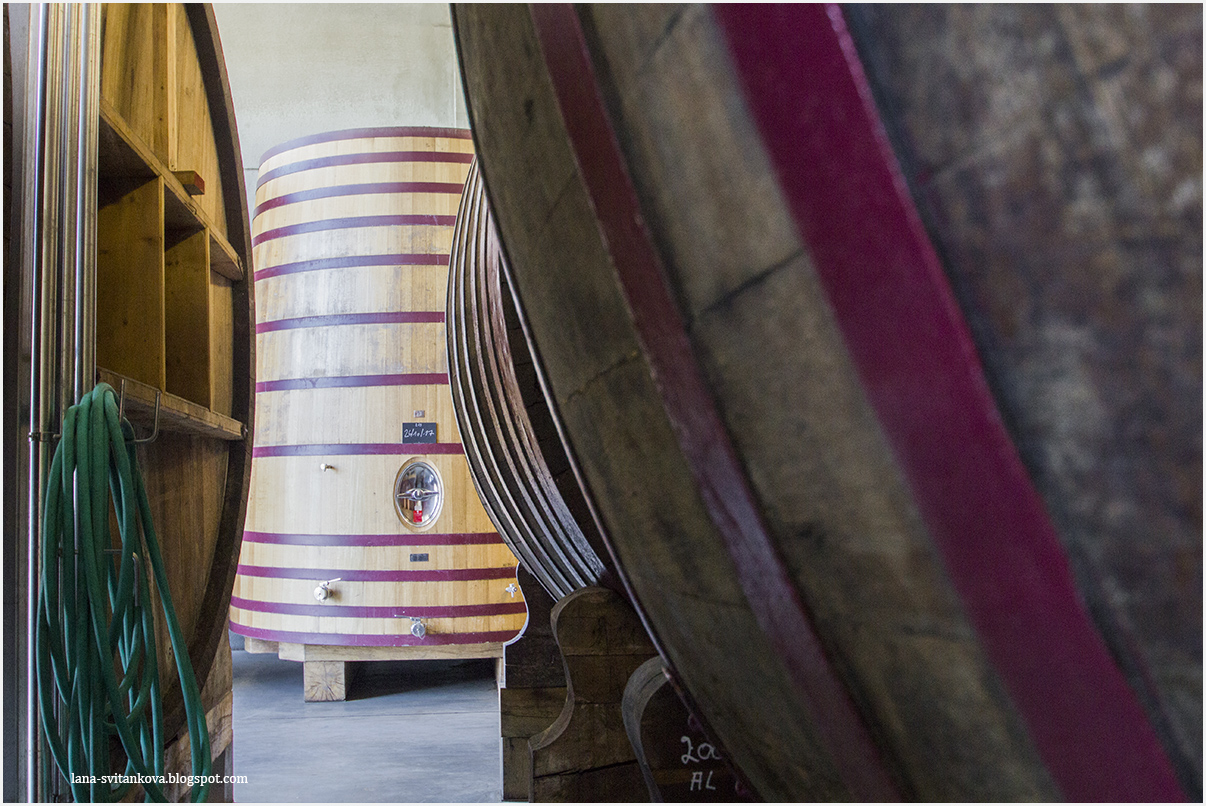 Раз на два роки чотири пивоварні, які варять фламандські елі - De Brabandere, Omer Vander Ghinste, Rodenbach і Verhaeghe - відкривають свої двері і влаштовують свято цього особливого пива з метою його попляризації. З 10 ранку і до 18 можна гуляти майже по всій пивоварні, мацати величезні фодери, запитувати про всілякі процеси, на кожній пивоварні є свої особливості, цікавинки і забави. Називається це - Rondje Roodbruin
Я про цей міні-фестиваль дізналася минулого року знову ж таки з журналу Belgian Beer and Food і зрозуміла, що таку забаву пропустити не можна, тому власне цей фестиваль став кінцевою точкою моєї великої бельгійської відпустки, яка почалася теж з раз-на-два-роки фестиваля "Ніч великої спраги", про який я писала отут. Посредині притулився ще один раз-на-два-роки захід від Cantillion - Cantillion Quintessence, але то радше щаслива випадковість, бо квитки купити було дивом.
Але повернемося до фламандців.
Штука в тому, що пивоварень, які варять таке пиво, більше за 4. Щонайменше, вар'ятні t'Verzet, яких не візьмуть в пісочницю, бо тру фламадець має бути в фодері - стоячій бочці, а не бочці, яка лежить (як у хлопців), і Brouwerij Strubbe... Щоправда, є підозра, що не всі мають можливість\обсяги\бажання наливати весь день безкоштовно. Безкоштовно-безкоштовно, я трошки далі про це розповім.
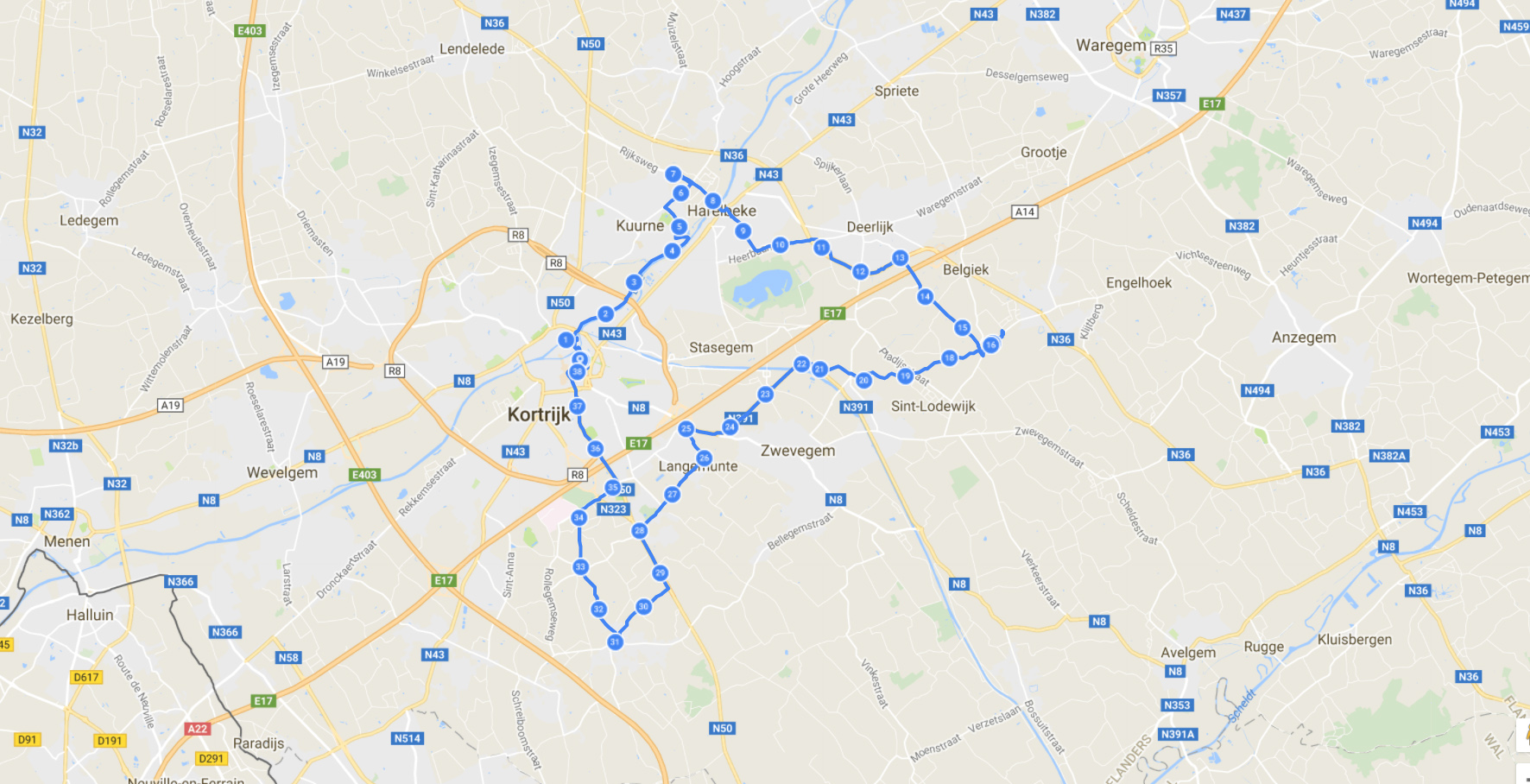
Найкрутіше і найстильовіше відвідати фестиваль на велосипеді, і дуже багато місцевих так і роблять. Можна скористатися мапою велосипедних маршрутів, яка є на сайті за посиланням вище. Для тих, кому ліньки крутити педалі, можна скристатися автобусами, які цілий день крусують між пивоварнями (не знаю, щоправда, чи вони теж безкоштовні, але цілком можливо), розклад на сайті теж є. Якщо ви оберете автобус, починайте або з Rodenbach, або з Verhaeghe, до них можна дістатися поїздом і пивоварні дуже близько до станцій. Якщо велосипедом, то буде трохи складніше - прокати в Кортріку в неділю не працюють, і єдине місце, де можна напозичити колеса, це туристичне бюро, в якому велосипедів 5 штук, і їх не бронюють, хто перший встав, того і капці (бюро починає працювати з 10ї ранку і до 17ї, тому просто приїдьте під відкриття, і буде вам щастя). Депозит за два велосипеди - 50 євро готівкою, прокат - 25 євро за два на весь день, можна розрахуватися карткою. Гарнющим маленьким Кортріком, а з нього вздовж каналу можна вирушати до першої пивоварні - De Brabandere, до якої 7 км.
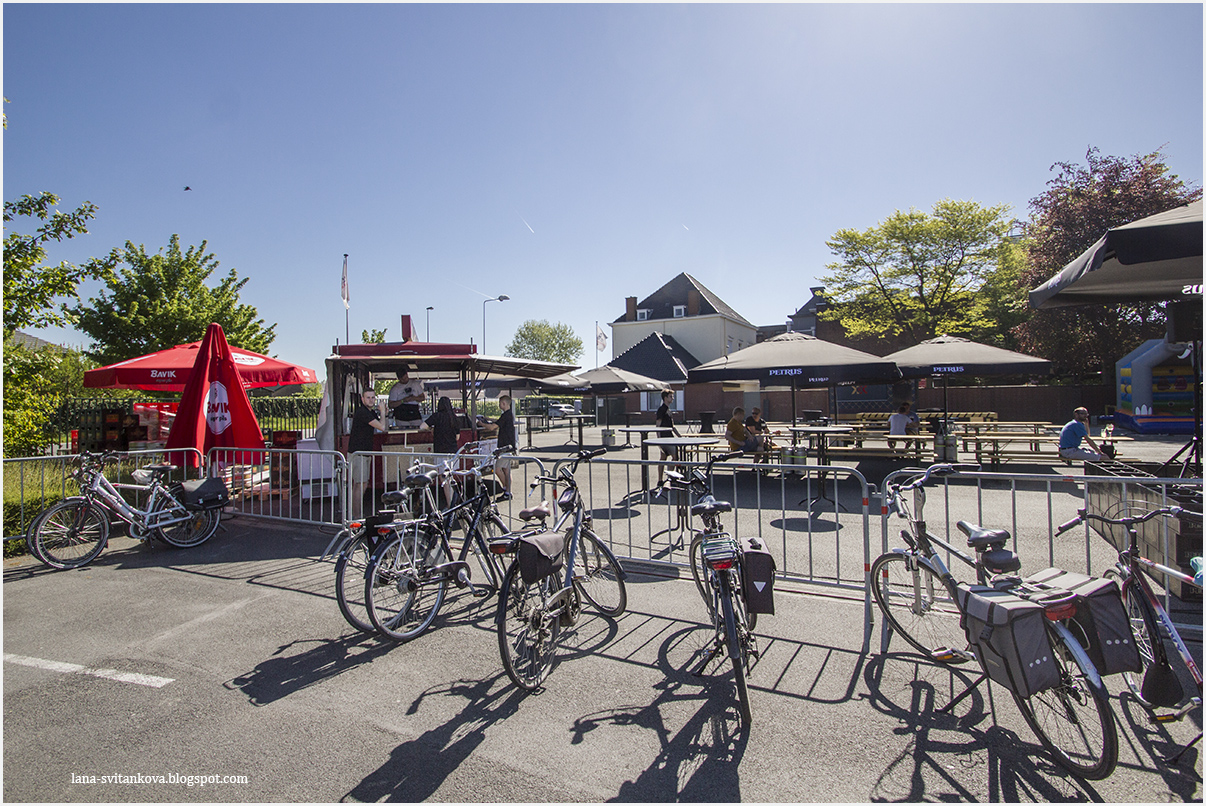
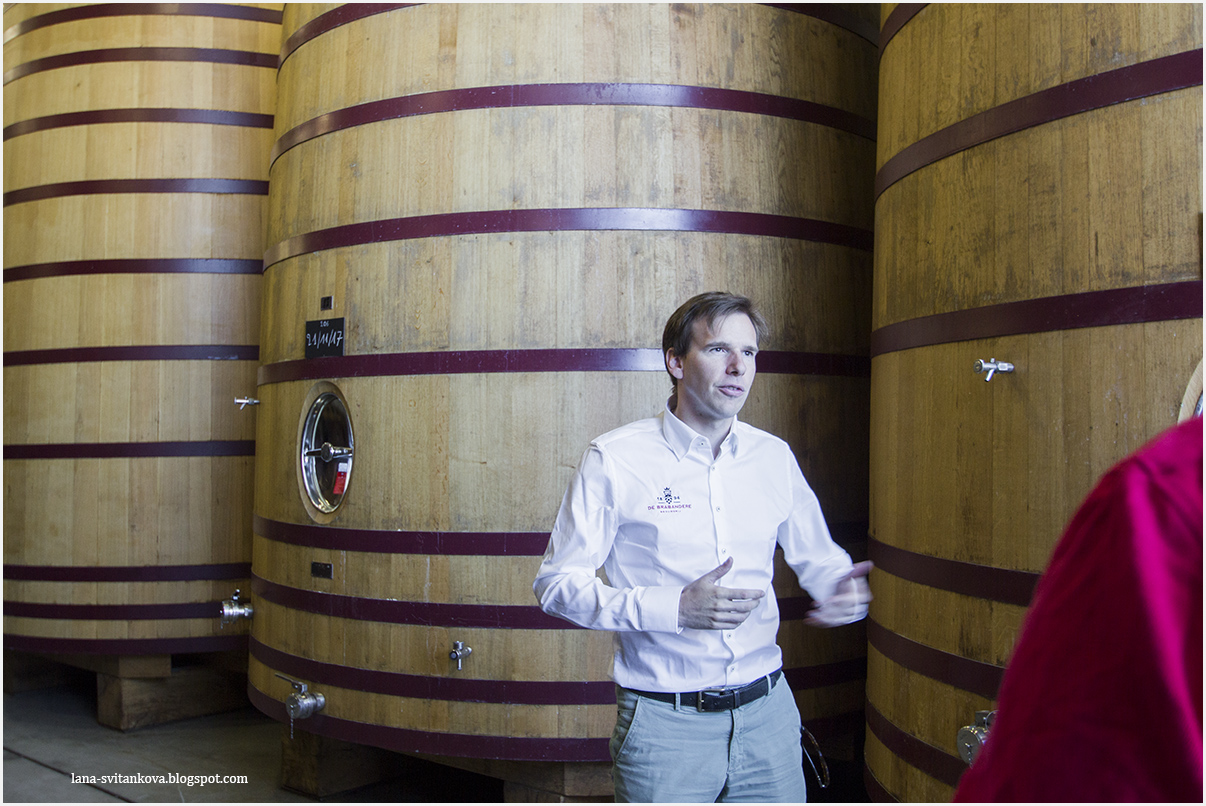
На De Brabandere влаштовують відкритий майданик, ставлять шатра, грає жива музика, ллють пиво, відкривають сховок фодерів і водять екскурсії. Нам пощастило натрапити на Альберта де Брабандере, який уже 5й з покоління управитель пивоварні, і поки він не був заяйнятий ніким, влаштував нам значно цікавішу балачку англійською. Найстаріші бочки, куплені ще в 70-х були спочатку під кальвадосом. Більшість фодерів відносно нові, виготовлені Foudrerie Francois від 2007 до 2014 - це ті, що ми побачили дату виробництва. Коли новий фодер приїжджає, його наповнюють водою, витримують місяць, зливають і ще раз наповнюють водою, щоб прибрати зайву танінність (я думала - або кількаразове пропарювання, або заливка чогось міцнішого за воду). Лише потім туди заливають найстарше з наявних пиво, щоб завелася потрібна мікрофлора. Пиво з фодерів куштують раз на місяць, а щоближче до очікуваної дати виходу - на стіні висить акуратний графік - то раз на тиждень. Що цікаво, оті, перші, кальвадосні, не стоять, а лежать... (хоча тру червоні/брунатні фламандці мають саме стояти). Давали скуштувати малюсінький келишок чистого неблендованого пива з фодерів, а далі на барі можна було замовити келих якогось Петруса, або зблендити самостійно, що теж додавало елемент забави. З гордістю розповідають, як любив навідувати їх Майкл Джексон (не той, що з співав, а той, що пив і писав), і наполягав, що вони мають випускати чистий варіант з фодерів, і, врешті-решт, цим варіантом став Petrus Pale. Мій улюблений. До речі, за певний час пивоварня повністю змінила формат, спілкування з покупцем і вигляд - замість традиційного монаха на етикетці тепер кольоровий і модний летеринг. А введення в продаж боксу "змішай собі сам" - теж очевидна спроба наблизитися до молодого споживача, залюбленого в коктейлі, якого потрібно чимось цікавим навернути. Принаймні мені це видається цікавішим за ребрендинг Роденбаха, але я забігаю наперед.
І, власне, пиво. Тут сусло варять, піддають первинному бродінню звичайними дріжджами, а потім заливають в фодери, щоб все завелося. А сусло - світле. Потім його змішають з темним молодим пивом (67%), і буде червоний фламандець.
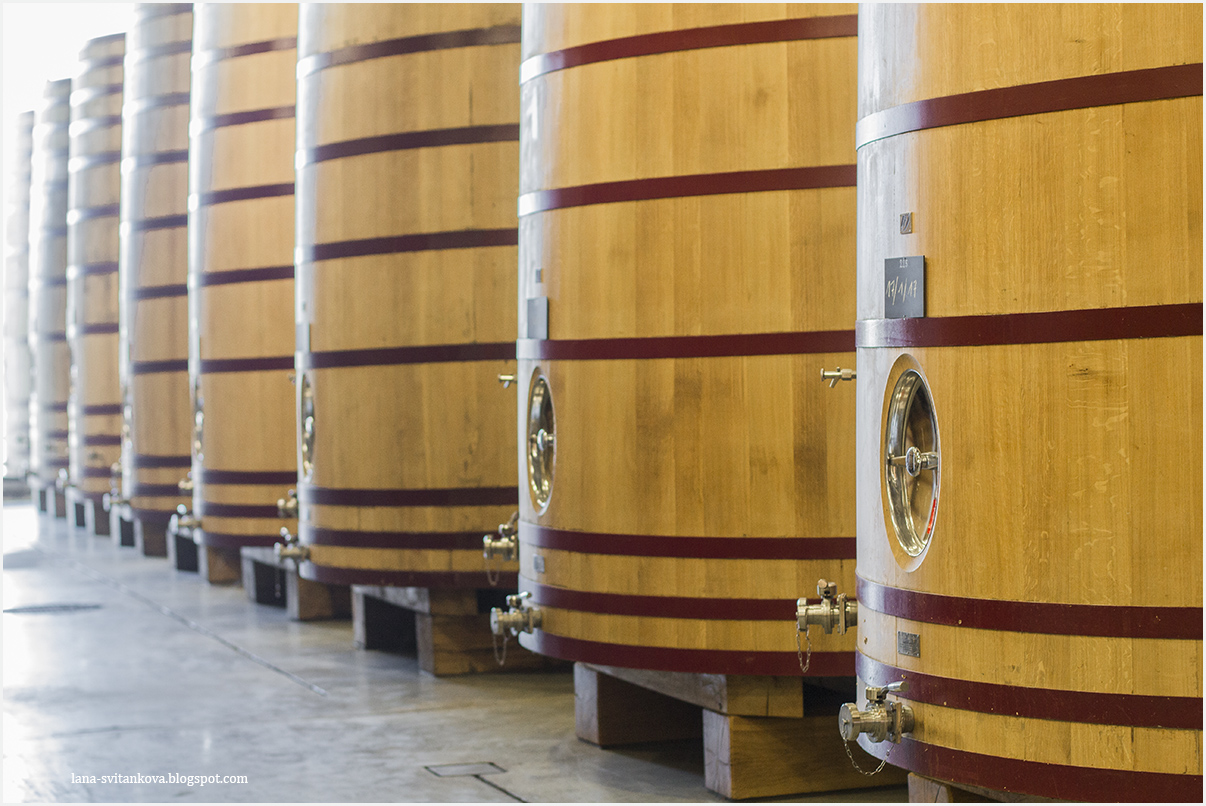
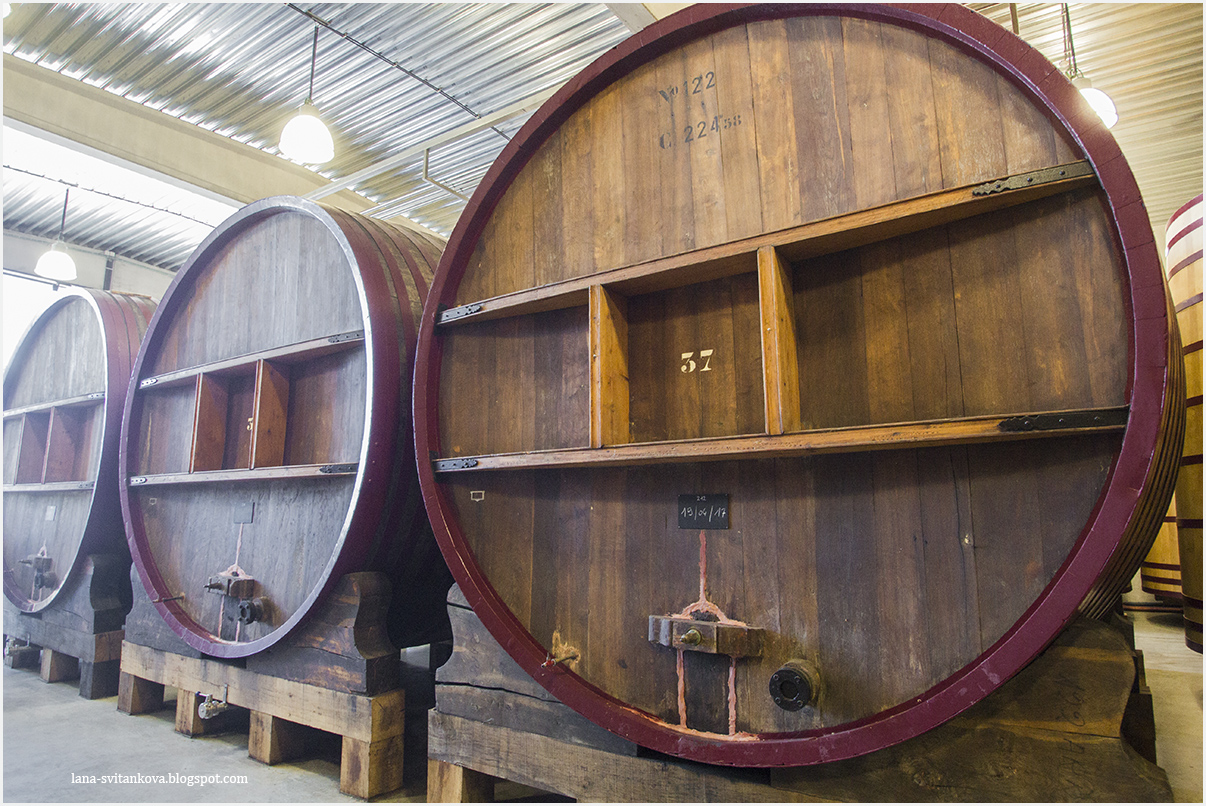
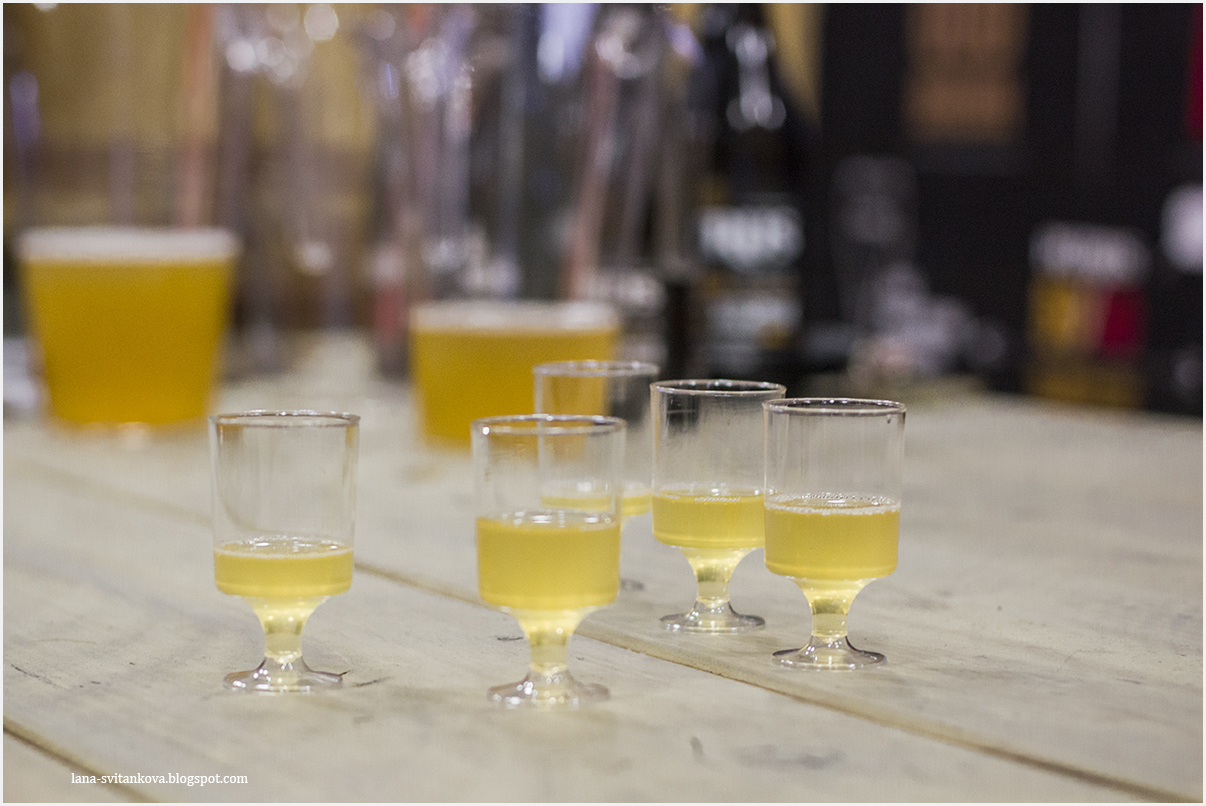
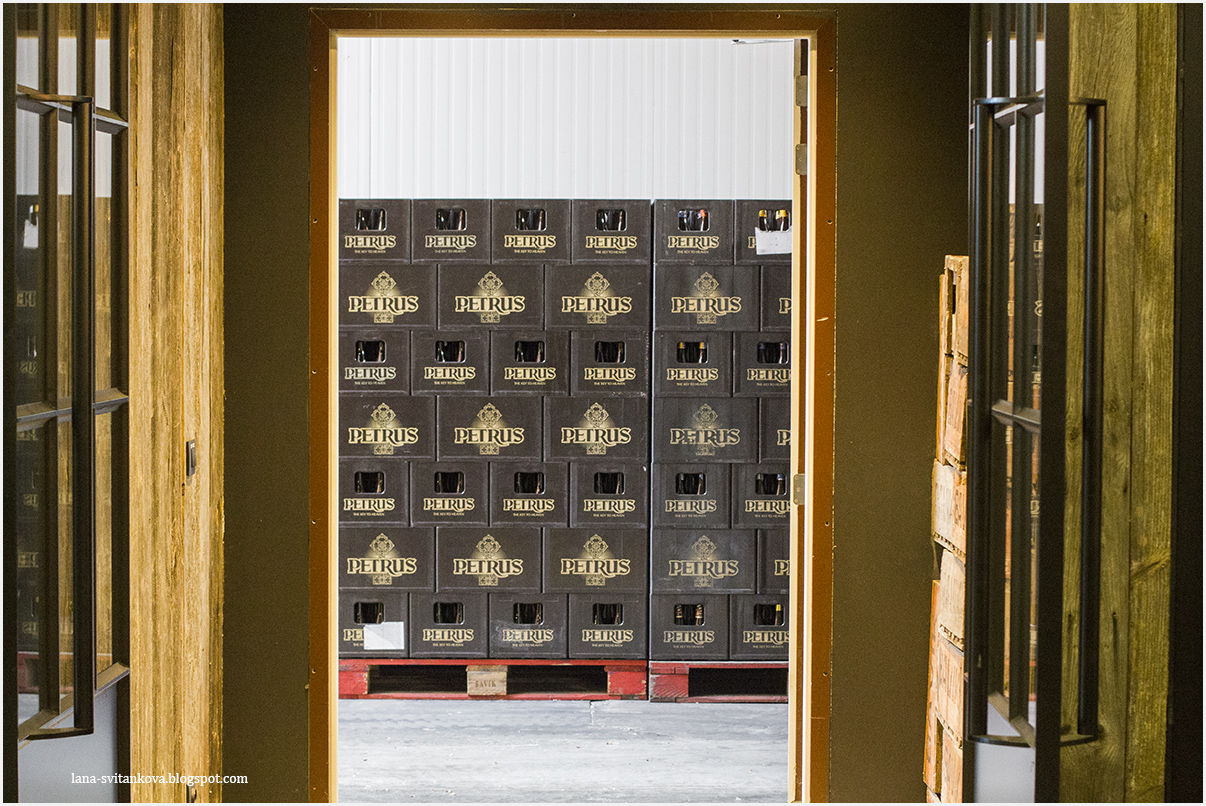
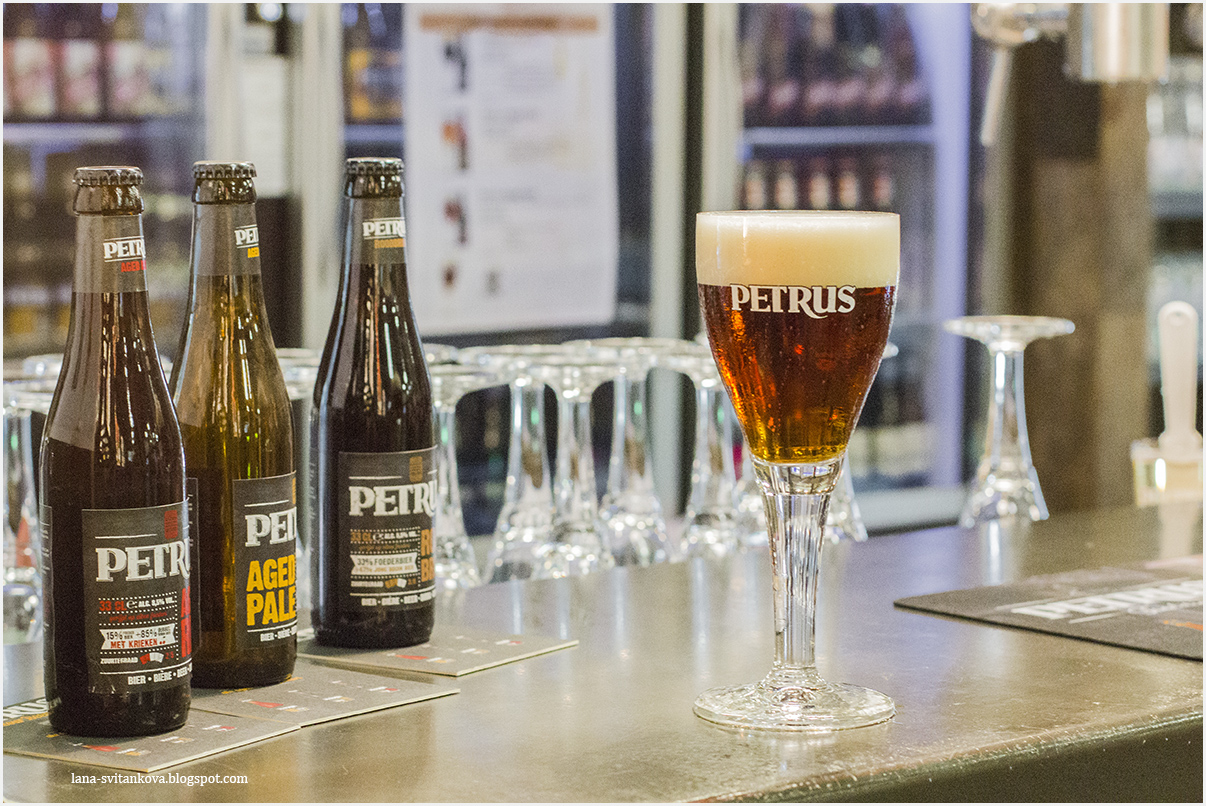
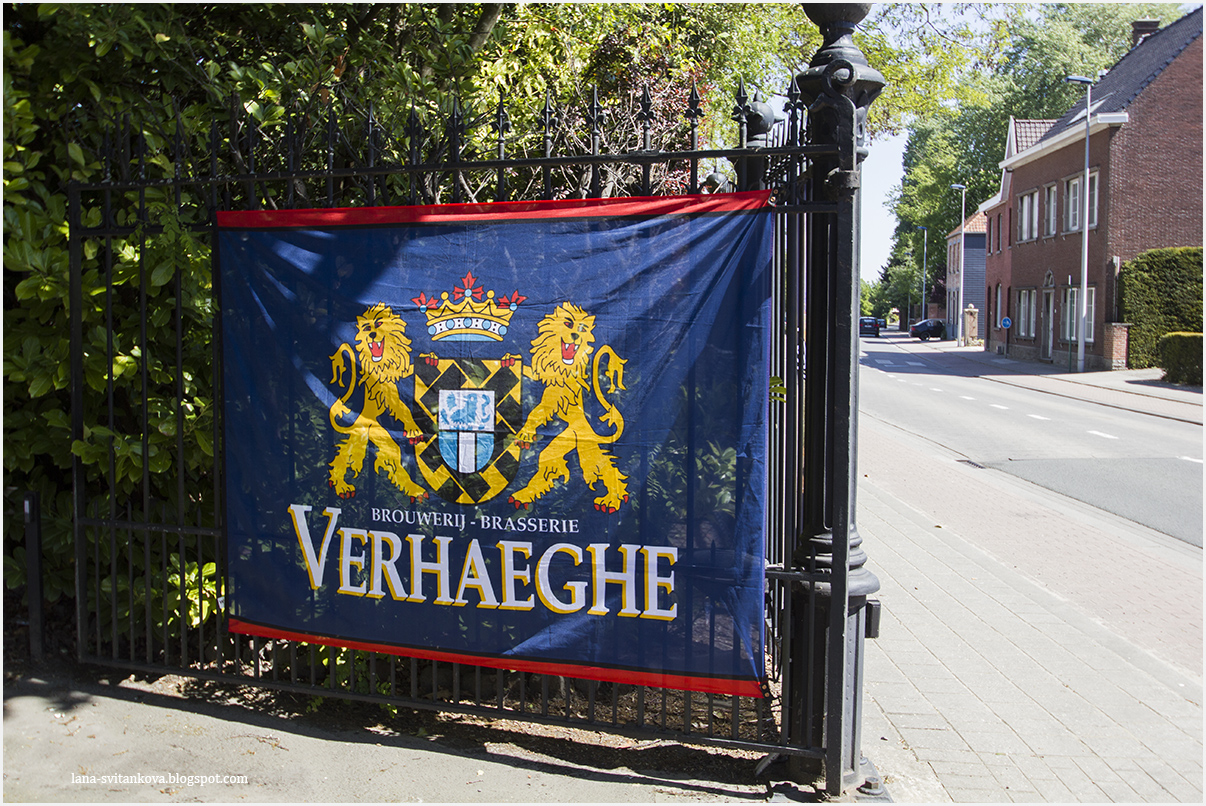
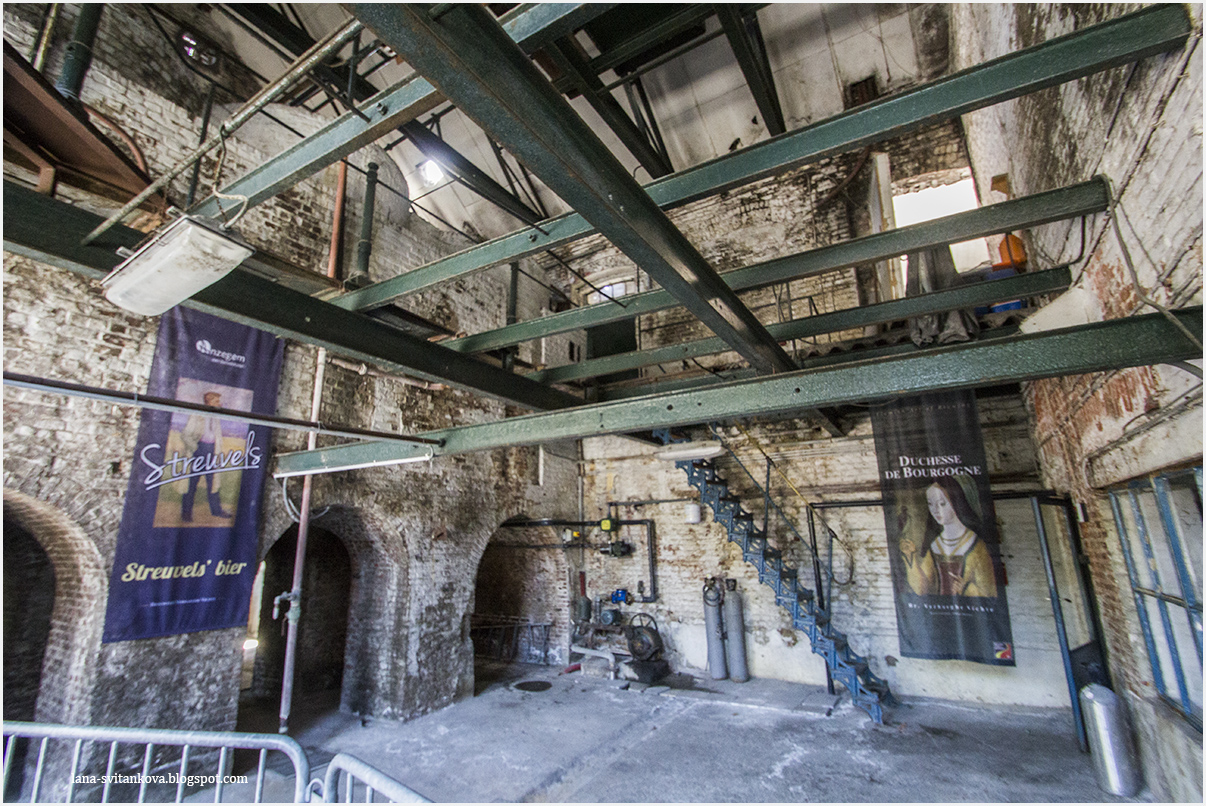
До Verhaeghe - 10 км. Тут нам трохи менше пощастило, всі гіди були дуже зайняті кількома локальними групами, і нам не вдалося нікого заангажувати для розмов. Але всю пивоварню оповиває аромат тонкий грушевий аромат, типовий для малих концентрацій етилацетату, продукту реакції алкоголю й оцтової кислоти. Тут пиво варять, бродять, лагерять у сталі, а потім витримують у фодерах. Всім (любителям фламандців) відома "Герцогиня" і є сумішшю молодого і витриманого пива. По пивоварні теж можна погуляти, помацати фодери - їх робила інша компанія, не можу розібрати на фото яка. Кожен гість отримував келих будь-якого пива пивоварні на вибір, не лише "Герцогиню", а потім продовжити смакування за власний кошт, включно з пивом, яблуками в клярі і домашніми хотдогами.
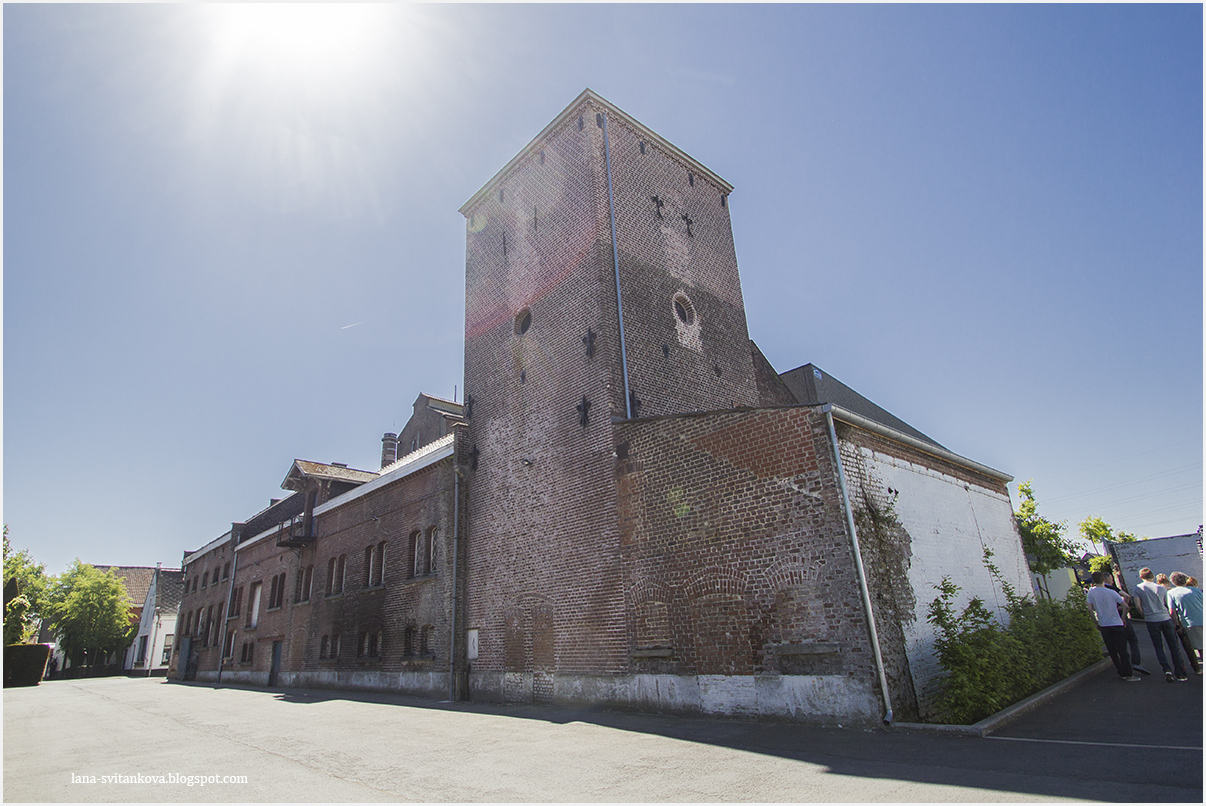
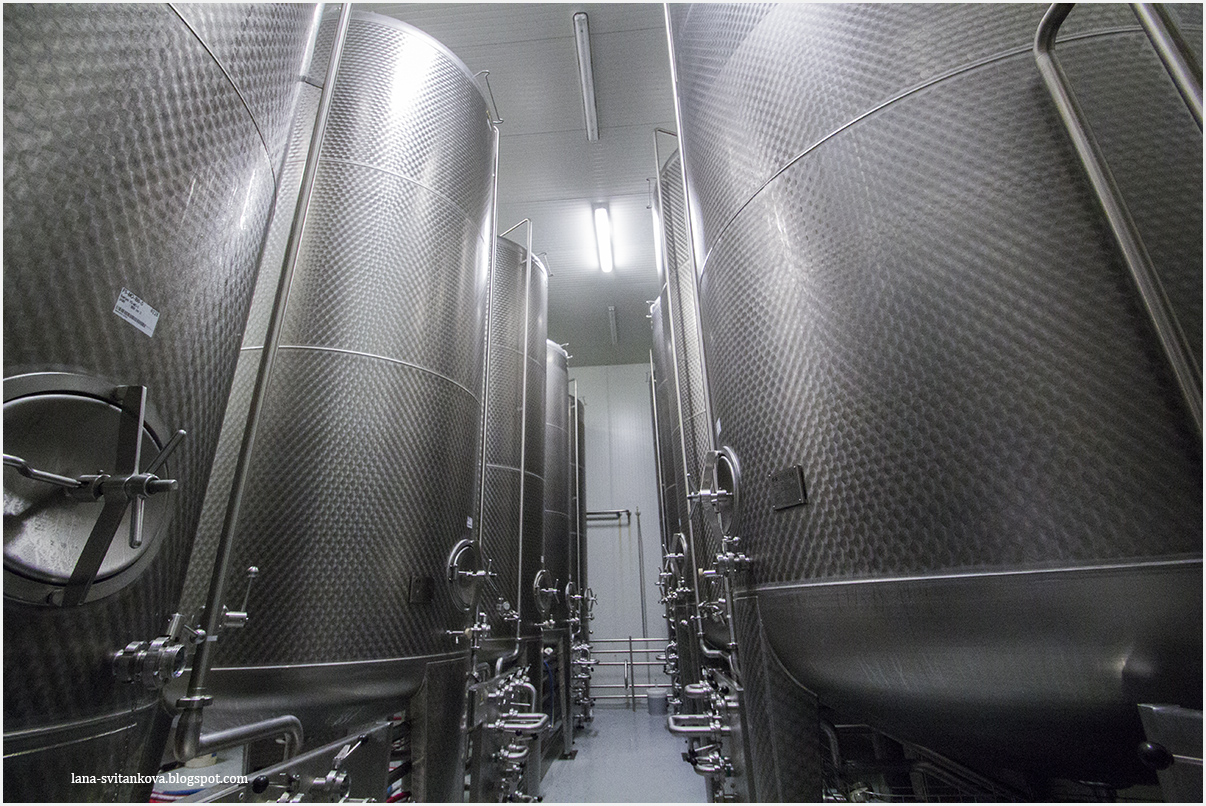
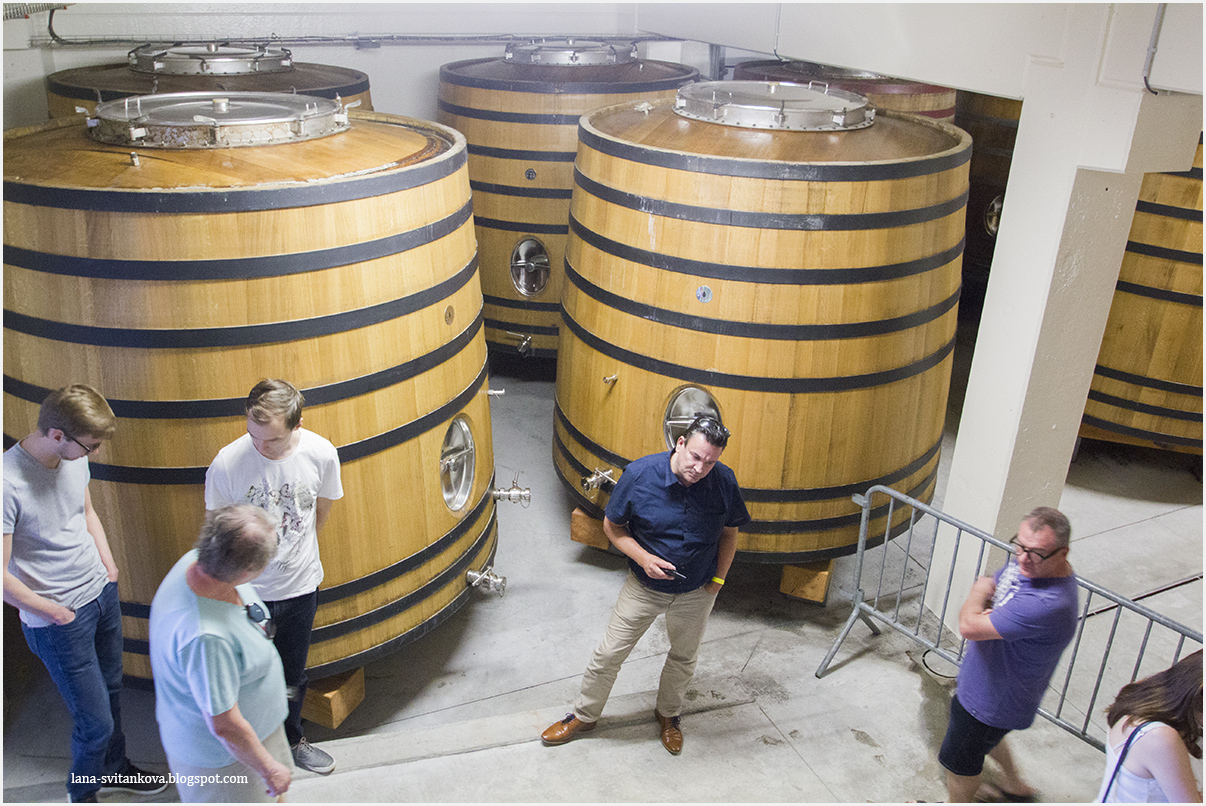
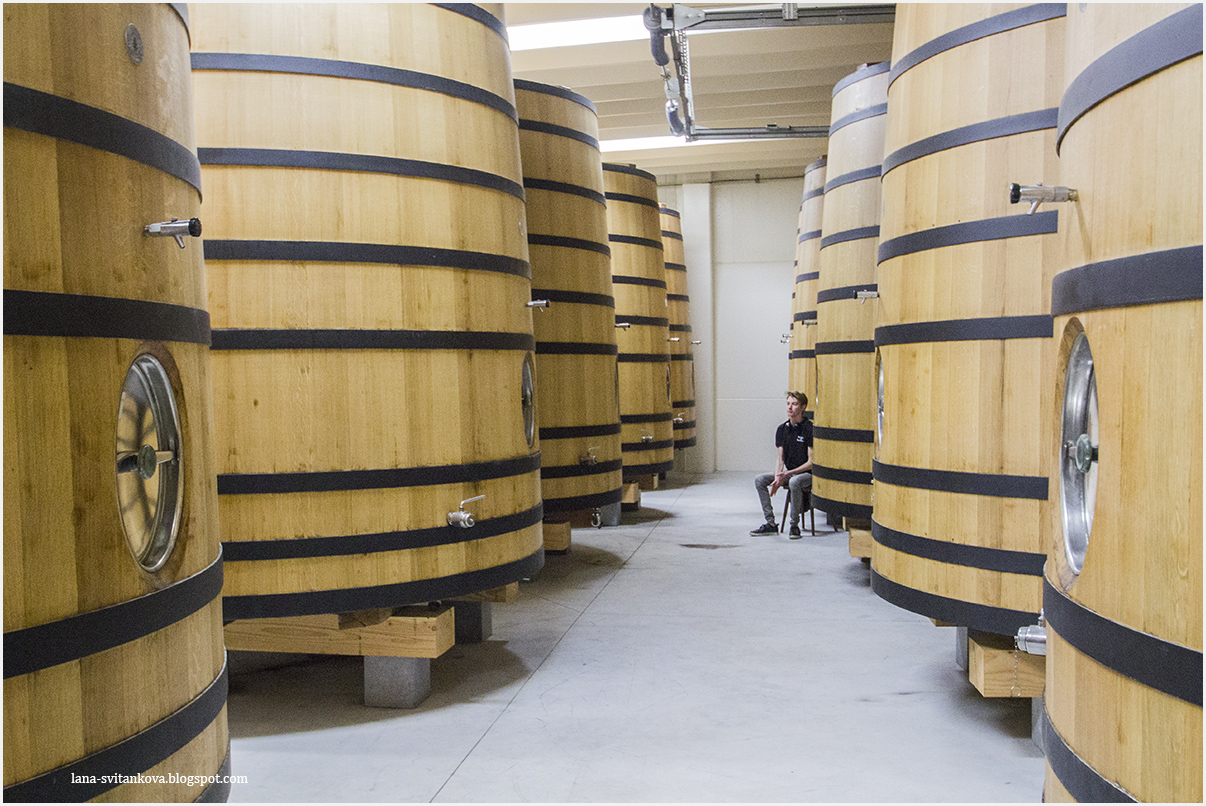
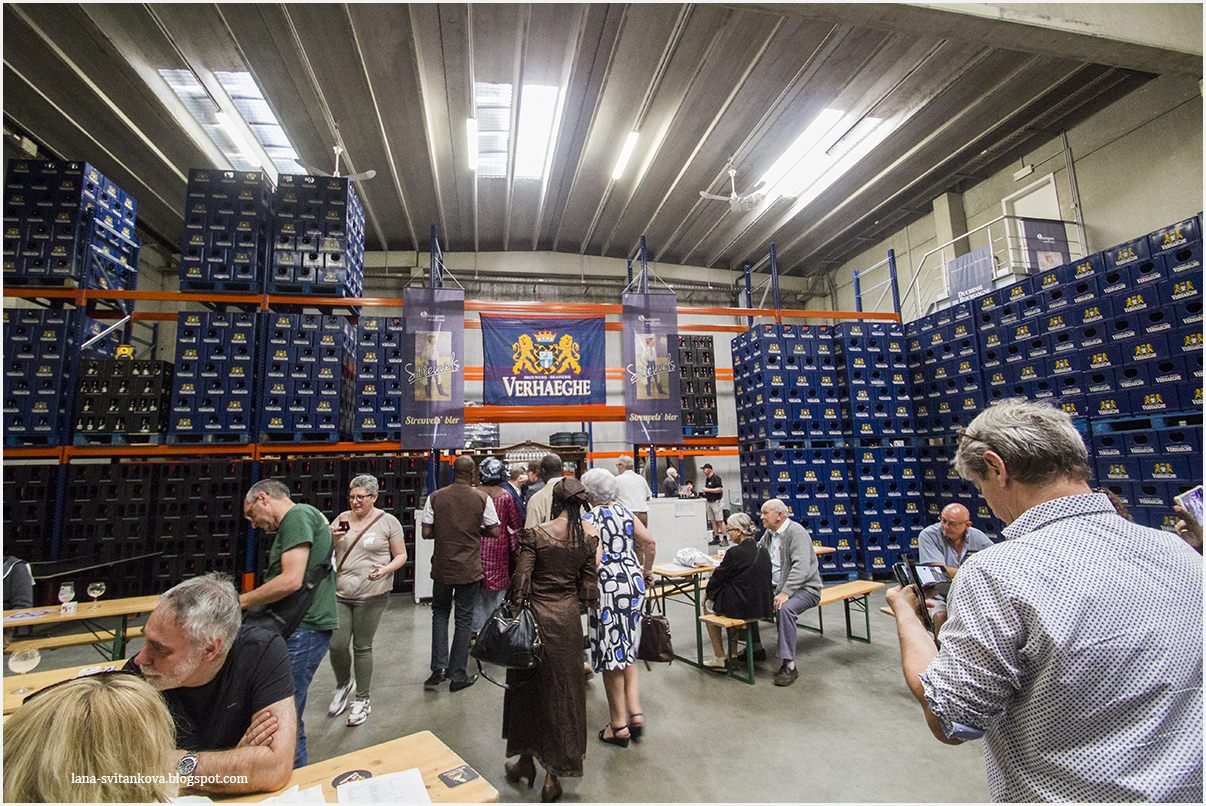
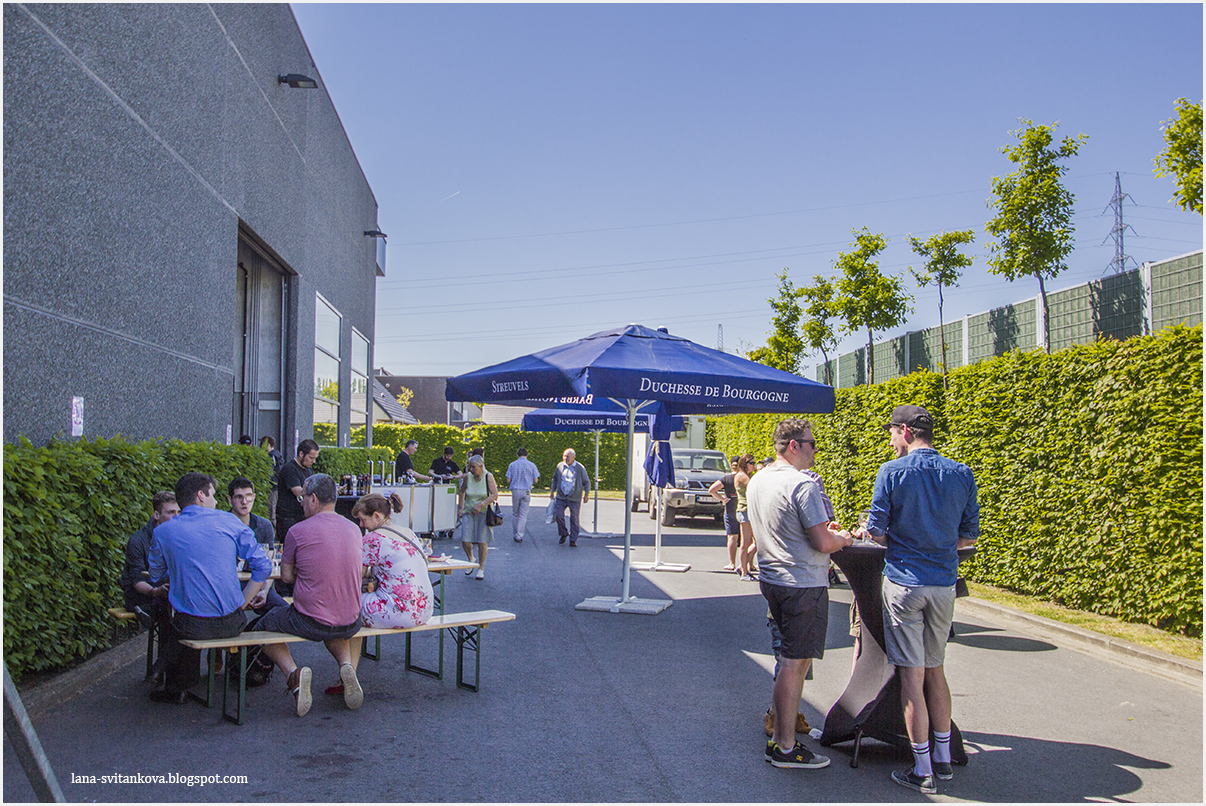
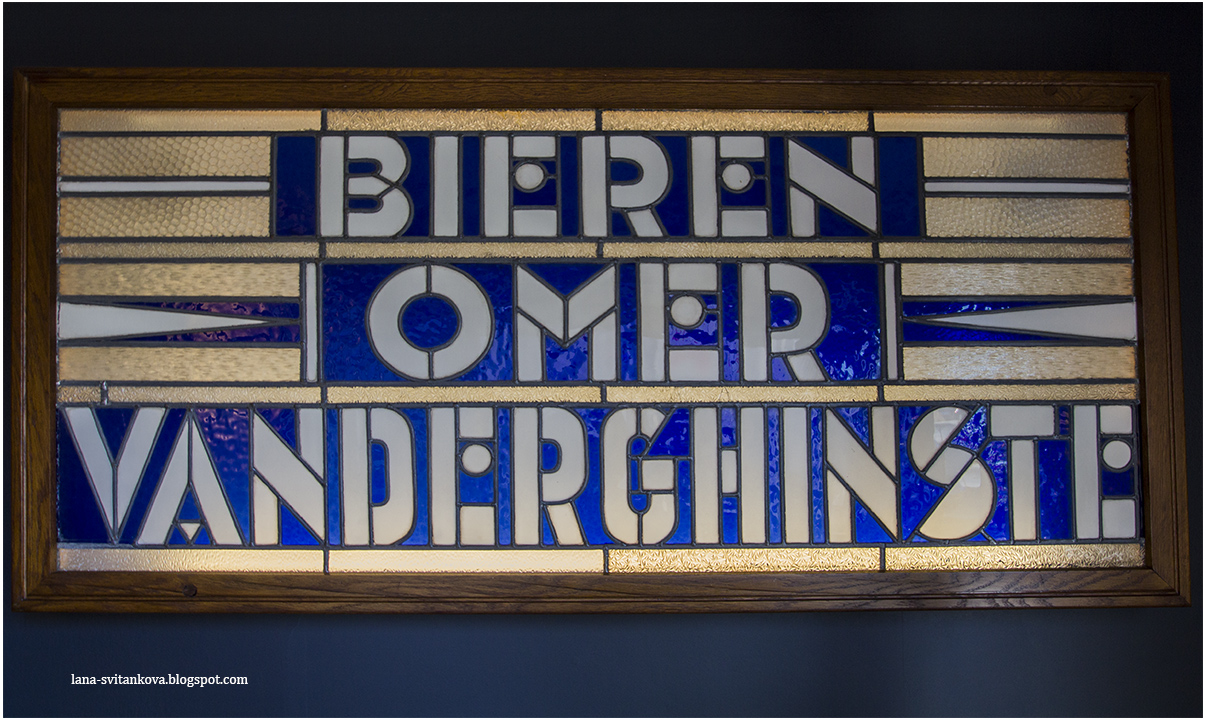
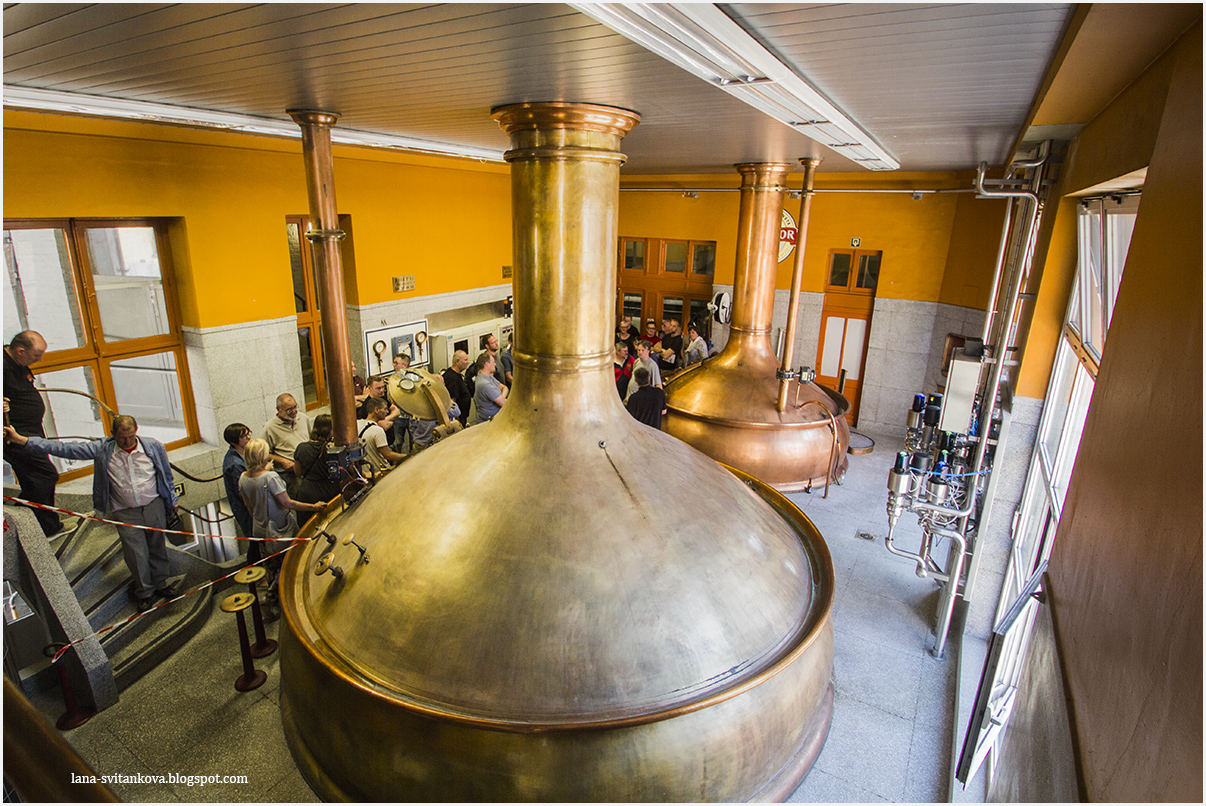
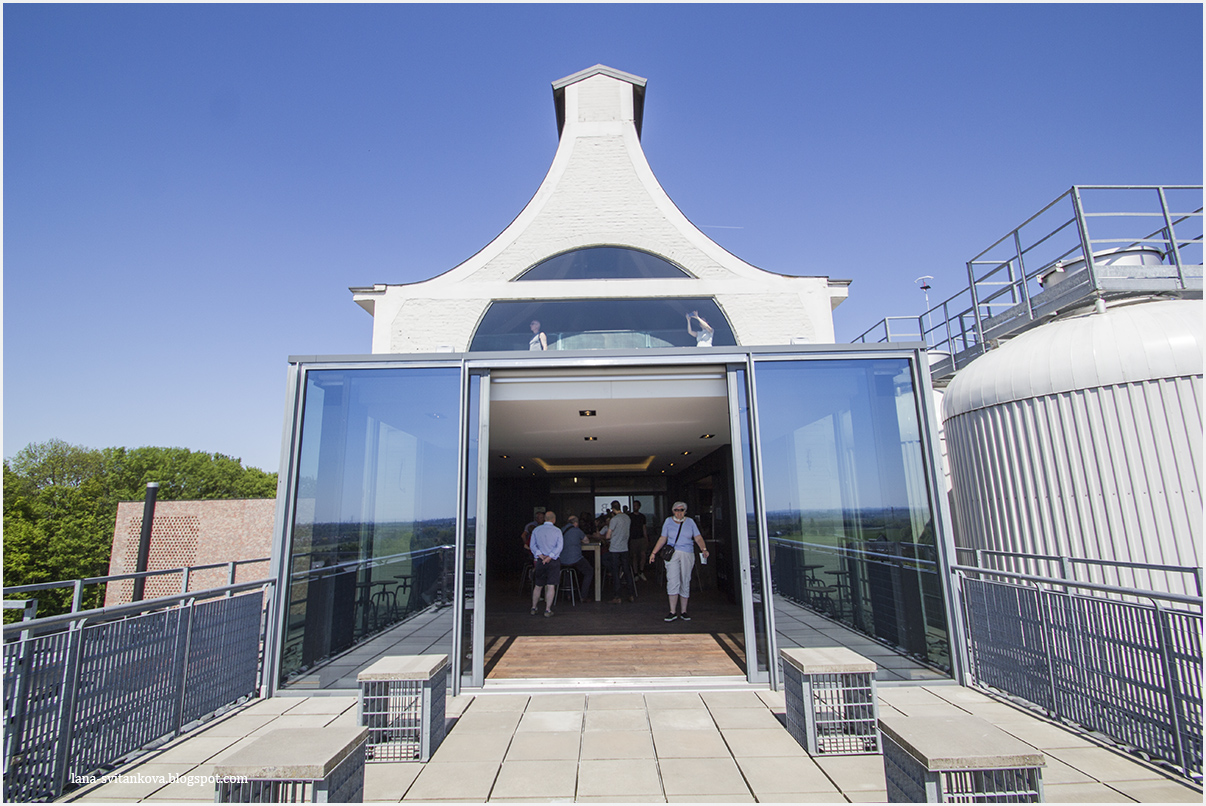
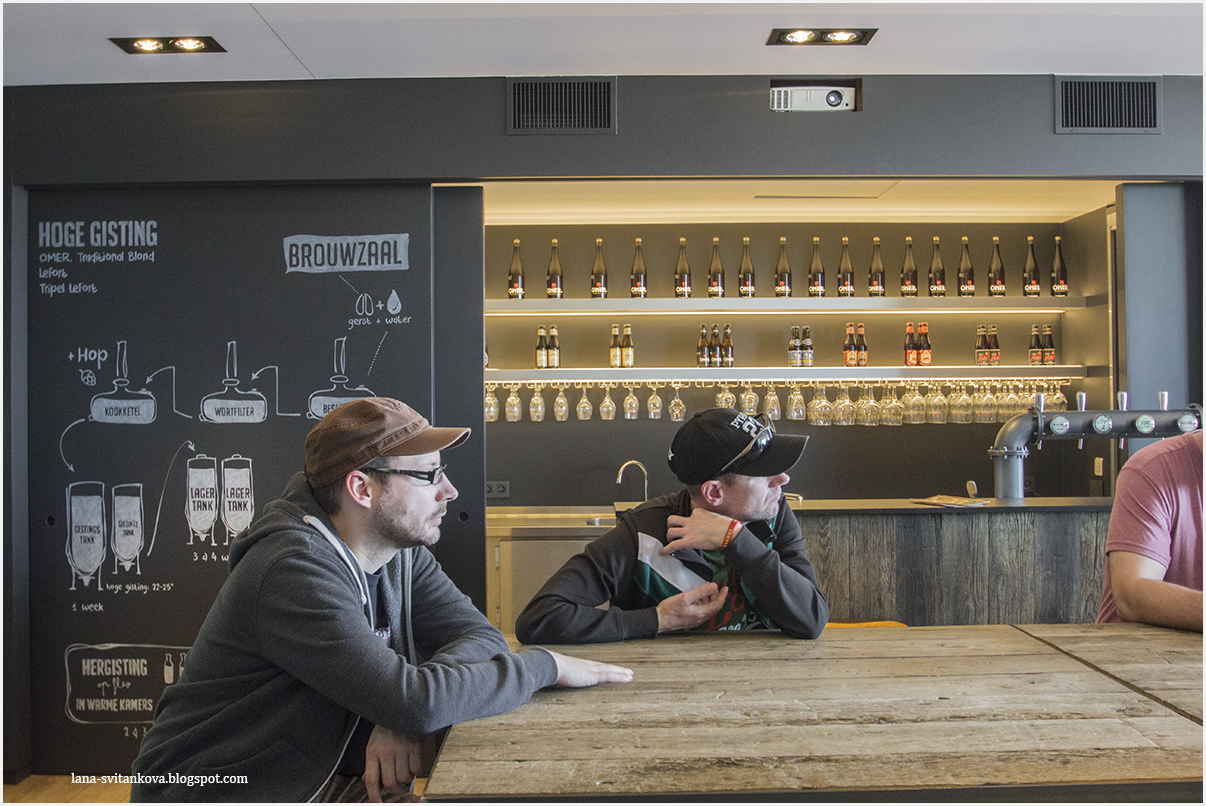
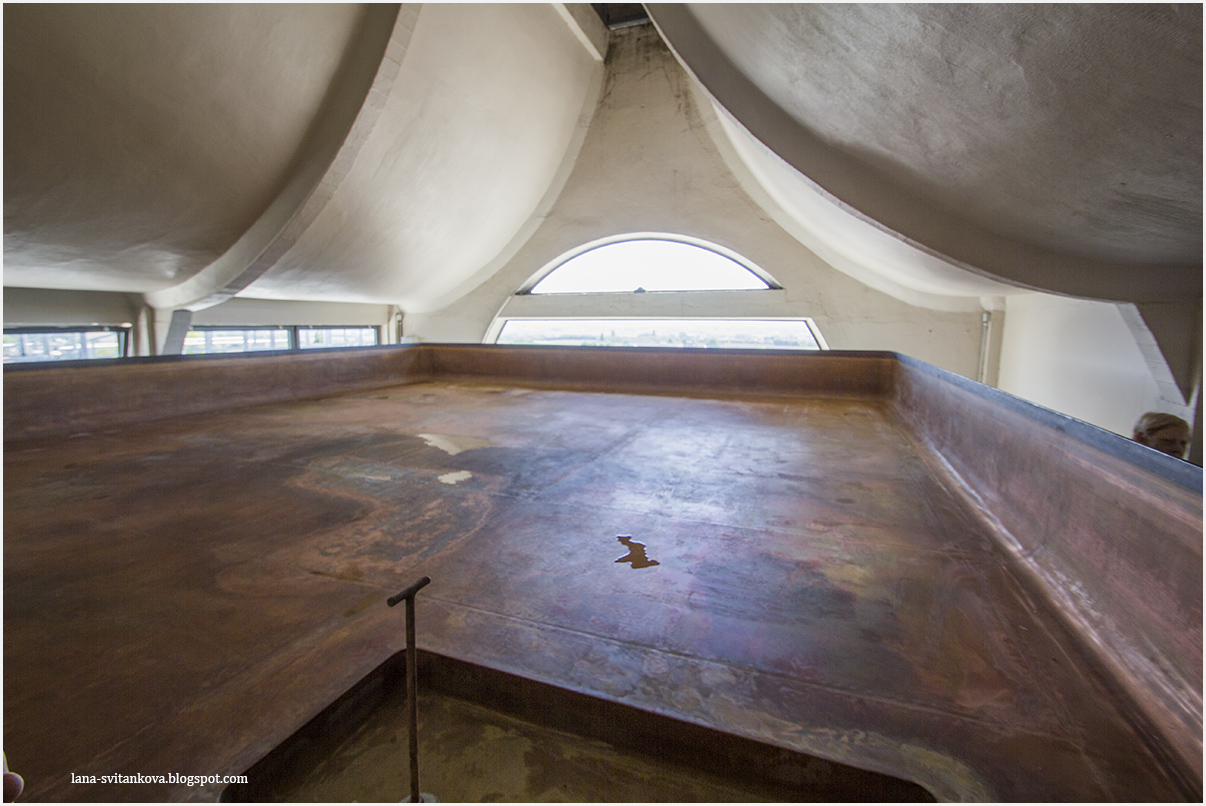
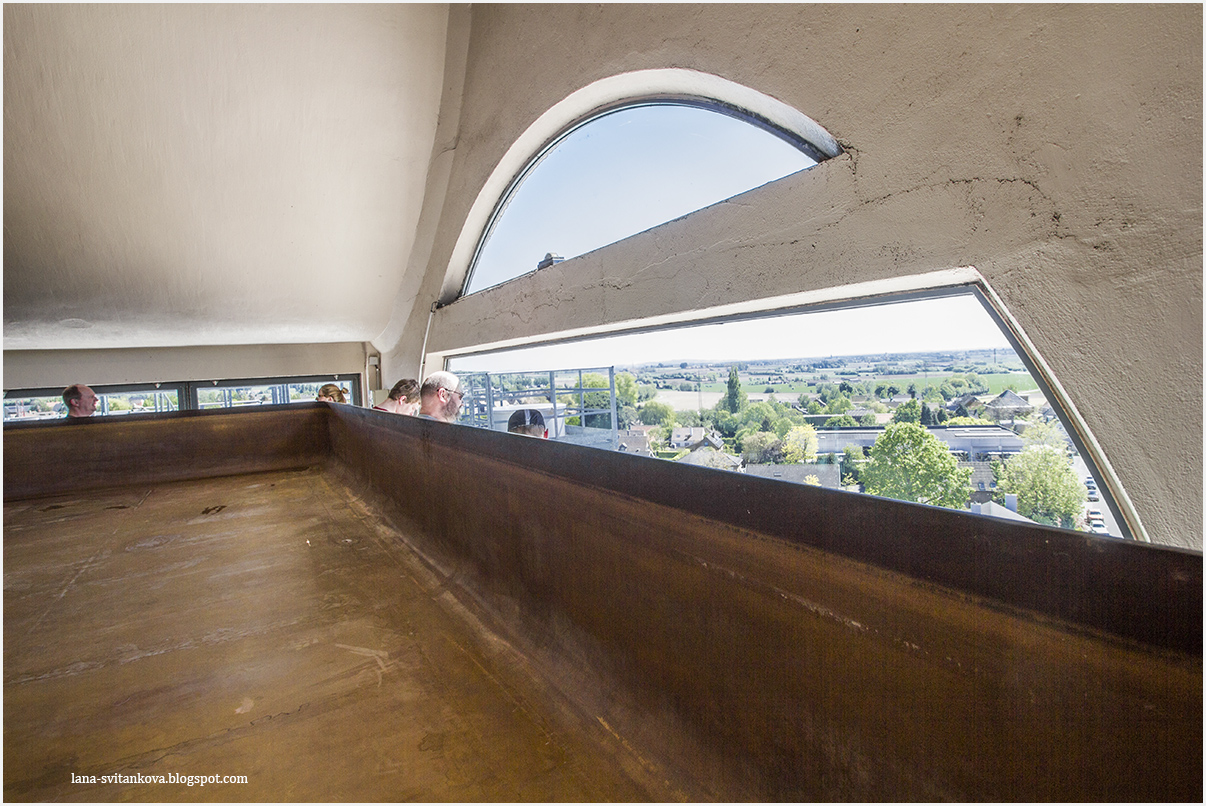
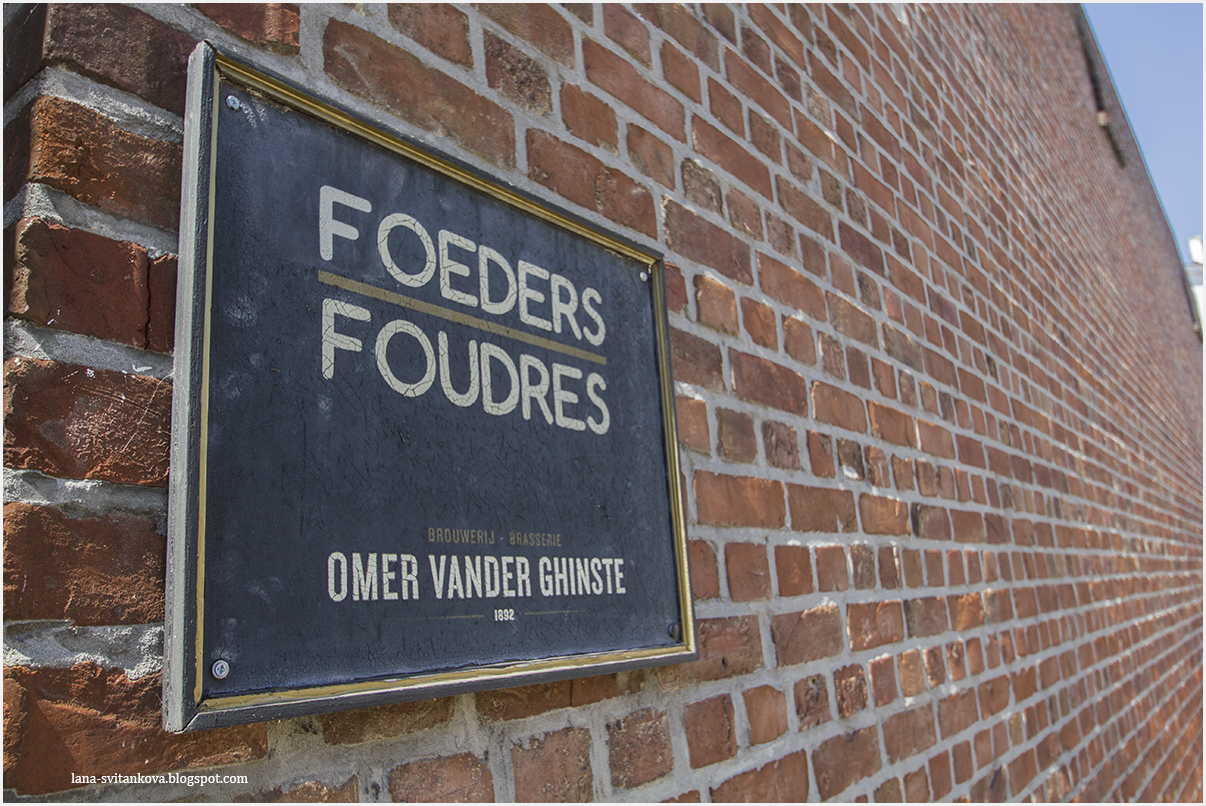
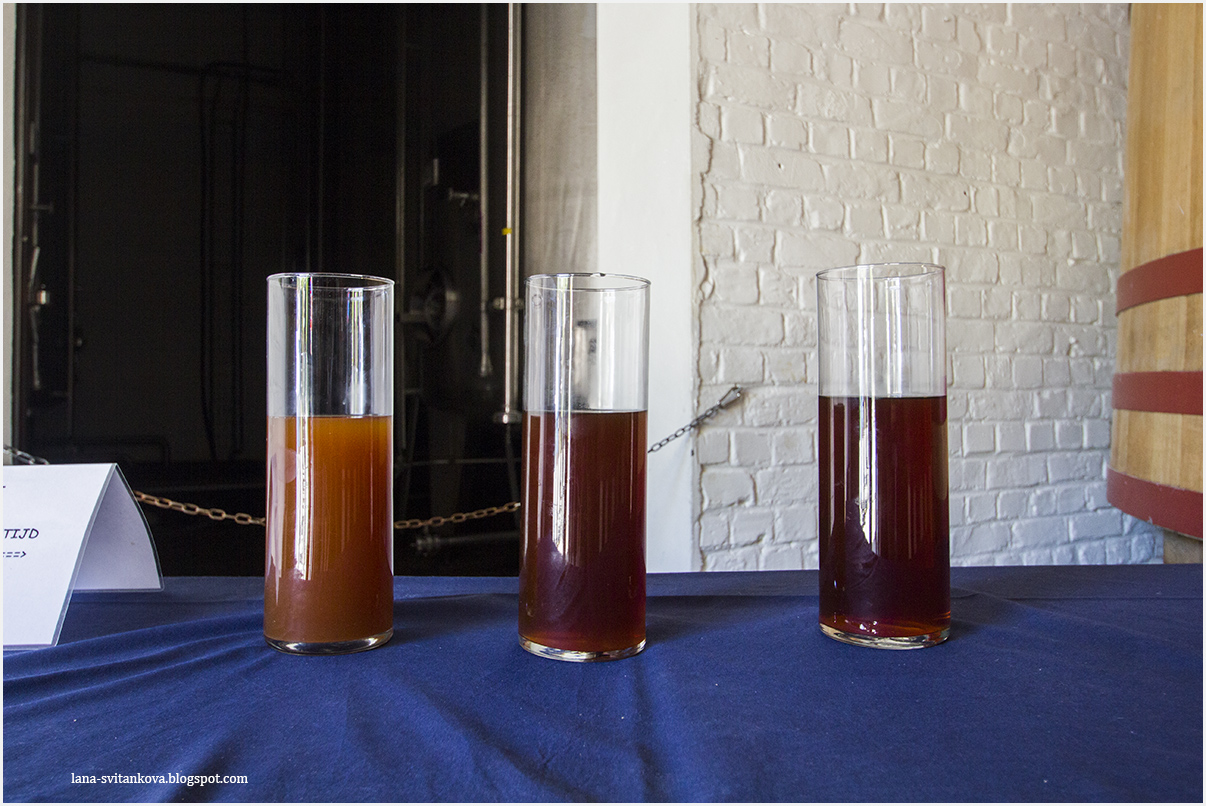
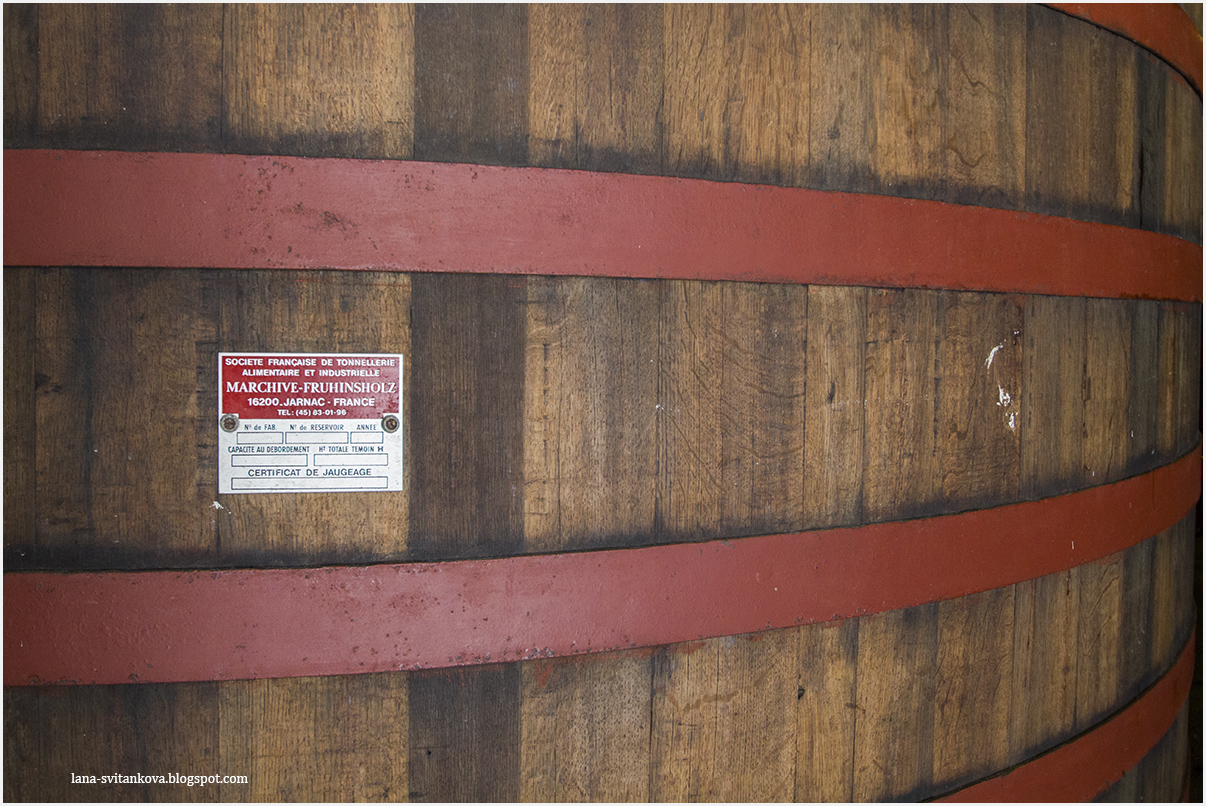
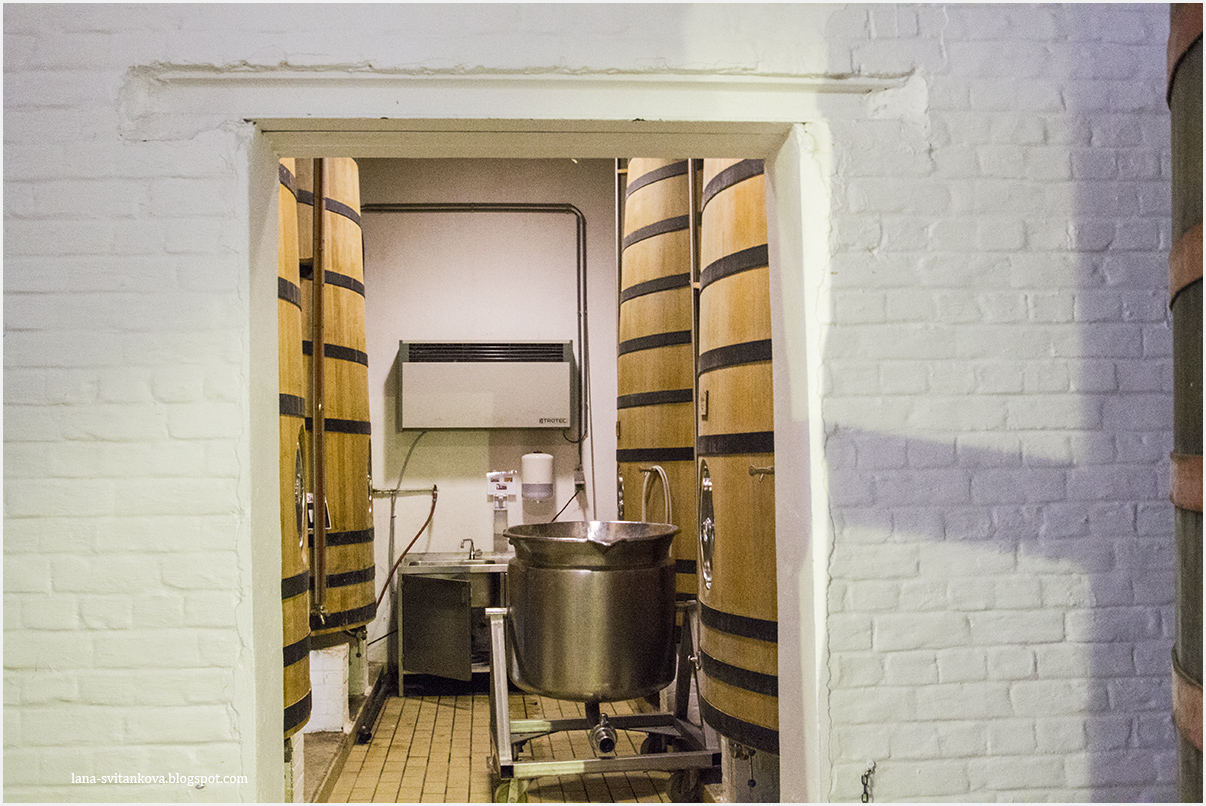
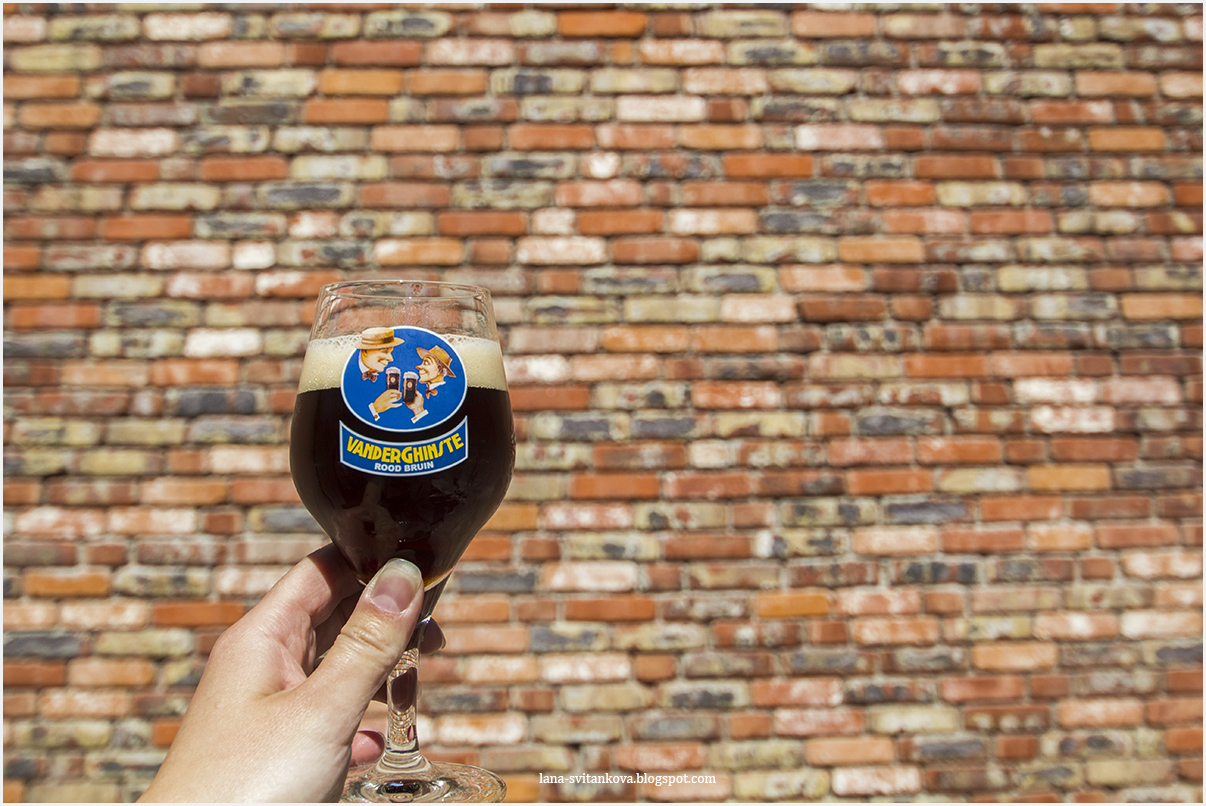
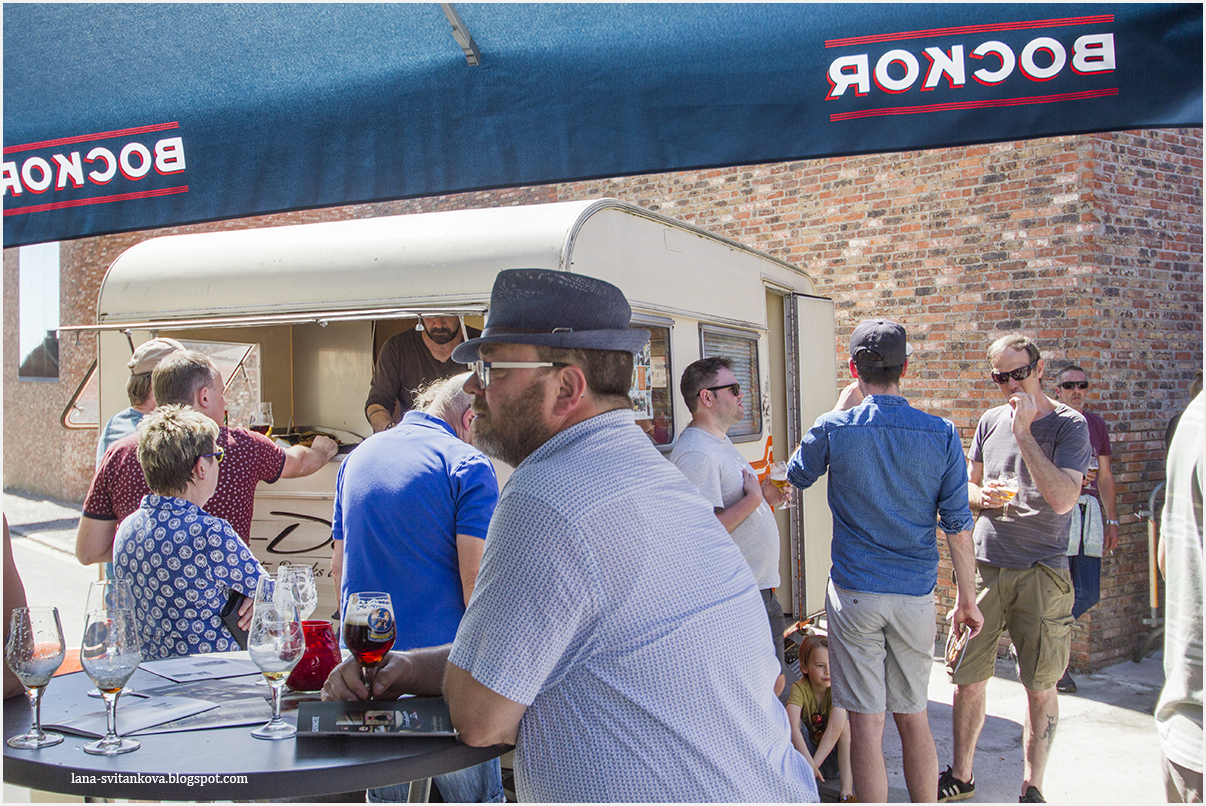
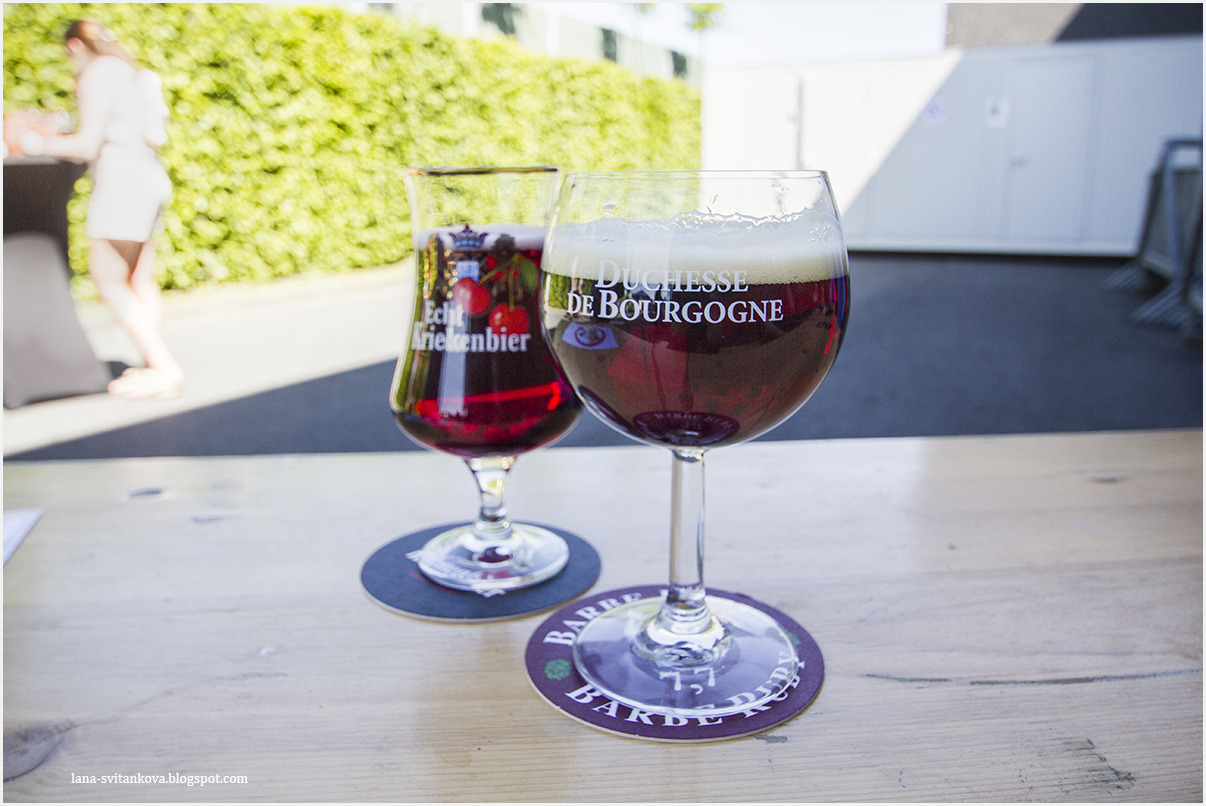 До Omer Vander Ghinste - ще 15 км. І, я впевнена, на такі страждання Майкл Джексон заради фламандців не йшов. Не їдьте тою дорогою, що малює гугл, він поведе вас постійно вгору, вгору, а потім через поле давнющою, полірованою тисячами ніг і копит бруківкою. Красиво навколо - дух перехоплює. Але нема чого перехоплювати, бо ви і так ледь дихаєте, бо крутите педалі вгору бруківкою. Фух. До пивоварні ви наближаєтеся, як до воріт раю. І це недалеко від істини. На відміну від решти, в Омера є кулшип. Він на 4му поверсі, а радше на піддашші пивоварні, і звідти у сусла такий краєвид, що я сама б там спонтанно бродила. Це спонтанно заброджене пиво відправлять на 18 місяців у фодери Marchive – Fruhinsholz. Чистим воно зватиметься "Cuvée des Jacobins", а розведене з 65% молодого - VanderGhinste Rood Bruin, і це один з найкращих фламандців, збалансований, не приторно-солодкий, як, скажімо, молода "Герцогиня". Це пиво хочеться пити і пити. І між іншим, келих ви вип'єте на пивоварні, а до того ж вам дадуть квиточок на безкоштовний келих у одному з кафе, які розташовані в радіусі 100 метрів від пивоварні. У сховку фодерів можа подивитися (от тут чомусь погуляти між ними не пускали) на фодери звичайні, з кріком, а також стояли три колби, з молодим пивом і 3 міясців і 6 місячним - помітна зміна кольору і прозорості.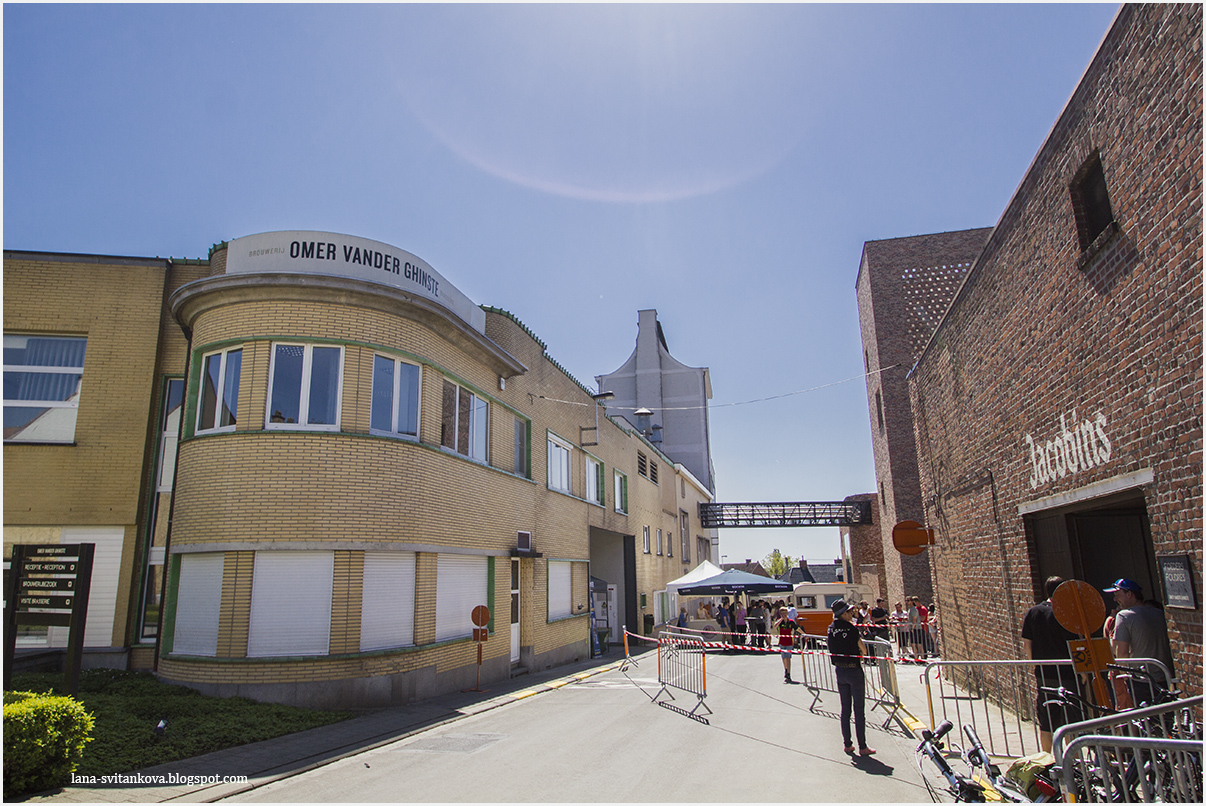
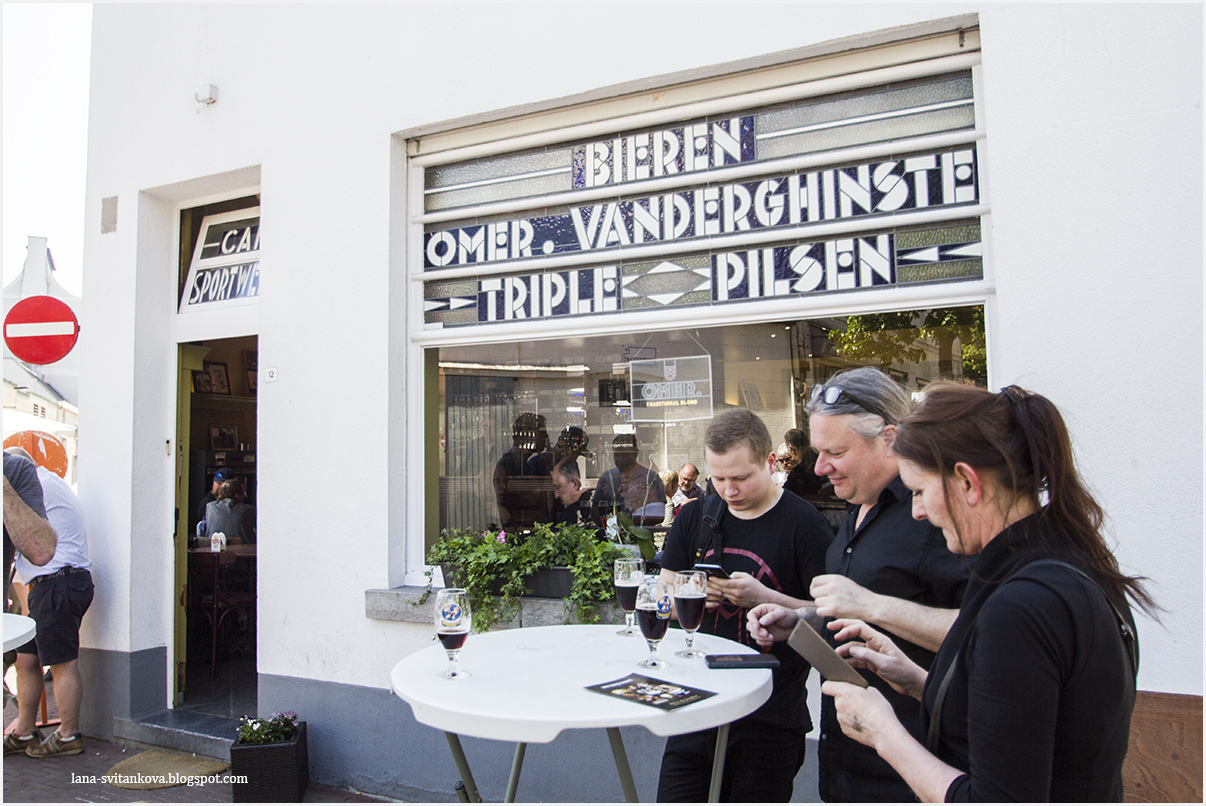
Після двох вандерхісте лишилося лише підняти свою уже пристойно втомлену сідлом дупцю, і крутити уже відпадаючими ногами останні 7 км до Кортріка, здавати велосипеди і йти на вокзал, щоб доїхати до Роденбаха, але остання порція марлезонського балету згодом.