

Показ дописів із міткою inEnglish. Показати всі дописи
Показ дописів із міткою inEnglish. Показати всі дописи
“Any farm should have a house, barn or other building adorned with a weathercock. We love farmhouse tradition, we have a brewery and own at least a weathercock, so hopefully someday comes the farm..." - says Sam, one of the founders of the Blackwell Brewery. Indeed, nobody knows what the future holds for Aeschlimann brothers, but the labels of core range are embellished with a small black rooster, and it seems that the wind is favorable.

Let’s be honest here, do you expect a lot of beer entertainment in Switzerland? No? Me neither. But we are all wrong, because good Swiss people know how to enjoy life.

Grill parties! It’s something quintessentially Swiss, believe me. Every single household seems to have a grill standing on the balcony, terrace or lawn and if you don’t own one, there’s plenty of meetings organized by neighbors, local farms, museums and (just imagine that!) green houses filled to their glass brims with exotic cacti and succulents. They provide grill and gas, you bring food. And beer, obviously.
Züri Fäsch, huge festival attended by 2 million people (Zurich population is just 400 thousand people, mind you) submerges the city into celebratory mood for 72 straight hours of music, performances, dance, street food, fireworks. And beer.
But Swiss have another hidden gem, as unexpected as it’s logical in a country boasting one of the most breathtaking landscapes, lush natural parks, crystal clear ice-cold rivers and springs, snow-capped mountains, rolling hills of vineyards and fields, castles and idyllic villages, all of those reachable by one-hour train ride max. Bierwanderung is the name. It’s an obvious linguistic love child of “beer” and “wander”, and it means just that: to wander and to have beer. And boy they do have a lot of places to go wander to and beer to enjoy. There are more than 1000 breweries operating in Switzerland now, from the tiniest one-person operation to big regional ones. This makes this small country with it’s 8,4 ml population to have an average 1 brewery per 8000 people. Which is the highest density of breweries in the world. Surprised, no? Have you heard somebody talking about this? It almost looks like Swiss quietly keep this knowledge to themselves like a secret treasure.

So back to Bierwanderung. You basically have three options to quench your thirst.
If you are on a budget or prefer enjoying nature on your own, get one of the guide-books (yes, they have books published on beer wandering, those sly Swiss!), choose the route, don a pair of comfortable shoes and depart for an adventure infused with fresh air and beer.
If you more into organized fun with lots of socializing, search Facebook for Bierwanderung. Guaranteed you’ll end up with at least five events in nearest few months. Typically you get a ticket beforehand – be fast, they tend to fly – which has all perks listed. Sometimes included are some full pours of 330 ml, sometimes it’s taster-size pours, but more of them. Some organizers throw a snack into package, and if they work in tow with local tourism authorities, which is often the case, even a cable car or funicular ride to the mountain peak is covered. In the end of the route you can expect music, a tent with more beer and a bunch of happy people. Indeed what to be unhappy about in a setting like this? What excites me about this besides the opportunity to enjoy beautiful vistas and get to know local beer scene is the way of how mutual support works: local agencies promote local businesses and outdoorsy attitude (and earn money), local breweries get bigger coverage because people come for events like this from other regions and sell a bit more beer (and get paid too), local tourist board helps with transport or logistics and get more tourists. They all work together making people happy. And afterwards there’s taxes paid to support local growth.
Sometimes breweries organize their own event without the help of agencies, securing more convenient dates and rates for themselves and visitors as well. There’s no need to buy a ticket, it’s an open event, so you can join anytime any check-point and pay only for what you drink – and this is the third way to experience Bierwanderung.
So one beautiful sunny Saturday (we knew the event was coming) we packed few sandwiches, a bottle of water and departed for Craft beer trail 2019. Ahoi Bier, The Darkwolf Brewery and Old Hill Brewery were waiting for us. As well as beer yoga, new beers brewed just for event and excitement of new adventure. After 15 kilometers of beautiful landscapes along the river and up the hills and through the forest with 3 breweries and 2 pop-ups along the way and 14 beers later we finished at the train station on the way home. Pleasant tiredness, sunburnt noses and kaleidoscope of impressions and memories were our spoils of the day. Like drinking beer in the backyard of the brewery which is accidentally (or not) the head brewer's home backyard, or meeting people with whom you have unexpected friends in common, or climbing up the panorama-view tower in the forest, or sharing a beer with a group of horse riders having no idea about what a car with beer is doing in the forest, but welcoming a serendipitous refreshment...


All that said, please exercise moderation and self-control. As much as beautiful mountains can be treacherous sometimes. But no worries, most of the trails allow for a leisurely stroll helping you to burn just enough calories to free space for one more glass. So next time you are in Switzerland check the Bierwanderung out and feel the groove of uniting with nature in style we all here deem appropriate.
Check for next events on facebook looking up "bierwanderung" or here https://bier.swiss/aktuell/veranstaltungen/

Do you have a moment to talk about sweet things? I mean, sweet beers.
Just hold on for a second and tell me when you last reminisced about beer? How many unforgettable glasses you had? Those ones, which surfaces immediately, with no need to look up in the crooks & nooks of your memory closet? Those glasses and bottles which spark nostalgia or bare meaningfulness to you?
These days we do everything on the go: drink, eat, talk, engage with people. In a never-ending whirl of fast life, we don’t pay attention to what we consume, be it food, drink or information. We are gradually losing the sheer joy of reveling in the moment. Have you contemplated your recent beer or have you just checked it in Untappd, and ordered another?
Here I ask you to slow down, and let me share little gems I keep dearly as milestones on this bewildering beer road of mine. Those which I don’t need to call out - they are always close to mind and heart. Those brightest recollections of past; powerful and luminous as a supernova because of place, circumstances or being an eye-opening experience.
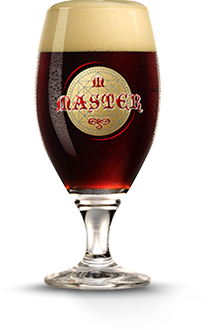 |
| Prague, May, 2008. Plzensky Prazdroj Master Tmavý 18° |
Early May in Prague is flooded with tourists, as they spill off the banks, literally and figuratively. I still have no idea who’s genius idea it was to go for a honeymoon trip to Prague (I was not even a beer drinker as much) in one of the busiest periods of the year, but we went nonetheless. That was the first, and the last tour of ours bought through an agency. Old cranky bus, huge noisy group, boring guide, crowded sightseeing spots. So we bought a map, and waved them goodbye, just to meet on the way back home. And that was an adventure to take, a magnificent medieval city to explore. Shady cobbled streets, framed by neat houses, terracotta tiled roofs, clanking of old trams, luscious parks in bloom, rolling waters of Vltava under the Karluv bridge, towers & spires, Gothic cathedrals, and a snug traditional pivnice - where waiters count your beers putting strokes on paper coasters. And inside one of these ‘lost in time and space’ taverns – I won’t be able to remember the name or address for all the world – I was brought a glass of Master Tmavý. A glass of a revelation. A revelation of “So, beer can taste like this?!”. That glass has opened a Pandora’s box, and it still hasn’t been shut.

| Bruges, September, 2010. Rodenbach Grand Cru |
Gauthierz Brasserie is a snug little place, on the canal facing Concertgebouw, in Bruges. And this evening, every surface is flooded with golden glow. The air is shimmering, thin as gossamer, a bit chilly, but still soaked by the light and warmth of day. A waitress brings me a glass (I already know this country’s custom of serving each beer in it’s own glass), and a bottle of beer I’ve chosen because of the beautiful name. She pours half a glass, and leaves me one on one with the Grand Cru. The aroma is slightly disturbing, and intriguing, unlike anything I’ve drank before. Its whiffs remind me of wild strawberries from Grandma’s garden, and homemade cherry vinegar. I sip cautiously, putting the glass down, unsure if I like it, pondering if I should continue to drink.. This unimaginable blend of sour, sweet and woody astringency unwinds on my tongue, and captivates me. And while I’m still a bit hesitant, the flavour opens up, and I give in. I finish this bottle, and order one more. This experience shatters my understanding of beer, deconstructing “typical” flavours and aromas. I’m almost crying over the glass, thinking a beer like this will never find an audience in my country, and would never be imported.
Thank God I was wrong. But ever since my life, and the lives of people whom I’ve introduced to Flemish sours, has never been the same.
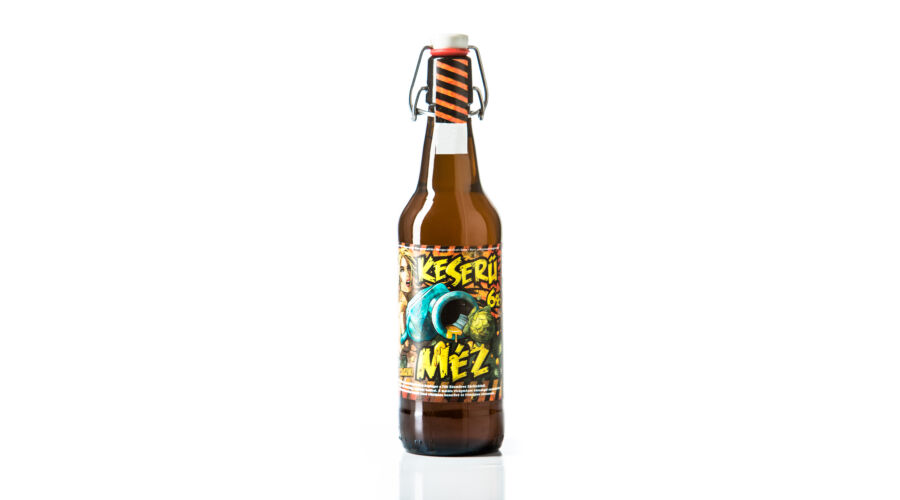 |
| Budapest/Fot, September, 2014. Fóti Kézműves Sörfőzde Keserű Méz |
You can ride a bicycle one of two styles: boring and adventurous. Of course, we always opt for the latter. So instead of leisurely riding along Duna, we decided to take a detour to a local brewery in a nearby village. But, as it sometimes happens, the road on the map turned out to be an upward path through the meadow of knee-high grass tangling your legs. Breathless, we carried the bikes, and dreamed of beer. Crossing a meadow, a grove, another meadow, sweating under the baking sun, and swearing to the tune of birds, we at last found something akin to a road - and after a few meters, stumbled upon a gate. Just so you know, a brewery in a Hungarian village is not a brew pub, it’s a dwelling. The owner here, brews on the ground floor, and lives with his family upstairs. There was a table, and a few benches in the courtyard, but something told us those were not for guests. Even though we didn’t speak Hungarian, and the owner didn’t speak English, our apparent exhaustion, and universal language of beer, needed no translation. We both got two glasses of fresh cold beer (named Keserű Méz – Bitter Honey, which was one of the first beers of new wave Hungarian small brewers) straight from the tank. We drank it happily, sitting on a long rustic bench, enjoying the weather, and the view. What bliss! We had to ride the non-existing road through a field (another one though) again, but that’s a different story for another time.
Beer connects people.
| Kyiv, January, 2017. Goose Island Bourbon County Brand Stout 2016 |
To this date, our small bottle-sharing club has tried a few thousand beers already. Having traveled Europe far and wide, I’ve gotten my hands and receptors on local stuff, and various imports, so more or less, I can imagine what awaits me in every single glass. So I’m nonchalantly looking at the last bottle of ten we share this one night. In the dim light, this unpretentious black bottle with no label - just a collar with brewery, beer name, year and alcohol content - doesn’t promise much. 13,8% ABV. Well, we brace ourselves - beers of such magnitude tend to be too much in your face, unbalanced, and aggressive. It pours like dark molasses; like oil - thick & viscous - and the aroma makes you dizzy. If smell could sound, this would be deafening - it knocks you down like an avalanche. I could spend all night just contently sniffing the glass. And here comes the taste. Receptors soon forget the language they use to convey signals of what’s happening to the brain properly. After the avalanche of aroma, comes a tsunami/earthquake/tectonic shift of flavour. For the first time in my life, I imagine the taste as a band unrolling on my tongue. It unwraps in my mouth nonstop, and changes every few seconds. Here’s toffee, here’s toasted coconut, overridden by soft woodiness, and oh here goes salted caramel, but where is it coming from?! I’m overloaded trying to process all of this, stunned and simply enjoying. I'm reminded that there are so many more things to explore in the world of beer.
PS. I promise myself to visit the brewery, which I’ll accomplish in a year.

| Kyiv, October, 2017. Varvar Brew Hay Day |
It’s a heck of a day - full of hushed conversations, whizzling of a drill, and barely hidden excitement. We have no idea where are we heading with this barrel aging project, but today is the day of truth. Today we’ll get a glimpse of the future through a tiny hole in each oak belly, and will get to know either if it hides a miracle, or holds bitter disappointment. One of the barrels bares the provisional title, “Farmhouse Ale”. The beer inside doesn’t have a name yet, but does have character; untamed and stubborn. It doesn't pour obediently, but spurts the first drops to the floor. And when I tuck my nose into the glass, marked by the fingerprints of my team, receiving my first sniff, a thought - only one - thumps wildly in my head, like the heart of a small bird… “We’ve done it!”. Yes, the golden liquid has a royal flush; all the aromas of hay, meadow grass, and flowers, with hints of horse-blanket, and a bit of barn aroma. A flavour to be proud of. A beer, which would be talked about by saying, “If I hadn’t opened the bottle myself, I would have thought it’s Belgian”. I step behind shiny tanks to hide tears of joy while our yeast whisperer drills another hole in the unknown turf of a barrel.
Hay Day is the final decided name, and we are bottling it that next week.
These five I vividly remember and cherish dearly. What are your memorable pints?
During the last five or six years all my vacations bit by bit, almost unnoticeably but unavoidably have turned into beercations. My itineraries revolve around breweries I want to visit, festivals I want to attend, events I want to participate in, stores I want to leave my money at and people I want to meet. But it seems I’m getting old. I don’t enjoy big vibrant and fast paced cities full of people and adventures as much as I did anymore. Not that I don’t like them at all, no. But I’m helplessly falling in love with tiny towns and villages and special people making something with their own hands and I’m eager to spend time on the road and get to them no matter what it takes. More so, if this people and I are brought together by mere accident, like a post on Facebook, a mention by a distant acquaintance or other intricate way of fate. And I’m extremely happy about the fact that such people exist and these unexpected journeys happen.
“Oh gosh, we’ve overslept the best connection for today!” This was the beginning of one Saturday morning in Belgium. Not your usual morning, because it was a morning of our 10 day long trip to the Holy ground of beer. Yes, I know it’s terribly cliched, but totally true nonetheless. Almost a month ago we spontaneously (yes, pun is intended) agreed this adventure with a brewery I accidentally found on the map of Milk the Funk society, people who love mix- and spontaneously ferment things. Antidoot doesn’t even sell beer yet, brothers Tom and Wim Jacobs only brew and welcome visitors some other Saturdays, but they are famous already, and it seems everyone knows about them, including two Swedish distributors whom we’d met in the afternoon. But I get ahead of myself.

When I hear the omnipresent “Beer is a man’s drink”, my left eye starts twitching. Sometimes both eyes.
When a girl asks bartender for a beer suggestion and he’s overly eager to sell her “something girly, fruity and sweet” I wonder if he has noticed me drinking an Imperial Stout just a bit further the counter. But she is deprived of it.
When I see beer on a shelf, a beer sporting derogatory name or label more fit for a pubescent joke, I lose all intent of buying it. I am deprived of that beer.
Beer is for all people, but it seems some of them are trying hard to persuade others that not everyone is welcomed in the beer industry.
Why beer is a woman’s drink as well as man's?

Because both took part in supplying ingredients, brewing and drinking from the very beginning.
Sumerian deity and patron of brewing is Ninkasi. A goddess. The Hymn to Ninkasi is considered the first ever written beer recipe. By the way, almost all Sumerian taverns were owned by women.
Kalevala, Finnish epic poem, tells the story of Osmotar, brewster goddess, making beer of water, hops, barley and bear saliva (don’t try this at home! The recipe is very detailed though, and takes twice as many poetical rows as the story of the world’s creation).
Saint Brigid of Kildare was reputed to turn water into beer for lepers. It is uncertain whether this beer cured them, but at least it quenched their thirst.
Incan aclla, the chosen female virgins, kept the sacred fires burning and brewed beer in their spare time (chewed, to say more exactly, but whatever).
Fancy facts, not gods or saints? Ok, let’s turn to history.
A famous writer, philosopher, and naturalist, abbess Hildegard of Bingen is said to be the first to have mentioned preservative qualities of hops in her medical work Liber Subtilitatum Diversarum Naturarum Creaturarum.
If you think about how similar beer brewing is to everyday cooking, next fact won’t surprise you. During the Middle Ages (12-13th century) brewing was decentralized and sporadic, mostly done for personal consumption, just as bread baking, preserving, cooking, and maintained by women. Later a term alewife/brewster emerged, a female who takes brewing as a trade. This job wasn’t considered very profitable or respected, but nonetheless better fare than being a servant or a prostitute. And there is a proof of this. The most precise papers in the history, tax registers, keep hundreds of female names and volumes of tallage they paid. So far so good. After the Black Death came and left, the amount of beer consumed had risen up considerably, and then industrialization started and went in full swing. Step by step men had been driving women out of brewing, widows and single women first, married brewsters later. If you wanted to brew in bigger capacities, you needed an equipment, and mostly that would demand more funds than you owned. And if you were a woman… Well, you just didn’t have enough credibility. At best, woman could inherit a brewery from her late husband, but if there were no male heir, it was usually sold. And the more profitable, commercial and large-scale brewing became, the more Guilds came into power, the fewer women stayed in the industry. Ale, Beer, and Brewsters in England by Judith M. Bennett is a very enlightening read.
Ok, let’s leave production for now; but how and when did beer, consumed by everyone, become “a man’s drink”? Reasons are plentiful, socio-cultural, economical, and special thanks goes to Miller, which started selling “High life” not as a beverage, but a lifestyle. Thankfully change is the only constant thing whatsoever, so it’s a high time (pun intended) to overthrow stereotypes. Carefully nurtured by media, hospitality industry, PR-departments and sadly enough by brewers themselves, it’s a white middle-aged man who embodies the image of target craft-beer audience. Yes, that bearded, charismatic loveable guy in a checkered shirt and a beanie, owner of a few tattoos and a shining smile. And if it’s not enough, women are not considered knowledgeable and credible sources of beer wisdom, though ability for learning, self-education and getting experience is nothing connected to gender.
Cases? I have plenty.
Have you ever tried to get in touch with brewers for an interview? If you are a female journalist, it’s highly possible that you’d be either ignored or promised responds forever. Editor-in-chief, male of course, will get answer in a few days. I’ve been there.

A TV-crew wants to get a short video of brewing process and a short interview. You say that the head-brewer will be busy, but a female spokesperson can answer all the questions. The director is very upset and wants “somebody competent”. What does he know of competence? The head-brewer of Orval is Anne-Françoise Pypaert, the first ever female trappist brewmaster. You don’t question the competence of Warpigs brewer either, don’t you?
I could say that such cases take place only in Ukraine, where craft beer revolution has just started, but it’s not true. Stereotypes are blooming everywhere.
Jordanne McMullan (UK, ambassador of BrewDog)
I think it is much more common now for females to know more about beer. A couple of years ago when I first started out on my beery journey, I was working behind a bar. Originally my journey began in the US where the craft beer scene is much further on and women in beer were extremely common. In the UK however, beer can still be subject to the ‘old man’s drink’. Whilst working behind the bar in the UK there was a moment where a man asked me a question about the beers followed by ‘oh you probably won’t know’, which I then went on to ask him more questions and showcase my knowledge about beer.
It is frustrating to feel you have to prove yourself in an industry you are passionate about, but I think that’s why I enjoy it more. I like proving people wrong and changing stereotypes. I find it’s much easier in cosmopolitan places e.g. London where there is a much vaster range and variety of people, which means people are much more open and can avoid stereotypes. But you do still face difficulties in the UK. The key is to not shy away from showcasing your knowledge. Sometimes I pause people and ask them why they assume I don’t know anything about beer. Then if the situation is right, I like to take the lead in the conversation to display my knowledge on the subject. It completely depends on the person and the situation though as some people discriminate because they are unaware of another way of thinking and some discriminate to be rude. You totally have to use your own judgment to decide what they best course of action is, whether it is to stand up for yourself or to educate the other person.

Is it difficult for a female to participate in beer industry? Oh, no. Since I’m not taken seriously as a woman and potential beer expert anyway, is it actually quite easy. I am convinced that only a few women in this country are proactive on the leading position in the beer business, because they know all too well they don’t stand a chance. In the beer business, women are allowed to work as waitresses, to sell stuff, to show their bosom, and to find nice words in the communications with their well-nourished bosses. And that’s it. I don’t know all women in this country, but the two, who really made it and occupy true leadership positions, are Susanne Horn from the Lammsbräu Brewery and Susanne Hecht from the Schneider Weisse Brewery. Some (other) women are in leading positions just because they inherited a brewery or because their husband is a brewery owner. With my knowledge and the 13 years of experience I have proven everything to myself and to others. Deep in my heart, I simply despise men, who do not take me seriously, just because I am a woman. And I definitely will tell all the female beer enthusiast: Go your own way! Connect with people, who take you seriously. When we will be able to truly grasp the difference between men and women, then we will understand, too, why our world is so short-sighted, always chasing for the quick gain, and rarely for the pleasant and responsible sustainability. If more women worked in responsible positions, our beer world would show more responsibility and beauty.
Christina Coady (Canada, Newfoundland, owner of the brewery under construction and future head-brewer)
Canada is such a big country, so I don’t feel like I can speak to all parts of a woman’s experience working in beer in Canada. I do, however, feel like I can speak to Ontario and Newfoundland. I got my start in Ontario. While there were frustrating moments (being questioned on my abilities, strength, and knowledge) during my time in Toronto, Ontario, the beer community and beer fans were mostly encouraging of diversity in beer. There are individuals that use women as objects in their labels, but they are popping up less and less as beer fans are now questioning said labels.
 Newfoundland’s craft beer scene is very new. In the last year several new breweries have opened across the province with women as owners and/ or brewers. There are almost twenty new breweries in planning (including my own) that also have women as owners and/or brewers. This change in women being more involved in management positions is amazing as beer fans here in Newfoundland are becoming familiar with a craft beer movement that already is diverse, rather than watching it become more so.
I will admit, when I am put down by either a beer professional, supplier, or beer fan, it does hurt and (after the incident, when I am away from others) I have shown anger and sadness. But, during said moments, I remember that I am pretty darn good at my job and I love what I do, so I have interesting things to say. I also try to surround myself with amazing men and women who are feminists that believe in what I’m doing, so when I am feeling upset they are there to help me bounce back. So surround yourself with good people. I like to joke that people who are rude or demeaning to women in beer (or who approve beer labels that depict women as objects) are dinosaurs and will be extinct soon enough. But, until that happens, they are still here and cans of beer that make you feel crappy about yourself are still sometimes on the shelves. Having men and women that believe no one should feel like garbage in their profession in your life provides a good sounding board for moments when you need to vent and pick yourself up.

Being a brewer is difficult for anyone regardless of gender. We work with temperature extremes and hazardous materials. We use raw materials that vary season to season with the expectation of continuing to hit a spec and make a product that people love. Production breweries are fast paced and often have unpredictable work hours. These are challenges that all brewers face.
I continue to give 100% of my effort each day at work. I meet or exceed all expectations of my peers and supervisors in my brewing. I continue my brewing education and am always open to learning more.
I have never had to "prove my expertise" to people working in the beer industry in my area. Sometimes I am challenged by "beer fans" who don't work in the profession, but it quickly turns into a productive conversation once they understand my educational background and experience. But don’t forget, only you can decide what you can or cannot do. Do not let anyone else decide what you are capable of. If you have the interest and the desire, you can do it. If you can visualize yourself doing a specific job or task, you are most likely capable of it. Never count yourself out. Never exclude yourself from an opportunity because you think you are not qualified. If you feel excluded, let your supervisor know. Always seek new opportunities.
Some breweries have very long traditions of doing things a certain way. The longer the tradition is, the longer it takes for that tradition to change. They may have a certain idea of what a brewer should look or act like. These ideas are useless and outdated in a constantly changing industry. Keep doing what you do, and do it well. I believe that breweries will continue to adapt and change their ideas about gender in the industry if they want to stay relevant in the market.

Louise Mulroy & Lucy Stevenson (UK, We Made a Beer podcast)
From the conversations we have had as part of the podcast, it still seems that the job opportunities afforded to men in brewing are still harder to come by for women, particularly in the early stages of a career. However it is by no means impossible for a woman to become successful in the UK beer industry. The UK has a number of high-profile and celebrated female brewers, beer writers and broadcasters and the industry in 2018 seems keener than ever to diversify its members. The homogeneity of the majority of brewers and drinkers is seen as a problem that needs to be addressed, not only in relation to gender but also regarding ethnicity, physical ability and learning ability. The UK industry seems to be putting more and more stock against qualifications these days, whether technical (in brewing) or theoretical/tasting-based in the form of Beer & Cider Academy courses or Cicerone exams. These can be a great way for anyone to build and then prove their knowledge. Achieving these qualifications can be a good equaliser, putting people on the same footing, knowledge-wise, irrespective of gender or background.
Simply to work out how to use your skill set to get beer into the hands of a wider selection of people. If you think that women are underrepresented in beer, find some way to represent them. For any industry to take female employees and commentators seriously, they need to take female consumers seriously. As podcast listeners, we couldn't find a podcast for beer novices, or a podcast about beer that wasn't voiced almost exclusively by men. These were problems that we could do something about - we produced We Made a Beer to try and address both of those problems, and we're really happy that it has brought more people into the world of beer.
Of course gender discrimination still exists, particularly in the marketing of beer, but there is a movement towards eradicating it. Some wonderful women in our industry have spoken out against discriminatory beer marketing on social media and at industry conferences. Along with their male colleagues, they are affecting real and overdue change.
It makes no sense at all to alienate a huge proportion of your potential customer base with sexist beer labels/pump clips. But, while the UK beer industry as a whole is embracing diversity, Twitter alone proves that there are still a substantial amount of men in the UK who seem to feel that beer 'belongs' to them, and they dislike the idea of outsiders interfering in their club. It's up to the people who produce, market and sell beer to challenge the perception that beer is a club and ensure that, instead, its a thriving, diverse and open community full of interesting characters from all walks of life.
 Liliya Solovey (Ukraine, owner of “Hop Heads” beer shop)
There are a lot of industries where females are rather at disadvantage, not only brewing one. And just because stereotyping is very strong, you have to prove your competence constantly. I can’t say I’ve experienced open diminishing or offence, but more often than not people don’t comprehend their ways as insulting or at least unpleasant. It shows mostly at the beer shop when even loyal customers want to ask some questions about beer and particularly call for Max (male co-owner of the shop). I don’t think they really want to upset me, it’s just a common cliche. I usually comment that I am perfectly capable to answer as well, and usually people start feeling embarrassed, but they understand what I mean. You just have to voice your concerns. I hate being a furniture in my shop, really and I hate needing to prove my knowledge and expertise all the time. But for now it’s a reality. For now.
Today women get into brewing more often, though mostly it’s jobs in marketing/sales departments, consulting and hospitality, sometimes it’s a quality control department (for instance, Quality Control Jury at “Ukrpivo” is 80% female). Hopefully, this trend will spread further. Because, yes, they exist, all these women, who open breweries, write books on beer, found clubs and societies (Pink Boots Society or Society of Beer Drinking Ladies) and brew beer (like this one), which is completely different from cliched “light, fruity, sweet beer for girls”. The reasons are different, but all these women have one thing in common: they love beer. And they know their beer. But they have a long way to go to be accepted as equals.
Women in the industry aren’t the only one who experience patronizing and derogatory attitude. Another whole layer of the “you are not welcome here” disposition consist of beer names and labels, exploiting disparaging jokes and images of half-naked or naked women. The saddest thing, mostly people don’t see it as a problem at all.
The most frequent reaction I get is “beer’s for boys, they will understand, it’s ordinary jokes, don’t fret”. Ok, I won’t question the reaction, but if a brewery immerses its brand into this kind of jokes, then I’ll question its values for sure.
The second most frequent answer is “who cares about the label, beer is what really matters”. Hey, it’s twenty first century outside, and we still don’t care about the packaging of the goods we consume and values of the companies we support by being their customers? We can discuss in lengths the properness of certain images, but derogatory label is screaming to me that people who run this project either have poor imagination, or just are lazy and lack self-respect and respect for their customers to put a bit more effort into the product. Because sex sells. It will always be the easiest way to sell. (I have to mention that I won’t be happy with label featuring a naked man, because this is an issue not only of gender discrimination, but of poor marketing in general. And no, I’m not against artistic portrayal of a human body, but you can’t get away from context).
Just some figures.
In 2016 Brewers Association released some very interesting data. Each fourth (25%) craft beer consumer drinking beer at least once a week is a female. Today this percentage can be even higher.
And even more intriguing white paper states that craft shoppers are demographically different than craft consumers. Craft consumers drinking beer on-premises are predominantly male (70%), but off-premise craft shoppers are predominantly female (73%). So if your beer on the shelf (and its label) is not attractive to a customer she will opt for another producer. Besides, not all men are comfortable with sexist jokes anymore. So why should breweries alienate themselves from potential customers? Each business should aim for a 100% customer coverage, widen its audience in all its might, and this just means to sell beer neither to men, nor to women, but to people. Brew for people regardless their gender, skin color, sexual orientation or self-identification in general. By the way labeling fruited, sweet or any kind of beer for that matter as “beer for girls” doesn’t make men preferring these beers too happy.
All the deep-rooted ugly cliches aside, the most disturbing thing still is that people are rarely aware they hurt someone with such attitude. Stereotypes and discrimination are tricky topics, emotions take over pretty often and you can’t avoid controversy. Humans always understand something better by experience than by explanation, and still the first step to mutual understanding is to talk. Like adults. Like proper grown-ups; and not to throw tantrums or sulk in the corner like offended children. Talking is important, but listening is crucial.
Craft beer culture has always been about culture first and foremost, it differs from “all the bland, soulless and uniformed”, it has an idea, an aim, a community. But culture is not limited to thoughtful consumption, discerning hints of flavors, proper glassware, the best ingredients. Attitude and interaction is a part of culture as well. I’d wish so much for craft beer culture to embrace diversity and stop labeling someone not wearing a beard or being gay, transgender or any person for that matter as not worthy acceptance or not credible.
If all craft beer movement started from the effort of few people to rise up against Big Beer, it’s about time to start movement for “beer for all”. Because it is for all indeed.
UPD. I’m immensely thankful to all the cool ladies, who lended me their voices and thoughts on the matter. Original piece was published in the beginning of March. As of today, two beer-shops mentioned above are out of business, but their owners keep rocking the industry and making it diverse and exciting. Thank you.